
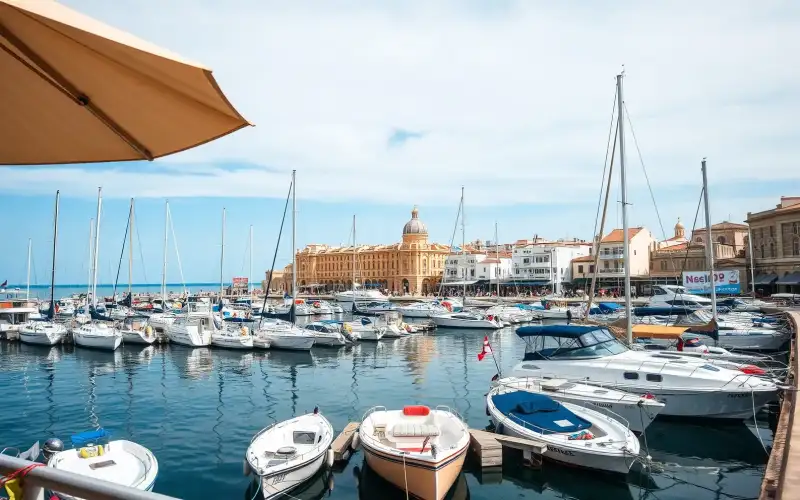
The Tuesday Night Revelation
I was sitting on the deck of a marina restaurant—all white linen and geometric plating—when my dive buddy Kostas texted asking where I was. "Fancy place," I typed back. He replied with a laugh emoji and directions to a taverna I'd walked past a hundred times without noticing. Twenty minutes later, I was crammed at a wooden table with his extended family, eating the best pastitsio I've had in five years, for less than half what I'd just paid for a sea bass that looked like it belonged in an art gallery.
That night crystallised something I'd been dancing around for months: Larnaca's restaurant scene isn't really one scene at all. It's two completely different worlds operating parallel to each other, five minutes' walk apart. And which one you choose depends entirely on what kind of evening you actually want.
The Marina Restaurant World
What You're Getting
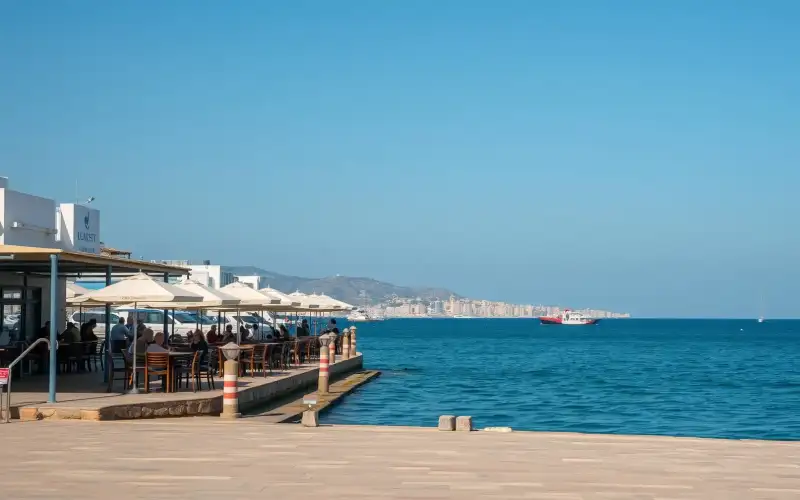
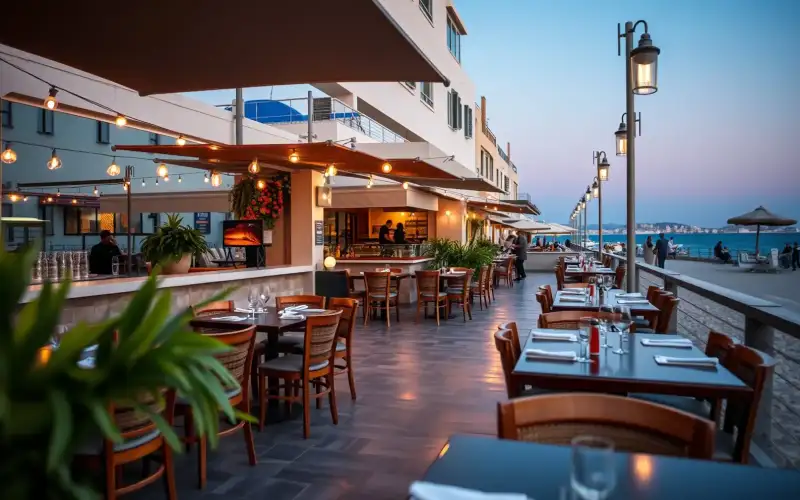
The Larnaca Marina restaurants—clustered around the eastern waterfront where the yachts bob and the sunset hits the water just right—represent modern Cyprus tourism at its most polished. These aren't chain restaurants; they're independent establishments that have invested seriously in their image. Think Italian marble tables, professional wait staff who know the wine list, plated mains that arrive with tweezers and explanation, and a view that justifies half your bill.
The menus read like a tour of Mediterranean cuisine with a technical twist. You'll find locally sourced fish prepared with techniques that wouldn't look out of place in Athens or Nicosia's fine dining scene. Seafood dominates—naturally—but there's usually a nod to meat dishes and vegetarian options that go beyond "salad." Wine lists are taken seriously. Prices for a two-course dinner with drinks typically run €35–55 per person, sometimes higher if you're ordering the special catch of the day.
The Atmosphere and the People
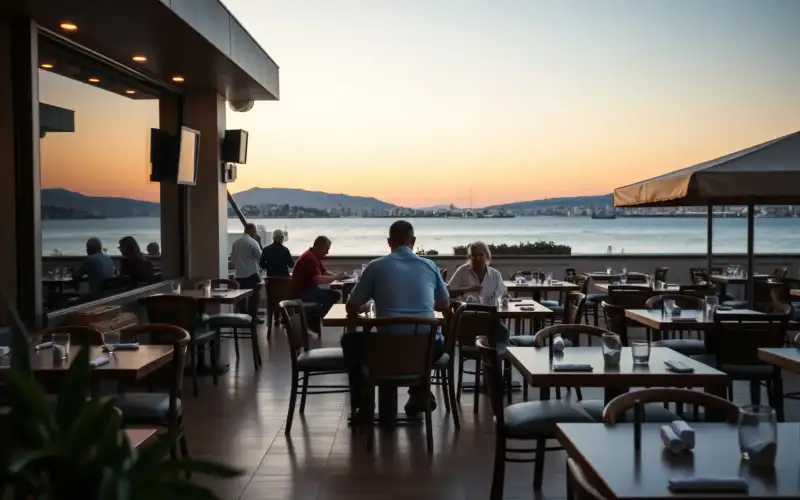
Marina dining is aspirational. You'll sit next to couples on anniversary trips, groups of friends marking birthdays, business people closing deals. There's a formality to it, even when the staff are friendly. You dress up a bit. You're not shouting across the table. The soundtrack is curated—usually ambient, never intrusive. The lighting is flattering. If you've come to Larnaca for a romantic evening or to impress someone, this is where you book the table.
The clientele skews toward British package tourists, expats, and Cypriot families celebrating something. You'll hear English spoken as often as Greek. The restaurants cater to that audience: dietary requirements are accommodated without fuss, portion sizes are generous but plated elegantly, and the pace of service is measured to match the leisurely Mediterranean evening.
The Food Reality
Here's the honest part: the food is very good, but it's not always authentically Cypriot. It's Cyprus-inspired, or Mediterranean with a Cyprus accent. A sea bream might be accompanied by a foam or a reduction that tastes more like the chef's training in France than anything your grandmother would recognise. The meze spreads are curated and beautiful, but smaller than traditional versions—because presentation matters more than abundance.
That's not a criticism. It's a choice. These restaurants are trading in experience and environment as much as food. You're paying for the marina view, the professional service, the confidence that you won't be disappointed. And you usually won't be. But if you're chasing authentic Cypriot cooking, you might find yourself enjoying a very good meal that doesn't quite taste like home.
The Old Town Taverna Experience
Where They Are and What They Look Like
The old town tavernas cluster in the narrow streets behind the Church of Saint Lazarus, in a maze of limestone alleyways that look like they've been rearranged by centuries of foot traffic. You'll find them by accident more often than by design—a painted sign, a plastic table on a pavement, the smell of grilled meat drifting from a doorway. Some have been in the same family for forty years. Some opened last year but look like they've been there forever.
These aren't Instagram restaurants. The décor is accidental—old photographs on walls, wooden chairs that don't match, maybe a vine creeping over a courtyard. The lighting is whatever happens when you string up bulbs and hope for the best. The tables are close together because space is precious in the old town. You will absolutely overhear other people's conversations, and they'll overhear yours.
The Food and the Cooking
This is where you find Cypriot cooking that hasn't been filtered through a culinary school. Slow-cooked stews (stifado), grilled halloumi that squeaks between your teeth, souvlaki that's been marinating in the same recipe for decades, pastitsio and moussaka made in the kitchen's oven every morning. The meze spreads are enormous—a table for two will have twelve, fifteen dishes, piling up until there's barely room for your glass.
The ingredients are local because the owner's cousin grows the tomatoes and the fish came in that morning. The cooking technique is "until it's ready," not "for exactly eight minutes at 65 degrees." A sea bream is grilled whole with lemon and olive oil. That's it. That's the entire recipe. And it tastes like the sea and the sun and nothing else.
Prices are genuinely cheap. A full meze for two, with wine and coffee, runs €20–30. A main course is rarely more than €12. You can eat very well for €15 per person, including drinks. This is not a financial sacrifice—it's the actual cost of running a small family business with low overheads and no marketing budget.
The Atmosphere and the People
Old town tavernas are social spaces first, restaurants second. The owner will chat with you. Other diners will chat with you. You might find yourself part of a larger table's conversation. There's no dress code—I've sat next to people in hiking boots and people in evening wear, and nobody cares. The pace is slow. Meals take time. There's no rush.
The clientele is mixed: local families, older Cypriot men playing cards in the corner, tourists who've stumbled down the right alley, expats who've lived here fifteen years. You hear Greek spoken properly, not as a tourist phrase. You might be the only English speakers in the room, or you might not. It depends on the night.
The Real Comparison: When to Choose Which
If You Want Romance or Celebration
Marina restaurants win here, clearly. If you're marking an anniversary, proposing, or taking someone out to impress them, the marina setting does half the work for you. The professional service means you won't have to worry about logistics. The food will be reliably excellent. The view is genuinely beautiful, especially in summer when the sun doesn't set until nearly 9 PM and the light turns golden across the water.
An old town taverna can be romantic—a quiet corner table, candlelight, the sound of the old town settling down around you—but you're relying on luck. The taverna has to be quiet that night. The kitchen has to be in good form. It's riskier. But when it works, it's more memorable than any marina dinner.
If You're Hungry and Want Value
Old town tavernas are unbeatable. You will eat more, pay less, and feel fuller. Marina restaurants offer good value for what you're getting (atmosphere, service, view), but they're not cheap. If you're on a tight budget or you've just come back from a dive and you're absolutely ravenous, the old town is where you go. The meze spreads at tavernas are designed to be generous. You'll be rolling out of your chair.
If You Want Authenticity
This is the old town's territory. Marina restaurants cook well, but they cook for an international audience. Old town tavernas cook for themselves and their families, and tourists are welcome at the table. The food tastes like it belongs to a place and a time, not like a reinterpretation of a place.
If You Want Predictability
Marina restaurants. They have systems. They've trained their staff. They know what they're doing. You'll get a good meal, and it will be what you expected. Old town tavernas are unpredictable. The kitchen might be inspired that night or tired. The owner might be friendly or distracted. You might get the best meal of your trip or a decent meal that was better last time. That unpredictability is part of the charm, but it's not for everyone.
The Practical Details for 2026
Booking and Timing
Marina restaurants should be booked ahead, especially in summer and on weekends. Walk-ins are possible but you might wait. Old town tavernas rarely take bookings—you just turn up. They fill gradually through the evening. The sweet spot is around 8:30 PM, when the first rush has been seated and the kitchen is warm but not frantic.
Both scenes are quieter in shoulder seasons (April–May, September–October), so you'll get better service and a more relaxed atmosphere. Winter is genuinely quiet—some marina restaurants close or reduce hours, and old town tavernas become locals-only spaces where you're genuinely welcome but you're definitely a visitor.
What to Expect: A Quick Reference
| Factor | Marina Restaurants | Old Town Tavernas |
|---|---|---|
| Average Price (per person) | €35–55 | €12–18 |
| Booking Required? | Yes, especially weekends | No, walk-in only |
| Dress Code | Smart casual minimum | Anything goes |
| Food Style | Mediterranean-influenced | Traditional Cypriot |
| Portion Size | Elegant, moderate | Generous, abundant |
| Pace | Measured, professional | Relaxed, social |
| Best For | Special occasions, romance | Authentic food, budget dining |
What I Actually Do
After five years of diving the Zenobia and eating in Larnaca between dives, I've stopped thinking of this as an either-or choice. I go to marina restaurants when I want to feel like I'm on holiday—when I've got a guest visiting or I want to mark something. I go to old town tavernas when I want to eat like I live here, which is most of the time.
The best meal I had last month was at a taverna where the owner's daughter was getting married the next day, so the kitchen was already in celebration mode. The worst was at a marina restaurant where the chef was having an off night and the sea bass was overcooked. The most memorable was a quiet Tuesday in the old town with Kostas and his family, eating pastitsio and arguing about football, which cost less than a coffee would have cost at the marina.
Neither is objectively better. They're serving different needs. The marina restaurants are doing what they should do—offering a polished, reliable, beautiful experience. The old town tavernas are doing what they should do—feeding their community and welcoming visitors into it. If you're in Larnaca for a week, eat at both. You'll understand the city better for it.
The old town will still be there at 9 PM if you decide you want it. The marina view doesn't go anywhere. Choose based on what kind of evening you actually want, not what you think you should want, and you won't go wrong.

Comments (5 comments)