
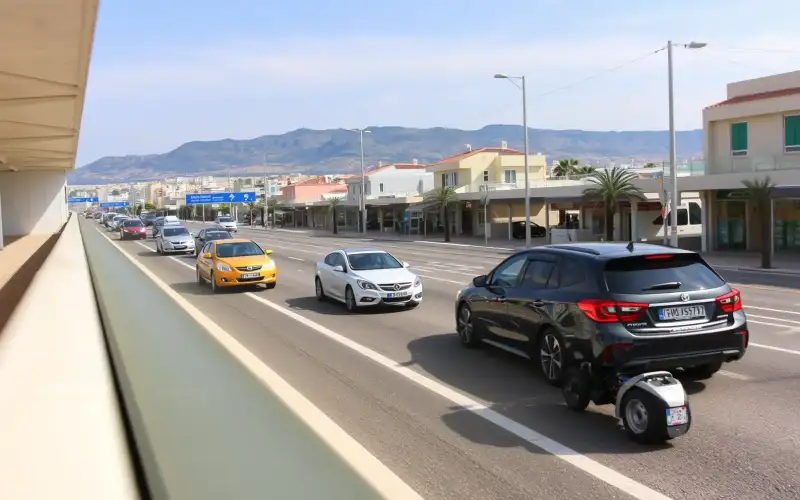
I arrived at Larnaca Airport on a sweltering June morning in 2026, rolling my suitcase toward the arrivals hall with the familiar question already forming: how on earth am I getting to my hotel? Twenty minutes later, I'd watched three different transfer companies tout their services, spotted a queue of taxis that stretched halfway across the forecourt, and noticed a bus rumbling past the terminal entrance. It struck me then that most British travellers arriving at LCA face exactly this moment of mild panic—and most have no idea which option actually makes sense for their trip.
The truth is, there's no single "best" way to get from Larnaca Airport to your destination. It depends entirely on who you are, where you're headed, how much luggage you're hauling, and whether you value speed, cost, or flexibility most. I've spent the last few years arriving and departing from LCA regularly, and I've tried nearly every transfer method available. Here's what actually works in 2026.
What Are Your Transfer Options from Larnaca Airport?
When you emerge from customs at LCA, you've essentially got four realistic choices: a private taxi, a shared shuttle service, a public bus, or hiring a car. Each has a distinct personality, and each suits different traveller profiles. Let me walk you through them honestly.
Private Taxis: Speed and Comfort (But at a Price)
The taxi rank at Larnaca Airport is hard to miss. You queue, you get assigned a vehicle, and within minutes you're heading toward your destination. In 2026, a private taxi from LCA to central Larnaca costs around €40–45, depending on traffic and exact drop-off location. To Paphos? Expect €90–110. To Ayia Napa? Around €55–65. These are official metered rates, and drivers generally stick to them, though it's always worth confirming before you get in.
The journey from airport to Larnaca town centre takes roughly 20–25 minutes in normal traffic, though I've seen it stretch to 40 minutes during peak summer afternoons. The driver will likely speak English, probably quite well, and you'll get door-to-door service without faffing about with luggage transfers or multiple stops.
Taxis suit you if: you're arriving with significant luggage, you're exhausted and want to collapse into a seat immediately, you're travelling as a couple or small family and splitting the cost makes sense, or you're arriving at an odd hour when buses don't run. They're less ideal if you're travelling solo and watching every euro, or if you're genuinely interested in soaking in the landscape during your transfer.
Shared Shuttle Services: The Middle Ground
Several companies operate shared shuttle services from LCA, picking up multiple passengers and dropping them at different hotels or locations around Larnaca, Paphos, and Ayia Napa. In 2026, prices typically range from €15–25 per person depending on your destination. The most common operators include Sunway Transfers and Kapnos Shuttle, though there are others. You can book these online before arrival, which is genuinely useful if you want to avoid the airport queues entirely.
The catch? You're sharing the minibus with other travellers, and your journey will include multiple stops. A shuttle to central Larnaca might take 30–35 minutes with no stops, but add three other hotel drop-offs and you're looking at 45–60 minutes. If you're heading to Paphos, you could be in the vehicle for 90 minutes or more. It's not uncomfortable—the vehicles are modern and air-conditioned—but it requires patience and flexibility.
Shared shuttles suit you if: you're travelling solo or as a couple on a budget, you don't mind a slightly longer journey, you've got moderate luggage, or you want to meet other travellers. They're less suitable if you're arriving with young children who need immediate access to a toilet, or if you're timing a tight connection to a boat or tour.
Public Buses: The Budget Option
This is where I often start when I'm visiting Larnaca for an extended stay and I'm not in a rush. The public bus from LCA to Larnaca town centre costs just €3 and takes around 30 minutes depending on traffic and passenger stops. Buses run regularly throughout the day—roughly every 15–20 minutes from around 6 a.m. to 11 p.m.—and the service is reliable and clean.
The bus stop is a short walk from the terminal exit, clearly signposted. You can buy a ticket at a kiosk near the stop or, in some cases, from the driver. The buses themselves are modern, air-conditioned, and frequented by locals as much as tourists, which I've always found rather reassuring.
The downside? You'll need to navigate with your luggage, which is manageable if you've got a small carry-on but tedious if you're travelling with a large suitcase and a partner's belongings. The bus doesn't drop you at your specific hotel—it follows a set route through town—so you might need to walk or take a local taxi for the final stretch. During peak summer season, buses can get crowded, and you won't have the comfort of direct, door-to-door service.
Buses suit you if: you're on a tight budget, you're travelling light, you're not in a hurry, you're staying somewhere on or near the main bus route through Larnaca, or you're the type who enjoys a bit of local immersion. They're not ideal if you've got heavy luggage, young children, or if you're arriving late at night.
Car Rental: Freedom and Flexibility
If you're planning to explore beyond your hotel—and honestly, why wouldn't you in Cyprus?—renting a car from the airport might be your answer. In 2026, you can rent a basic economy car (think Hyundai i10 or similar) for around €25–35 per day if you book in advance, or €40–50 if you book on arrival. Larger vehicles and premium options cost more, naturally.
The rental desks are in the terminal building, and the process is straightforward if you've got an international driving licence and a valid credit card. Most companies offer unlimited mileage within Cyprus, and insurance is usually included (though you'll want to check the excess). Petrol is reasonably priced—around €1.10–1.30 per litre in 2026—and driving in Cyprus is generally straightforward, with decent roads and fairly relaxed traffic outside peak hours.
Car rental suits you if: you're staying for more than three days and planning to explore (the Troodos mountains, Paphos, Ayia Napa, the Akamas Peninsula), you're travelling as a family and want flexibility with meal times and itineraries, or you simply prefer the autonomy. It's less suitable if you're only in Larnaca for a weekend, you're uncomfortable driving on the left, or you're planning to drink wine at lunch and need a designated driver.
How Do These Options Compare on Cost and Convenience?
Let me break this down with a simple comparison table for the most common journey: airport to a mid-range hotel in central Larnaca (roughly 25 km).
| Transfer Type | Cost per Person (2026) | Journey Time | Luggage Allowance | Door-to-Door? |
|---|---|---|---|---|
| Private Taxi | €40–45 | 20–25 mins | Generous | Yes |
| Shared Shuttle | €15–20 | 45–60 mins | Moderate | Usually |
| Public Bus | €3 | 30–40 mins | Limited | No |
| Car Rental (per day) | €25–50 | 30 mins to destination + freedom | Full | Yes |
For a solo traveller on a weekend trip, the bus is unbeatable value. For a family of four staying a week and wanting to explore, car rental often works out cheaper than multiple taxi journeys and gives you infinitely more flexibility. For a couple arriving tired and wanting to relax immediately, a private taxi is worth every euro.
Which Transfer Option Is Best for Your Travel Profile?
Solo Travellers
If you're arriving alone, the shared shuttle or public bus is probably your best bet. A private taxi feels wasteful when you're splitting the cost with no one, and you'll save €35–40 by choosing a shuttle. The social aspect of a shuttle can be genuinely nice—I've met several people on shared transfers who I later bumped into at tavernas or beaches and ended up having drinks with. If you're staying somewhere central and not in a rush, the bus is honestly brilliant value.
Couples
For two of you, the economics shift slightly. A private taxi now costs €20–22.50 per person, which is closer to shuttle pricing but with the advantage of going directly to your hotel without other stops. If you're tired, want to chat without worrying about being overheard, or you've got more luggage than you initially planned, the taxi becomes more attractive. Alternatively, if you're staying three or more nights and planning to explore beyond Larnaca town, renting a car together makes strong financial sense.
Families with Children
With kids in tow, I'd generally recommend either a private taxi or car rental. The taxi gets you to your hotel quickly, which matters when you've got tired, hungry children. The car rental gives you the flexibility to stop for bathroom breaks, grab snacks, and explore at your own pace. Public buses work if your children are old enough to sit still and you're genuinely budget-conscious, but the hassle of managing luggage and multiple stops usually outweighs the savings. Shared shuttles are a middle option—they're cheaper than taxis but involve more stops and waiting than you might want with young kids.
Groups of Friends
If you're four or more people arriving together, a private taxi or two becomes very economical. A minibus taxi (which some companies offer) might cost €60–70 total for four people, working out at just €15–17.50 each—barely more than a shuttle and with the convenience of direct service. Alternatively, if you're staying a week and planning to explore together, hiring two or three cars gives you autonomy and usually works out cheaper than multiple taxi journeys.
Practical Tips for Getting from LCA in 2026
Book in Advance or Play It by Ear?
Shared shuttles and car rentals benefit from advance booking—you'll get better rates and avoid airport queues. Taxis you can always grab from the rank, though booking ahead (via your hotel or a transfer company) can sometimes save a few euros. The bus requires no booking; you just buy a ticket and go.
What About Late-Night or Early-Morning Arrivals?
If you're landing at 11 p.m. or departing at 5 a.m., buses won't be running. A private taxi is your only realistic option unless you've pre-booked a shuttle service that operates extended hours (some do, for a small premium). Budget an extra €10–15 for night-time surcharges on taxis.
The Luggage Question
Be honest about how much you're bringing. If you've got a large suitcase and a carry-on per person, taxis and car rentals handle it easily. Shuttles accommodate it but with less comfort. Buses work only if you're genuinely travelling light.
Currency and Payment
Taxis accept cash (euros) and increasingly cards, though cash is safer if you're worried about surcharges. Shuttle companies usually require card payment online. Buses take coins or notes; a €5 note for a €3 ticket will get you change. Car rental requires a credit card for the deposit.
One More Thing: The Zenobia Factor
If you're arriving specifically to dive the Zenobia wreck (and many of you are), you might be heading to Larnaca town centre to meet a dive operator early the next morning. A private taxi or car rental makes sense here—you want to be rested and on time, not navigating bus schedules. The Zenobia is genuinely world-class, and it deserves you arriving in a frame of mind where you can appreciate it.
Similarly, if you're planning a day trip to Lefkara village—and I'd recommend it, the pottery and the lace are worth the detour—having a car gives you the freedom to linger over lunch at a village taverna without watching the clock for a bus back.
The Bottom Line
There's no universally "right" answer, but there's definitely a right answer for you. Solo and budget-conscious? Bus or shuttle. Couples wanting comfort? Taxi or car. Families or groups? Car rental or multiple taxis. Tired and just wanting to collapse? Taxi, every time. The airport to hotel transfer is often your first interaction with Cyprus, and it sets the tone for your entire trip. Choose the option that lets you arrive in the right frame of mind—whether that's relaxed, energised, or simply ready for a cold drink and a plate of grilled halloumi.



Comments (4 comments)