
The Taverna That Made Me Question Everything
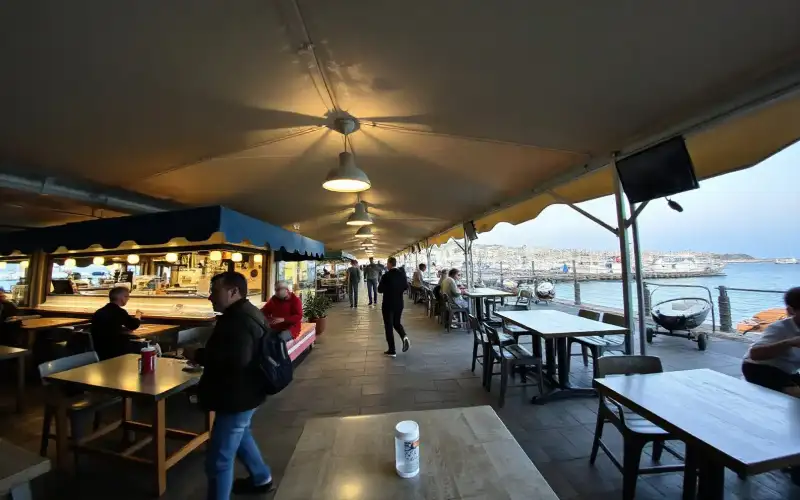
I arrived at Psaropouli on Finikoudes at 7 p.m. on a Tuesday in March 2026, armed with scepticism and a notebook. The waterfront was still bright, the sea glassy, and every table was occupied. A waiter in a crisp white shirt gestured toward the kitchen. "Fresh today," he said, pointing at the display case. I'd heard that line seventeen times before in Cyprus. But when I ordered the grilled octopus—€16 for a substantial portion—and bit into it, I understood why people keep coming back.
The meat was tender without being mushy, charred just enough at the edges, dressed with nothing but lemon and olive oil. No pretence, no foam, no theatrical plating. Just octopus that tasted like it had been pulled from the water that morning. This single dish became my benchmark for the next four tavernas I'd visit across Larnaca. I was here to answer a question that matters to British travellers planning a week on this island: which fish tavernas are worth your money, and which are cashing in on the guidebook effect?
Psaropouli: The Benchmark
Psaropouli sits at the southern end of Finikoudes promenade, away from the main tourist crush but still visible from the beach. The owner, Yiorgos, has run it for twenty-three years. He works the kitchen most evenings, which is the first honest sign. When a restaurant owner is still cooking at dinner service, corners aren't being cut.
I returned three times during my stay. The first visit was octopus. The second, I ordered the grilled sea bream (€18 for a whole fish, roughly 400g). It arrived split down the spine, bones removed with care, flesh white and flaking. The third time, I had the mussels saganaki—fried cheese-wrapped mussels—which shouldn't work but did, the salty brine of the shellfish playing against the melted halloumi.
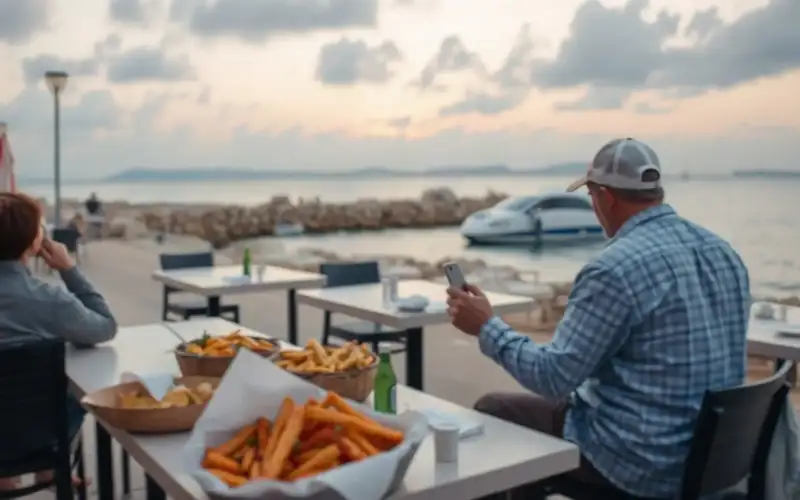
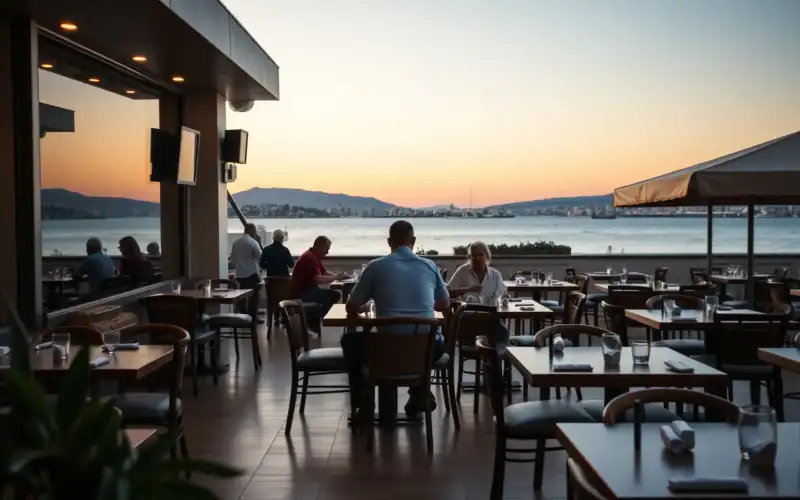
The atmosphere is unpretentious. Families eat alongside couples. The tables are close together, which means you overhear conversations in Greek, German, and English. There's no music except the sound of the sea and the occasional clink of glasses. A full meal for one person—starter, main, house wine, water, and coffee—costs €35–€42. For the quality, that's fair pricing, not the inflated €55–€65 you'll see elsewhere on the same promenade.
The weakness: booking is essential, especially weekends. Walk in after 8 p.m. and you'll be turned away. The kitchen closes at 11 p.m., and Yiorgos doesn't rush service.
Thalassa: The Instagram Trap
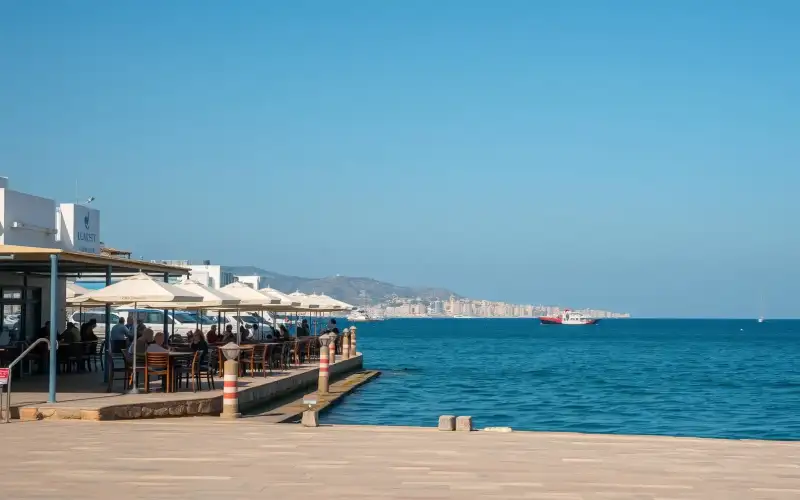
Thalassa occupies a prime corner plot on Finikoudes, directly opposite the beach. The exterior is whitewashed, the signage is elegant, and the tables have sea views. It's the kind of place that photographs well, which is precisely why it appears in every travel blog about Larnaca.
I ate there on a Friday evening at 8:30 p.m. The restaurant was three-quarters full, mostly tourists consulting laminated menus. The wine list was extensive—too extensive, with bottles marked up 300% from retail. I ordered grilled squid (€14) and a Greek salad (€9). The squid was rubbery, suggesting it had been frozen or cooked earlier in the day and reheated. The salad was acceptable but forgettable: tomatoes, cucumber, olives, feta, nothing more.
The service was attentive but mechanical. The waiter appeared every three minutes to ask if everything was fine, a tactic designed to move tables quickly. A main course and a starter cost €23 without drinks. Add wine, and you're at €40 per person for mediocre food. The view is free, but you're paying for it.
What irritated me most was the kitchen's indifference. When I asked if the squid was fresh, the waiter hesitated. That hesitation told me everything. At Psaropouli, Yiorgos would have described exactly where the squid came from and how it was prepared. At Thalassa, the question seemed to cause discomfort.
Machi Thalassas: The Neighbourhood Secret
Machi Thalassas sits three blocks inland from Finikoudes, on a quiet street lined with apartment buildings. There's no sea view. The sign is small. Most tourists never find it. That's the point.
I went on a Wednesday lunchtime, following a recommendation from my hotel receptionist. The restaurant was half-full with locals: construction workers, office staff, pensioners. The menu was handwritten and updated daily. On that day, there were seven fish options, all priced between €9 and €14 per portion. I ordered the grilled red mullet (€11) and a plate of saganaki (€5).
The mullet was exceptional: delicate, sweet, cooked whole with the head on. The saganaki arrived still sizzling, the cheese pulling in golden strands. The owner, Maria, brought water without asking and asked how the food was. Not in the robotic way of Thalassa, but with genuine curiosity. She told me the mullet had come from the harbour that morning, bought directly from a fisherman she's known for fifteen years.
The bill came to €19 for both courses, water, and coffee. The atmosphere was convivial without being touristy. I sat next to a man eating grilled octopus and reading a Greek newspaper. Nobody was taking photographs. Everyone was eating.
The catch: the restaurant closes at 3 p.m. and doesn't open for dinner. It's a lunch spot, designed for locals and those willing to eat when Cypriots eat. If you're expecting a romantic dinner here, you'll be disappointed.
Lemongrass: The Unexpected Pivot
Lemongrass is technically a seafood restaurant, though it leans toward Asian fusion. It's located on Mackenzie Beach, a ten-minute drive north of Finikoudes, in an area that's quieter and more residential than the main promenade.
I was sceptical walking in. Asian fusion in Cyprus often means confused cooking and inflated prices. But the chef, Andreas, trained in Bangkok for two years before returning to Larnaca. The menu respects both traditions: you can order a traditional grilled fish, or you can have it prepared with Thai spices and coconut.
I ordered the sea bass with lemongrass and ginger (€22). It arrived in a light broth, the fish flaking away from the bone, the broth fragrant without being overpowering. A side of jasmine rice and a glass of Cypriot white wine brought the total to €35. The atmosphere was calm, the restaurant was half-full, and the service was unhurried.
The owner, Katerina, explained that they receive deliveries from the same harbour suppliers as the traditional tavernas, but they're willing to take risks with preparation. It's not trying to be something it's not. If you want classical Mediterranean seafood, go to Psaropouli. If you want something more adventurous, Lemongrass offers it without pretence.
The weakness is that it's further from the main tourist zone, so fewer casual diners stumble in. The menu is more expensive than Machi Thalassas, though the plating is more refined. It's a restaurant for people who know what they want, not for those wandering Finikoudes at random.
Taverna Yiorgos: The Honest Workhorse
Taverna Yiorgos (no relation to Psaropouli's owner) sits on the eastern edge of Finikoudes, near the old fishermen's harbour. The building is concrete, unremarkable. The tables are plastic. The menu is laminated and worn. It looks like a place tourists would avoid, which is probably why it's so good.
I went on a Saturday evening, expecting a quiet meal. Instead, I found three generations of a Cypriot family at one table, a couple from Germany at another, and a solo diner reading a book. The waiter, who introduced himself as Nicos, asked if I wanted the fish of the day. I did. It was gilthead bream, €13 per portion.
The bream was grilled simply, served whole with a wedge of lemon and a small dish of tzatziki on the side. The flesh was firm and sweet. The bones were easy to navigate. I ordered a small carafe of house white (€6 for 500ml), which was crisp and dry. The meal came to €22 including water and a small coffee.
What struck me about Taverna Yiorgos was the absence of performance. There was no music, no mood lighting, no attempt to seduce. Just good fish, honest pricing, and a waiter who cared whether the food was hot when it arrived. The restaurant has been running for nineteen years. Nicos has worked there for twelve. When I asked why people keep coming back, he shrugged. "We don't lie," he said. "The fish is fresh, the price is fair, the kitchen is clean. That's all."
The Truth About Freshness
One question kept surfacing: how do you know if fish is actually fresh? I asked this at each restaurant, and the answers revealed a lot.
At Psaropouli and Taverna Yiorgos, the owners or head chefs showed me the display case and explained their sourcing. At Machi Thalassas, Maria told me the names of the fishermen she buys from. At Lemongrass, Katerina described the morning delivery schedule. At Thalassa, when I asked the same question, the waiter deferred to the manager, who gave a generic answer about daily deliveries.
The honest truth: most fish sold in Larnaca restaurants is fresh. The Mediterranean supply is good, and the turnover is fast. The difference between restaurants isn't whether the fish is fresh, but how it's treated. A restaurant that buys whole fish and fillets it to order will always outperform one that pre-portions and stores. A kitchen that grills to order beats one that cooks in batches.
Here's a practical tip: order whole fish, not fillets. Ask how it was caught and when it arrived. If the waiter hesitates, order something else. If the owner appears and explains, you're in the right place.
Price Comparison: What You'll Actually Pay
Here's a breakdown of a typical meal at each restaurant, including starter, main, one drink, water, and coffee:
| Restaurant | Average Cost per Person | Quality Rating | Best For |
|---|---|---|---|
| Psaropouli | €38 | Excellent | Classic Mediterranean, serious diners |
| Thalassa | €45 | Average | Views, Instagram, not food |
| Machi Thalassas | €20 | Excellent | Lunch, local experience, budget |
| Lemongrass | €38 | Very Good | Adventurous palates, quieter setting |
| Taverna Yiorgos | €24 | Excellent | No-nonsense dining, value |
The pattern is clear. The two restaurants with the highest quality ratings—Psaropouli and Taverna Yiorgos—are also among the cheapest. The restaurant with the lowest quality rating—Thalassa—is the most expensive. The lesson: in Larnaca, you're not paying for better food when you choose a prime waterfront location. You're paying for the view and the tourist traffic.
When to Go, What to Order
Timing matters. I visited each restaurant at different times and noticed patterns. Finikoudes tavernas are best visited between 7 p.m. and 8 p.m., before the main tourist wave hits at 9 p.m. By 9:30 p.m., the tables are full of package tourists consulting guidebooks. By 10 p.m., the kitchen is rushing.
Machi Thalassas is lunch-only, so there's no evening option. But if you're in Larnaca for a midweek break, a long lunch there is worth rearranging your schedule for.
Mackenzie Beach restaurants like Lemongrass are better in the off-season (April–May, September–October) when they're less crowded. In summer, they fill with families and can feel chaotic.
As for what to order: stick with the specials. Ask what arrived that morning. Order whole fish, not fillets. Avoid anything that requires complex preparation—the best tavernas excel at simplicity. A grilled fish with lemon is harder to fake than a seafood pasta.
The Verdict
After five meals across Larnaca's fish tavernas, the picture is straightforward. There are restaurants that prioritise quality and fairness, and restaurants that prioritise location and margins. The good news: the quality restaurants are easy to find if you know what to look for.
Psaropouli is the benchmark. It's where I'd take someone I wanted to impress, or where I'd go if I wanted the best traditional Mediterranean seafood. Taverna Yiorgos is the everyday choice—reliable, fair, and honest. Machi Thalassas is the discovery, the place that reminds you why local recommendations matter more than guidebooks. Lemongrass is for those willing to take a small risk in exchange for something different. And Thalassa is the lesson: a beautiful location and an elegant sign don't guarantee a good meal.
Larnaca has excellent fish. The question isn't whether you'll eat well—you will. The question is whether you'll eat well for a fair price, cooked by someone who cares. The five restaurants I visited answered that question clearly. Now it's up to you to choose.
Comments (0 comments)
No comments yet — be the first!