
The Morning I Realised Larnaca's Beaches Were Made for British Families
It was July 2019 when I first noticed the pattern. I'd just finished a morning dive off the Zenobia wreck—my 47th that year—and was heading back to shore when I spotted them: dozens of British families, kids aged 4 to 14, splashing about in the shallows at Finikoudes Beach while parents lounged under sunbeds reading paperbacks. One father caught my eye and grinned. "Best decision we made," he shouted across the water, "coming to Larnaca instead of Paphos. The kids can actually wade out here without dropping off a cliff." That conversation stuck with me. Over the past seven years, I've watched Larnaca's beaches evolve into a genuine family destination—not by accident, but because the geography and infrastructure actually work for children.
Summer 2026 is shaping up to be the busiest season yet for family tourism in Larnaca. Flight prices from the UK have stabilised around £180–220 return per person on budget carriers, and the airport is now handling direct flights from Manchester, Birmingham, and Edinburgh. If you're bringing kids aged 5 to 16, the question isn't whether to come—it's which beach to choose. That decision matters more than you'd think, because not all Larnaca beaches are created equal for families.
Why Larnaca's Beaches Beat the Paphos and Ayia Napa Circuit
Let me be direct: Larnaca's beaches are fundamentally different from what you'll find 40 kilometres west in Paphos or 50 kilometres east in Ayia Napa. The seabed gradient is gentler. The water stays shallower for longer. The crowds are smaller. And the infrastructure—sunbeds, cafes, toilets, parking—is mature and reliable without feeling overcrowded in July and August.
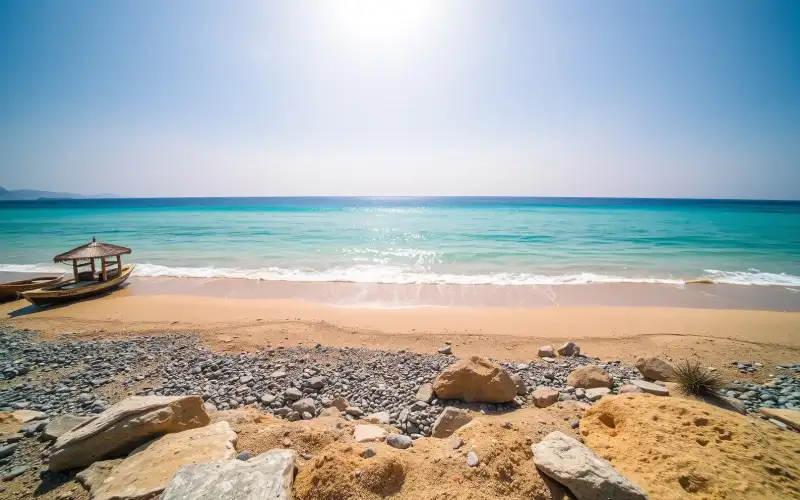
The reason lies in geography. Larnaca Bay curves in a way that creates a natural, shallow gradient. A child can wade out 30 metres and still be in waist-deep water. Compare that to Nissi Beach in Ayia Napa, where the drop-off happens much faster, or some of the rockier stretches near Paphos. I've trained hundreds of young snorkellers in these waters, and I can tell you: the shallowness here is a feature, not a limitation.
Practically speaking, Larnaca also benefits from being the main airport hub. You land, collect your hire car, and you're at Finikoudes in 15 minutes. No two-hour coach journey. That matters when you've got tired kids and limited patience. The town itself has been investing in family amenities since 2023—more playgrounds, better beach facilities, and cafes that actually cater to families rather than just nightlife crowds.
The Gradient Advantage
I mention the gradient because it's the single biggest safety factor for families with young children. At Finikoudes, you can stand 40 metres out and still touch bottom with your toes. This means kids aged 4–8 can play independently—within sight—without you needing to hover constantly. Parents can actually relax. That's rare on Mediterranean beaches, and it's why so many British families return to Larnaca year after year.
Timing and Crowds
July is peak season. August is slightly quieter because many British families take their holidays in July and early August. If you have flexibility, mid-August to late August (after the 20th) sees noticeably fewer people. Sunbed prices drop slightly, and the beaches are still warm and swimmable. Early July can be chaotic—expect 80% occupancy at the main beaches by 10 a.m.
Finikoudes Beach: The Main Event
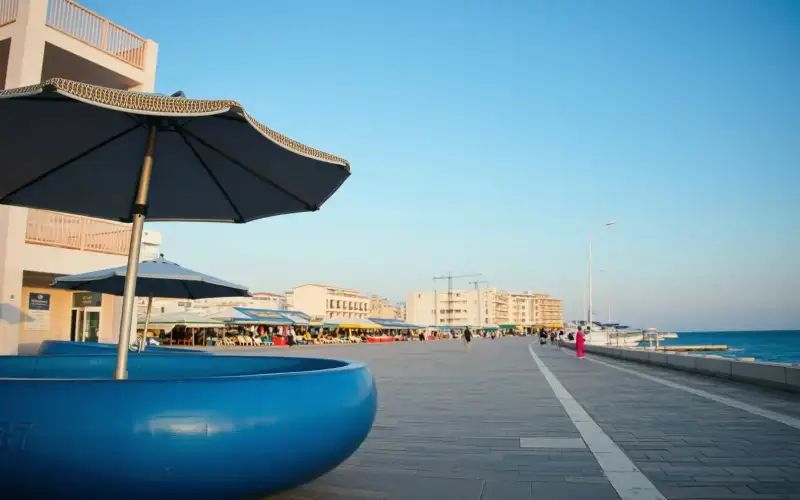
Finikoudes is the flagship family beach, and for good reason. It's a 500-metre stretch of golden sand backed by a tree-lined promenade, with organised sunbeds, beach bars, and enough infrastructure to handle thousands of visitors daily. If you're arriving at Larnaca Airport and want immediate, no-fuss beach access, this is it.
Facilities and Sunbed Hire
Sunbed hire costs €6–8 per bed, per day (2026 prices). Most operators will rent you a bed and umbrella combo for €12–14. The season runs from May through October, but July and August are the peak months when beds are set up from 7 a.m. onwards. You can usually find a bed even in high season if you arrive by 9 a.m., though prime spots near the water are gone by 10 a.m.
The beach has four main lifeguard stations, staffed daily from 9 a.m. to 6 p.m. in summer. Toilets are plentiful—I count at least eight permanent facilities, plus portable units during peak season. Showers are available, though they're basic (cold water, no privacy). Bring flip-flops; the sand gets hot by midday.
Parking is the only real challenge. There's a pay car park directly behind the beach, but it fills by 10 a.m. in July and August. Cost is €1.50 per hour, or €12 for a full day. If you're arriving after 11 a.m., use the secondary lot 200 metres inland—it's cheaper (€1 per hour) and usually has space. Alternatively, street parking is free along Athenon Avenue, a five-minute walk north of the beach.
Food and Cafes
The promenade has roughly 15 beach bars and cafes. Most serve standard Mediterranean fare—souvlaki, Greek salads, fresh fish. Prices are tourist-adjusted: a souvlaki costs €6–8, a Greek salad €7–9, a cold beer €3–4. The cafes are licensed to operate on the beach itself, so you can order food and eat while sitting on your sunbed. This is a lifesaver with young children.
My recommendation: try the smaller, family-run places slightly away from the main drag rather than the big branded bars near the lifeguard station. You'll pay the same price but get better portions and faster service. One specific spot—Psaropoula (a small family taverna about 100 metres east of the main lifeguard station)—serves fresh fish daily and has a kids' menu that actually includes vegetables, not just chips.
There's also a small supermarket (Carrefour Express) 300 metres inland. Grab water, sun cream, and snacks there rather than buying from beach vendors, which are 40% more expensive.
Mackenzie Beach: The Quieter Alternative
If Finikoudes feels too crowded—and in July it often does—Mackenzie is your answer. It's 2 kilometres south, accessed via the coastal road or a 25-minute walk along the promenade. The beach is narrower than Finikoudes but equally sandy, and it attracts 30–40% fewer visitors because it lacks the main infrastructure.
Here's what you need to know: Mackenzie has sunbeds (€6–7 per day), but only two beach bars instead of fifteen. Parking is easier—there's a small lot directly behind the beach with spaces usually available until midday. The water is equally shallow and equally safe for children.
The trade-off is convenience. If you forget something, you can't just pop to a cafe 20 metres away. You need to plan ahead. But if you're the type of family that packs a cool box with sandwiches and drinks, Mackenzie is superior. It's calmer, the water is the same temperature, and you'll actually hear yourself think.
One practical note: Mackenzie is popular with windsurfers in certain conditions. Check the flags before you go—if there's a strong northerly wind, you might see equipment and instructors. It's safe, but the beach feels busier and the water can be choppier. Finikoudes, being more sheltered, is better on windy days.
When to Visit Mackenzie
Early mornings (7–9 a.m.) are golden. The beach is virtually empty, the water is glassy, and you can find sunbeds in prime spots. If you're staying in Larnaca town, this is worth the early start. By 11 a.m., it fills up with a mix of locals and tourists, but it never reaches Finikoudes' density.
Hidden Gems: Smaller Family Beaches Worth Exploring
Beyond the two main beaches, Larnaca has several smaller sandy stretches that British families often miss. These aren't secret—locals and repeat visitors know them—but they're not in the guidebooks, which means they're quieter.
Larnaca Seafront Beach (Town Centre)
If you're staying in central Larnaca and don't want to drive, there's a small, managed beach right in town, adjacent to the castle. It's only about 150 metres long, but it has sunbeds, a lifeguard, and a couple of beach bars. The water is shallow and safe. It's perfect for families with very young children (aged 2–5) who need short beach sessions. Parking is in the town centre car parks (€1 per hour), a two-minute walk away.
Dekelia Beach
This is a 400-metre stretch about 3 kilometres north of Finikoudes, accessed via a small coastal road. It's less developed than the main beaches—no sunbeds, minimal facilities—but it has a natural, quieter vibe. There's a taverna at one end and a small car park. It suits families who want a beach experience without the organised infrastructure. Water is equally shallow. Bring your own umbrella and sun cream.
Pervolia Beach
Further south, about 8 kilometres from central Larnaca, Pervolia is a longer stretch (600+ metres) that's popular with locals but rarely crowded with tourists. It has sunbeds, a couple of beach bars, and excellent parking. The water is shallow and protected. If you're staying in a villa or apartment south of Larnaca, this is your local beach. Driving from Finikoudes takes 15 minutes.
Practical Essentials for Summer 2026
What to Pack and What to Buy Locally
Sun cream is cheaper in UK supermarkets than in Cyprus. Bring at least SPF 50 for children—the Mediterranean sun is intense, and even with careful application, kids burn quickly. Bring enough for your entire holiday; tourist-shop cream costs €12–15 for a small bottle.
Beach towels are heavy to pack. Buy cheap ones locally (€3–5 at Carrefour or local shops) and leave them behind. Flip-flops are essential—sand gets extremely hot by midday, and kids will complain if barefoot.
Water shoes are worth considering if your child is sensitive to sharp shells or pebbles. Most Larnaca beaches are sandy, but occasional shells appear. A pair costs €8–12 locally.
Bring a waterproof phone case (£5–10 from UK shops before you go). Snapping photos of the kids in the water is part of the holiday, and you don't want to lose your phone to a wave.
Timing Your Beach Days
The sun is strongest between 11 a.m. and 3 p.m. Plan your beach time around this: early morning (7–10 a.m.) or late afternoon (4–7 p.m.) are ideal. The water temperature in July and August is 27–28°C, so kids will stay in for hours if allowed. Set time limits before you arrive.
Lunch break between 1 p.m. and 3 p.m. is practical. Kids get tired, you get tired, and the heat is punishing. Return to your hotel, eat, rest, and come back for a late-afternoon session. Many families do a 7–11 a.m. beach session, then 5–8 p.m., skipping the hottest hours entirely.
Safety and Lifeguards
Finikoudes and Mackenzie both have lifeguards during summer months. Check the flag system: green means safe, yellow means caution, red means closed. In my seven years of diving here, I've never seen a red flag in July or August—the sea is genuinely calm during summer months. Winter is different, but you're not bringing kids in winter.
The main hazard isn't waves or currents—it's sun exposure. Kids dehydrate quickly and often don't complain until they're already affected. Bring more water than you think you'll need. A 2-litre bottle per child per day is reasonable.
Getting to Larnaca Beaches: Practical Transport
Most British families hire a car at the airport. It's the simplest option for families with young children and luggage. Rental costs €25–40 per day for a small automatic (2026 prices). Parking at beaches costs €1–1.50 per hour, so budget €10–15 per beach day for parking alone.
If you're not driving, local buses run to Finikoudes every 20–30 minutes from the town centre. A single ticket costs €1.50. Journey time is 10–15 minutes depending on stops. Buses are air-conditioned and reliable, but they're crowded in July and August, and carrying beach gear plus children can be awkward.
Taxis are available but expensive for daily beach trips—expect €15–20 from the town centre to Finikoudes. Use them occasionally, not daily.
The Bigger Picture: Why Families Keep Coming Back
I've been diving and writing about Larnaca for over a decade. What strikes me most is how the beaches—particularly Finikoudes and Mackenzie—have become genuinely family-oriented without losing their character. They're not theme parks. They're working beaches where locals and visitors coexist peacefully.
The shallow water means your 6-year-old can play independently. The sunbeds mean you can actually sit down and read. The cafes mean you don't have to pack a full picnic. The parking, while occasionally frustrating, is manageable if you know the tricks. And the water—warm, clear, safe—is simply ideal for children.
British families return to Larnaca year after year because the basics work. It's not complicated. It's not overcomplicated marketing. It's simply a place where kids have fun, parents relax, and nobody goes home regretting the choice.
If you're booking for summer 2026, book early—July is filling up. Arrive at beaches by 9 a.m. if you want prime sunbed spots. Bring more water than you think you'll need. Skip the hottest hours. And give yourself permission to do nothing but sit on a sunbed and watch your kids play in shallow water. That's what Larnaca does best.
Comments (0 comments)
No comments yet — be the first!