
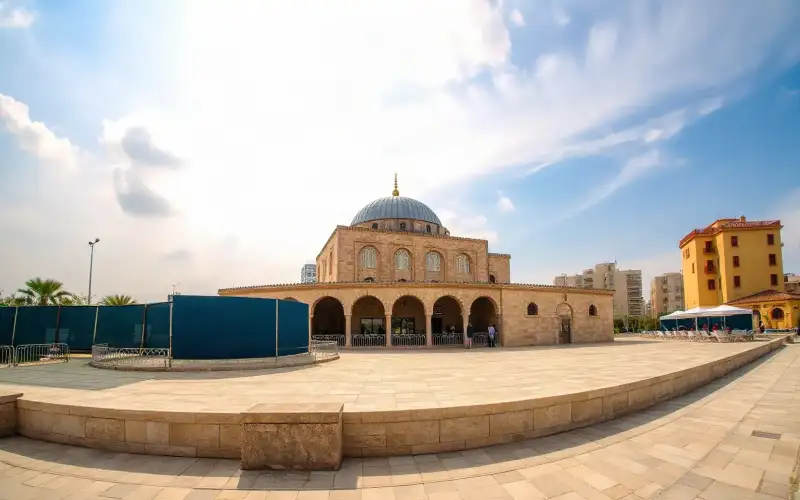
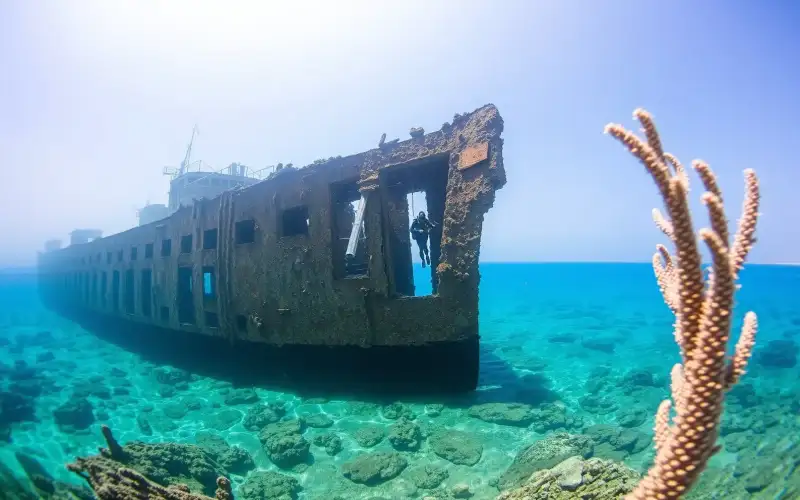
The first time I stood at Hala Sultan Tekke, I wasn't expecting to feel anything particular. I'd dived the Zenobia wreck more than a hundred times, explored every reef system around Larnaca, but a mosque on the edge of a salt lake? It seemed like a box to tick on a tourist itinerary. Then the call to prayer echoed across the water at sunset, and something shifted. The pink light caught the minaret's tiles, the Salt Lake turned copper-coloured, and suddenly I understood why this place has drawn pilgrims for nearly 1,400 years.
Hala Sultan Tekke isn't just another heritage site. It's the fourth holiest shrine in Islam, a place where spiritual devotion meets architectural brilliance, where Ottoman history crystallises in stone and tile. For British travellers visiting Larnaca—whether you're staying at a mid-range hotel near the airport or planning a weekend break—this is one of those sites that rewards genuine engagement over rushed photography.
The History: Why This Shrine Matters
Hala Sultan Tekke commemorates Umm Haram, the Prophet Muhammad's foster mother (or aunt, depending on historical interpretation). She arrived in Cyprus around 649 CE during the Arab-Byzantine wars, and according to Islamic tradition, she died here after a fall from her mule. Her tomb became a place of pilgrimage almost immediately, and by the 18th century, the Ottoman Empire had transformed the site into a major religious complex.
The current main mosque was completed in 1760, though the complex expanded and contracted through centuries of Ottoman rule, British colonial administration, and modern Cyprus history. What makes this significant isn't just the religious importance—it's that Hala Sultan Tekke represents a rare point of continuity in a region fractured by conflict. Even during the 1974 partition, the site remained accessible to Muslim pilgrims from the north, a small pocket of religious freedom in a divided island.
Today, around 40,000 pilgrims visit annually, with the largest numbers during Ramadan and Eid celebrations. The shrine attracts visitors from across the Islamic world—Turkish, Arab, Pakistani, Malaysian pilgrims—and increasingly, culturally curious Western travellers who approach the site with respect and genuine interest.
Architecture: Reading the Ottoman Design
The main mosque building reveals layers of Ottoman design principles that developed over 300 years. The dome—that's your first visual anchor—is octagonal, a classic Ottoman geometry that distributes weight elegantly while creating that distinctive silhouette you'll recognise from photographs. Inside, the dome sits on eight pillars, and the light floods through windows positioned to create that ethereal, contemplative atmosphere Ottoman architects perfected.
The minaret, visible from the Salt Lake shore, rises 30 metres and features the characteristic Ottoman spiral stairs inside. You won't be climbing it (non-Muslims aren't permitted), but from outside, notice the tilework on the upper section—deep blues and turquoises with geometric patterns typical of 18th-century Ottoman craftsmanship. These tiles were likely produced in Iznik, Turkey's famous ceramic centre, then transported to Cyprus.
The courtyard (called the sahn) surrounds the main mosque and contains several auxiliary buildings: the original 14th-century tomb of Umm Haram, a smaller prayer house, ablution fountains, and a modern guest house. Ottoman courtyards follow strict spatial logic—the open space allows for overflow prayer during major festivals, while the surrounding colonnade provides shelter and defines sacred space. The floor is a mix of stone and marble, worn smooth by centuries of footsteps.
One detail that often goes unnoticed: the ablution fountains (sabils). These aren't decorative—they're functional elements of Islamic worship. The fountain's design allows water to flow in a specific way for ritual purification. If you look carefully, you'll see the channels and basins arranged precisely to facilitate the washing of hands, face, and feet before prayer. This is Ottoman practicality meeting Islamic requirement.
The Salt Lake Connection
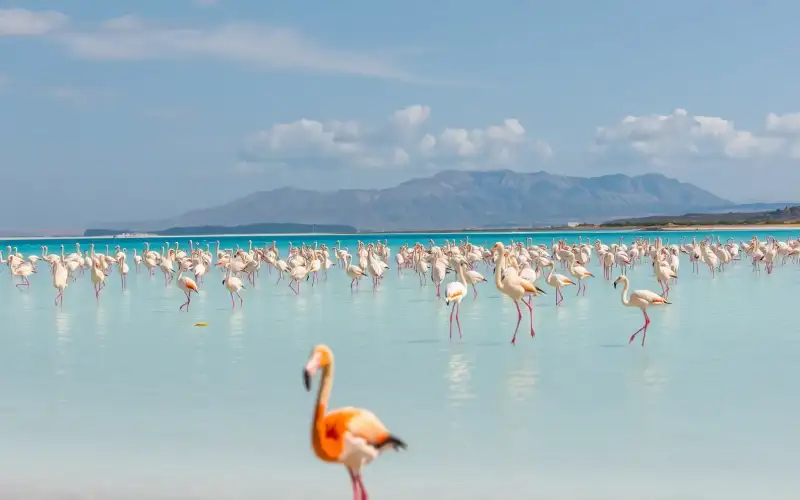
Hala Sultan Tekke sits on the edge of Larnaca Salt Lake, one of Cyprus's most important wetland ecosystems. The lake itself is fascinating—during summer, it dries almost completely, leaving crystalline salt deposits that were historically harvested commercially. In winter, it fills with water and becomes a crucial stopover for migratory birds, particularly flamingos. You'll see them from November through March, sometimes hundreds at once, their pink plumage creating an almost surreal contrast against the blue water.
The juxtaposition of sacred shrine and natural landscape creates a unique spiritual geography. The Ottoman builders deliberately positioned Hala Sultan Tekke where water meets land, where the vertical architecture of the mosque meets the horizontal expanse of the lake. This wasn't accidental—water holds spiritual significance in Islamic tradition, and the site's location amplifies that symbolism.
Visiting Etiquette: What You Actually Need to Know
This is where many Western visitors falter, either by being overly cautious or insufficiently respectful. The reality is practical and straightforward if you understand the reasoning.
Dress code: Women should wear clothing that covers shoulders, knees, and chest. A loose-fitting dress, trousers, or a skirt with a shirt works perfectly. Men should wear trousers and a shirt (no shorts, no vests). You don't need a headscarf as a non-Muslim woman, though some visitors choose to wear one as a gesture of respect—this is entirely optional. If you're uncertain, bring a lightweight scarf; the staff are used to visitors and understanding about genuine attempts to respect the space.
Shoe removal: You'll remove your shoes before entering the main prayer hall. There's a designated shoe rack. Wear socks or be prepared for cold marble floors, especially in winter.
Photography: This varies. The courtyard and exterior are generally fine to photograph. Inside the main mosque, photography is typically not permitted during prayer times, and some areas may be restricted. Look for signage or ask the attendants—they're usually welcoming if you approach respectfully. Never photograph people praying, regardless of permission.
Prayer times: If you visit during prayer times (five daily prayers), you might encounter groups of worshippers. Simply move aside and allow them space. You can observe from a distance, but don't walk through active prayer areas.
Ramadan considerations: During Ramadan, visiting hours may shift, and the atmosphere changes significantly. If you visit during this month, be aware that many Muslims will be fasting from dawn to sunset. The site becomes even more spiritually charged in the evenings after breaking the fast. This is actually an excellent time to visit if you want to experience the shrine's true spiritual purpose, but go with heightened sensitivity.
Best Times to Visit
Timing transforms your experience here. Early morning—around 7 to 8 AM—offers several advantages. The light is soft and golden, the courtyard is quieter, and you'll avoid the afternoon heat. The site opens at 7:30 AM generally, though hours can shift seasonally.
Late afternoon, around 4 to 5 PM, is equally magical. The sun angles toward the western horizon, catching the dome and minaret in warm light. The Salt Lake reflects this golden hour brilliance, and if you time it right, you'll see the call to prayer happening as light transforms the landscape.
Avoid midday (11 AM to 3 PM) in summer. The heat is intense, there's little shade in the courtyard, and the light is harsh for photography. Winter visits (December through February) are ideal for comfort and light quality, though bring a light jacket for early mornings.
Ramadan 2026 runs from late February to late March, making it an interesting visiting period if you're interested in the site's spiritual dimension. Eid al-Fitr and Eid al-Adha draw large pilgrim crowds, so if you prefer quieter visits, avoid these dates.
Photography: Capturing the Sacred
The architectural photography here is genuinely rewarding. The dome's geometry creates stunning compositions, particularly when photographed from the courtyard's corners. The minaret framed against sky works best in late afternoon. The tilework on the upper minaret requires close focus—if you have a decent zoom or macro capability, those geometric patterns are worth capturing.
The Salt Lake backdrop is equally compelling. Position yourself near the mosque's eastern or western edge at sunset or sunrise, and you can capture both the architecture and the landscape in a single frame. The flamingos (if present in winter) add an unexpected element of colour.
One practical tip: bring a polarising filter if you have one. The water's reflection can be overwhelming; a polariser cuts glare and deepens the sky's colour. The stone and tilework also benefit from reduced reflection.
Common Mistakes Visitors Make
I've watched plenty of visitors navigate this site, and patterns emerge. The most common error is treating it like a museum—rushing through, ticking boxes, moving on. Hala Sultan Tekke rewards slowness. Spend at least 90 minutes here, ideally two hours. Sit in the courtyard for 20 minutes. Let the atmosphere settle into you.
Second mistake: visiting only for the shrine, missing the Salt Lake entirely. The two sites are inseparable spiritually and geographically. The walk around the lake's edge (about 4 kilometres, mostly flat) takes 45 minutes to an hour and completely changes how you perceive the mosque's position in the landscape.
Third: ignoring the smaller buildings. The original 14th-century tomb chamber is modest but profound. The auxiliary prayer house is architecturally interesting. These spaces reveal how the complex functioned historically.
Fourth: poor timing regarding prayer times. If you arrive during Maghrib prayer (sunset) or Isha prayer (evening), you'll find the main mosque occupied. This isn't a problem—simply visit the courtyard or return in 20 minutes. But knowing prayer times helps you plan photography and exploration.
The Half-Day Itinerary: Combining Hala Sultan Tekke with Salt Lake
Here's how to structure a perfect half-day visit (4 to 5 hours total):
Start at 7:30 AM: Arrive at Hala Sultan Tekke as it opens. The courtyard is quiet, light is perfect, and you'll have space to explore without crowds. Spend 60 to 90 minutes here—photograph the exterior, remove shoes and visit the main prayer hall (if open to visitors), explore the tomb chamber, sit quietly in the courtyard.
8:30 to 9:30 AM: Walk the Salt Lake perimeter. Start from the mosque and head clockwise toward the northern shore. The path is clear and well-maintained. In winter, you'll likely spot flamingos. The walk offers constantly changing perspectives on the mosque architecture.
9:30 to 10 AM: Return to the mosque area for coffee or water (there's a small café near the entrance). Reflect on what you've experienced.
This timing avoids midday heat, captures excellent light, and respects prayer schedules. If you're staying at a hotel near Larnaca Airport (10 to 15 kilometres away), you can easily fit this into a morning before afternoon activities or evening flights.
Practical Details You'll Need
The site is located approximately 6 kilometres southwest of Larnaca town centre, on the Salt Lake's southern shore. If you're driving, the road is well-signposted from the main Larnaca-Limassol highway. Parking is free and plentiful. Public transport options are limited—a taxi from Larnaca town costs around €12 to €15 and takes 15 minutes.
Admission is free. There's no entry fee, though donations are appreciated and support site maintenance. The café serves basic refreshments—coffee, water, soft drinks, simple snacks. Prices are reasonable (€2 to €4 for drinks).
Facilities include toilets (near the entrance), ablution areas (for Muslim visitors), and shaded seating in the courtyard. There's no luggage storage, so travel light. Mobile phone reception is reliable throughout the site.
The site is open year-round, generally from 7:30 AM to sunset, though hours can shift seasonally. It's advisable to check locally or phone ahead (the Larnaca municipality can provide current hours) if you're visiting during Ramadan or major Islamic holidays.
Why This Matters Beyond Tourism
Hala Sultan Tekke represents something increasingly rare in the modern Mediterranean—a place where genuine spiritual practice coexists with respectful tourism. It's not a museum performance of faith; it's an active shrine where pilgrims come to pray and reflect. Your visit as a tourist should acknowledge this reality.
The site also embodies Cyprus's complex history. It survived Ottoman rule, British colonialism, and the 1974 partition. That it remains accessible, maintained, and vibrant speaks to something deeper about human resilience and the power of shared sacred space.
For British travellers accustomed to visiting historic sites as passive observers, Hala Sultan Tekke demands something different—genuine engagement, cultural humility, and a willingness to step outside your comfort zone. That's precisely why it's worth your time.
Comments (0 comments)
No comments yet — be the first!