
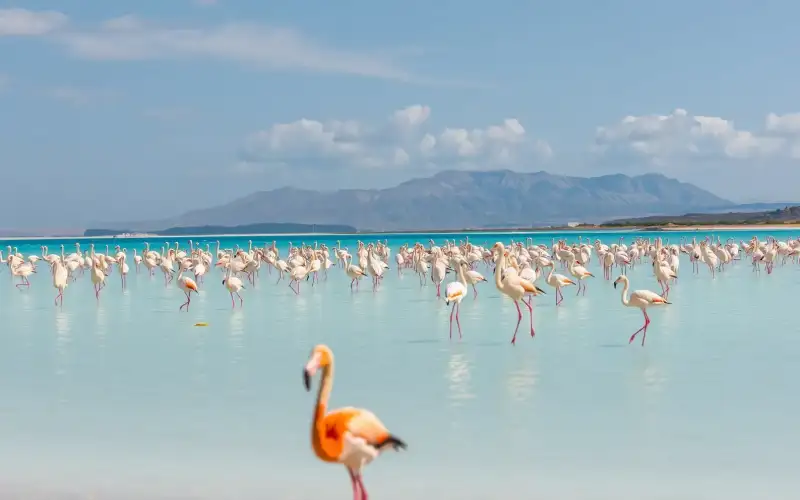
I watched a coach full of British tourists pull up to the salt lake's eastern viewing platform at half-past three on a February afternoon in 2019, cameras ready, and within five minutes they'd turned around and left. No flamingos. They'd checked the wrong season, trusted a guidebook from 2015, and missed the entire point. That's when I decided someone needed to write a proper guide to this place—one that actually tells you when the birds show up, where to stand, and what to do while you're waiting.
The Larnaca Salt Lake sits just 8 kilometres south of Larnaca town centre, straddling the Larnaca-Kiti road. It's a working salt extraction facility and a Ramsar wetland of international importance, which means it's both an industrial operation and a nature reserve. That contradiction is what makes it interesting. You'll see salt mountains stacked like giant sugar cubes, brine pools in shades of orange and pink, and if you time it right, hundreds of greater flamingos wading through the shallows. This guide walks you through every practical detail you need.
What You'll Learn in This Guide
By the end of this article, you'll understand the complete rhythm of the salt lake ecosystem across all seasons, know exactly when and where flamingos congregate, and have a working knowledge of the best walking routes and photography positions. You'll also learn how to visit the Hala Sultan Tekke mosque on the lake's western edge—a 7th-century Islamic shrine that's one of Cyprus's most significant religious sites—without getting in the way of active salt production.
This isn't a casual stroll guide. The salt lake is 4.4 kilometres around its perimeter, the terrain is flat but exposed, and you need to understand the seasonal patterns to avoid disappointment. I've spent years managing airport operations in extreme conditions; I approach this lake the same way—with logistics and timing.
Prerequisites: What You Need Before You Go
Start with these basics. You'll need comfortable walking shoes with good grip—the salt crust around the lake edges is slippery when wet, and the brine pools attract algae that can be slick underfoot. Bring more water than you think you'll need. The lake sits in open terrain with no shade, and the salt-laden air dehydrates you faster than you'd expect. In summer, the glare off the white salt pyramids is intense; sunglasses and a hat are essential, not optional.
Check the weather forecast before you leave your hotel. Wind speeds matter here. When the Meltemia winds blow hard from the north in July and August, the salt dust becomes oppressive. A light breeze is fine; gusts above 25 kilometres per hour will work against you, especially if you're photographing. The best conditions are calm mornings.
Bring binoculars if you have them. The flamingos will be visible to the naked eye, but binoculars let you see plumage detail and behaviour that makes the experience richer. A camera with a decent zoom lens (or a smartphone with zoom capability) is useful for photography, though you don't need professional equipment.
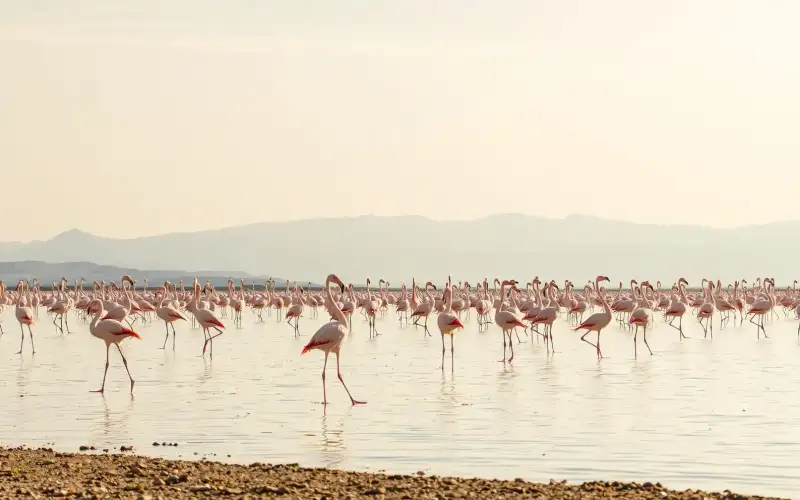
Timing your visit is the single most important variable. The greater flamingos (Phoenicopterus roseus) don't live at the salt lake year-round. They arrive in November and stay through March, with peak numbers in January and February. The lake is essentially empty of flamingos from April through October. If you're visiting in June, you won't see them. This is the mistake most visitors make.
The salt lake operates as an active production facility. Entry is free, but you're walking around an industrial site. Respect the perimeter fences and keep to designated paths. The lake's eastern and southern shores have public access; the western shore (where Hala Sultan Tekke sits) requires a small entrance fee to visit the mosque itself.
Parking is available at three main points: the eastern viewing platform (the largest car park, with facilities), the southern edge near Kiti village, and the western approach to Hala Sultan Tekke. All three are free. The eastern platform is most convenient for first-time visitors.
Check current conditions before arrival. The Larnaca municipality website occasionally closes sections for maintenance. In 2026, the eastern viewing platform remains the primary access point, though this can change. A quick phone call to the Larnaca tourist information office (on the seafront in town) takes two minutes and saves frustration.
Bring a small notebook if you're interested in birdwatching. The lake hosts over 200 bird species across the year. You might see avocets, spoonbills, herons, and egrets alongside the flamingos. A basic field guide to Mediterranean birds is helpful, though not essential.
Respect local customs if you're visiting Hala Sultan Tekke. It's an active mosque and a pilgrimage site for Muslims. Dress modestly—covered shoulders and knees. Remove your shoes before entering the shrine itself. Photography inside the mosque is restricted; ask the caretaker before you shoot.
Step 1: Choose Your Season and Plan Your Timing
The flamingo season runs November through March. Within that window, timing matters enormously. December and early January see good numbers, but the birds are still settling in and can be skittish. By mid-January, they've established feeding patterns and are less easily disturbed. February is peak season—the birds are accustomed to visitors, the weather is mild, and the light is excellent for photography.
Within each day, visit early. The flamingos feed most actively in the first three hours after dawn. They're more visible, less scattered, and the light is softer for photography. Arrive by 8:30 a.m. if possible. The eastern viewing platform is busiest between 10 a.m. and noon; if you prefer solitude, go earlier.
Check the lunar calendar if you're interested in brine colour. The salt lake's water changes colour based on algae concentration and light angle, both influenced by season and time of day. The most vivid orange and pink hues occur in late afternoon when the sun is low, but that's also when flamingo activity drops. Morning visits offer better bird behaviour and acceptable colour; it's a reasonable compromise.
Avoid weekends in peak season if you want a quieter experience. Saturday and Sunday mornings in January and February bring coach groups and family visits. Wednesday or Thursday mornings are noticeably calmer. If you're based in Larnaca for more than a couple of days, a weekday visit is worth planning.
Summer visits (June through September) make sense only if you're interested in the salt production process itself or the broader birdlife. The lake will have herons, egrets, and waders, but no flamingos. The heat is intense, and the industrial activity is more visible. Spring (April and May) is pleasant weather-wise, but the flamingos have departed and the lake feels emptier.
Step 2: Arrive at the Eastern Viewing Platform and Assess Conditions
The eastern car park is signposted from the Larnaca-Kiti road. You'll see the salt pyramids from the main road; turn toward them. The car park has proper facilities: toilets, a small café (basic but functional), and a covered viewing area. Parking is straightforward and free.
When you arrive, walk to the viewing platform's railing and scan the lake with your naked eye first. The flamingos congregate in the shallow brine pools; they're usually visible as pink shapes against the darker water. If you see nothing immediately, don't leave. Look for movement. The birds often stand still for extended periods, making them blend with the landscape.
Assess the wind direction. If the wind is blowing from the east (pushing toward the flamingos), they'll likely drift westward, away from the viewing platform. If the wind comes from the west or north, the birds tend to hold position or move toward you. This matters for photography and visibility. A calm morning is ideal, but light winds are manageable.
Note the water level and colour. In wet winters, the brine pools are fuller and the flamingos spread across a wider area, making them less concentrated. In drier periods, they bunch up in smaller pools, which makes viewing easier. The colour shifts from blue-grey in winter to orange-pink in summer (when there's no water anyway). The colour is a visual cue to algae concentration and salinity, which affects the flamingos' food availability.
Once you've scanned the lake, decide your next move. If flamingos are clearly visible and active, grab your binoculars or camera and settle in for observation. If they're distant or sparse, consider walking the eastern shore toward the south, which sometimes offers better angles and closer views.
Step 3: Walk the Eastern and Southern Shores
The eastern shore path is roughly 1.5 kilometres from the viewing platform to the southern corner of the lake. It's a flat, easy walk on packed earth and salt-crusted ground. The path is well-defined, and you'll see other visitors using it. The terrain is exposed; there's no shade, so keep your hat on and drink water regularly.
As you walk south, you'll pass several informal viewing spots. The flamingos often congregate in the pools visible from this path. Stop frequently and scan with binoculars. You might see other waders—avocets with their curved bills, spoonbills, grey herons standing motionless in the shallows. The diversity is remarkable if you take time to observe.
The southern corner of the lake (near Kiti village) offers a different perspective. The viewing angle changes, and sometimes birds that were distant from the eastern platform become clearer from here. This is also quieter; fewer visitors venture this far. The walk takes about 40 minutes at a leisurely pace, including stops for observation and photography.
Pay attention to the ground as you walk. The salt crust is uneven in places, and you might encounter small pools of brine. These pools are harmless but can ruin shoes if you're not careful. The salt water stains fabric and corrodes leather. Step over them rather than through them.
If you're visiting in February and the flamingos are present, you'll likely see them engaged in courtship displays. This involves synchronized head movements, wing displays, and group movements. It's remarkable to watch and makes for excellent photography. The displays are most frequent in late morning, so timing your walk for 9:00 to 11:00 a.m. increases your chances of witnessing this behaviour.
Step 4: Visit Hala Sultan Tekke on the Western Shore
The western shore is home to Hala Sultan Tekke, a mosque built in the 7th century and one of the four holiest sites in Islam. The approach is from the western side of the lake, near the village of Tersefanou. There's a separate car park and entrance (small fee, roughly €3 per person in 2026). The mosque sits on a small promontory overlooking the lake, and the setting is serene.
The walk from the car park to the mosque takes about 10 minutes. The path is shaded in places by cypress and palm trees, a stark contrast to the exposed salt lake. The mosque itself is a small, whitewashed structure with a minaret. The interior is cool and quiet. Photography is allowed outside; inside, ask permission first.
The site is active and peaceful. You'll likely encounter local visitors, especially on Friday afternoons when prayers occur. Respect the religious significance. Dress modestly, remove your shoes before entering the shrine, and keep voices low. The caretaker is usually present and can provide brief historical context.
From Hala Sultan Tekke, you can see the full western edge of the salt lake. The viewing angle is different from the eastern platform, and sometimes this offers better visibility of flamingos on the western pools. The combination of the mosque visit and lake viewing makes this a worthwhile addition to your itinerary, adding perhaps 90 minutes to your overall time at the site.
Step 5: Photograph the Flamingos and Lake Landscape
Photography here is about patience and positioning. The flamingos are living subjects; they move unpredictably. Position yourself downwind of them if possible—they're less likely to be startled by your approach. Move slowly and avoid sudden movements. If a large flock takes flight, they'll circle and resettle within minutes, so don't panic.
The light is crucial. Early morning light (7:00 to 9:00 a.m.) is soft and flattering. It brings out the pink of the flamingos' plumage and softens the harsh white of the salt pyramids. Midday light is harsh and creates blown-out highlights. Late afternoon light (4:00 to 6:00 p.m.) is warm and golden but the flamingos are less active.
For smartphone photography, use the zoom feature but don't over-crop. The context—the flamingos against the salt lake and sky—is part of what makes the image compelling. A distant flamingo in a vast landscape can be more evocative than a close-up.
If you have a camera with a telephoto lens, bring it. A 200mm to 400mm focal length is ideal for flamingo photography. You can capture detail without disturbing the birds. Focus on the eyes and head; that's where the viewer's attention naturally goes.
The brine pools themselves are photogenic. The colour shifts—from deep blue to orange to pink—depending on algae concentration and light angle. Capture the contrast between the flamingos' pink plumage and the coloured water. The salt pyramids in the background add scale and context.
Avoid photographing during midday if possible. The harsh light and intense glare make both the birds and the landscape look washed out. If you're visiting in summer (when there are no flamingos), late afternoon is the best time for landscape photography, when the salt pyramids cast long shadows and the light is warm.
Troubleshooting: What to Do If Things Go Wrong
No flamingos visible despite it being the right season? First, confirm the date. If it's November to March, they're here somewhere. Scan with binoculars rather than relying on naked-eye spotting. The birds might be on the far western pools, out of easy view from the eastern platform. Walk the southern shore; the angle change often reveals birds that weren't visible before. If it's still empty, check the wind direction. Strong winds can push the birds to sheltered areas. Return the next morning; conditions change daily.
Intense glare and harsh light making observation difficult? Wear polarized sunglasses. They reduce glare off the water and salt surfaces dramatically. If you're photographing, use a lens hood to reduce flare. Visit earlier in the morning or later in the afternoon when the sun angle is lower.
Brine water on your shoes or clothes? Don't panic. Rinse with fresh water as soon as possible. Salt water corrodes leather and stains fabric, but immediate rinsing prevents permanent damage. The café at the eastern platform has a tap; use it. Bring a small towel or cloth if you're concerned.
Feeling dehydrated or overheated? The lake is exposed and the sun is intense, especially in winter when you're not expecting heat. Drink water regularly, not just when you're thirsty. Thirst is a late indicator of dehydration. Take breaks in the covered viewing area at the eastern platform. Sit in the shade and rest. There's no shame in limiting your walk to 90 minutes rather than pushing for the full circuit.
Difficulty accessing Hala Sultan Tekke? The site occasionally closes for maintenance or during religious holidays. Call ahead if you're planning a specific visit. The entrance fee is small but required. Bring a few euros in cash; card payments aren't always available.
Coach groups or large crowds making observation difficult? Weekday mornings are quieter. If you're stuck with a busy Saturday, arrive very early (before 8:00 a.m.) or visit late afternoon (after 4:00 p.m.). The crowds thin considerably outside peak midday hours.
Seasonal Patterns and Extended Considerations
The flamingos' presence is governed by food availability and weather. The salt lake's brine shrimp populations peak in winter, which is why the flamingos congregate here during those months. As water temperatures rise in spring, the shrimp populations decline and the birds migrate northward to breeding grounds in Turkey and the Mediterranean. By April, the lake is essentially empty of flamingos.
In summer, the lake becomes a working salt production facility. The brine pools are drained and processed, and the industrial activity is visible. The landscape is less appealing for casual visitors, though the salt production itself is interesting if you're curious about industrial processes. The heat is also intense; summer visits are best avoided unless you have a specific reason.
Autumn (September and October) is transitional. The first flamingos begin arriving in late November, so October is still quiet. The weather is pleasant, and the lake has a peaceful quality, but the flamingos aren't present. If you're interested in other birdlife—herons, egrets, waders—autumn is worthwhile.
The salt lake is a living ecosystem. The flamingos are the headline attraction, but the broader birdlife is remarkable. Over the years, I've observed avocets, spoonbills, grey herons, little egrets, and dozens of other species. Bring binoculars and a bird guide, and you'll find plenty to observe even if the flamingos are sparse.
Photography conditions are best in February. The light is soft, the flamingos are active and habituated to visitors, and the weather is mild. If you're planning a dedicated photography visit, book your Larnaca trip for early February.
Final Logistics and Practical Notes
The salt lake visit works well as a half-day excursion from Larnaca town centre. The drive is 15 to 20 minutes depending on traffic. You can combine it with a visit to Kiti village (a traditional settlement 2 kilometres south) or the nearby beaches. Some visitors pair it with a trip to the Larnaca Marina or the medieval castle in town, making a full day of exploration.
If you're renting a car, the salt lake is straightforward to reach. If you're relying on public transport, local buses run from Larnaca town to the Kiti area, stopping near the southern lake edge. The timetable is reliable but not frequent; check schedules before planning your visit.
Bring a light jacket even in February. The wind off the lake can be cool, and you'll be standing still for extended periods while observing. Layers are your friend—you can remove them if you warm up.
The café at the eastern viewing platform serves basic refreshments: coffee, soft drinks, snacks. The quality is functional rather than exceptional, but it's convenient. Bring your own snacks if you prefer something specific. There are no restaurants immediately adjacent to the lake, though Kiti village has a few tavernas within a short drive.
Respect the working nature of the site. The salt lake is an industrial facility as well as a nature reserve. Don't wander beyond marked paths or fences. Don't disturb the flamingos—observe from a distance. Don't leave rubbish. The site is maintained for both production and conservation; help keep it that way.
The Larnaca Salt Lake is one of Cyprus's most distinctive natural sites. It's not a manicured nature reserve or a tourist attraction with all the trappings. It's a working salt facility that happens to be one of the Mediterranean's most important flamingo wintering grounds. That duality—industrial and wild, functional and beautiful—is what makes it compelling. Get the timing right, bring binoculars, and you'll see something genuinely remarkable.
Comments (3 comments)