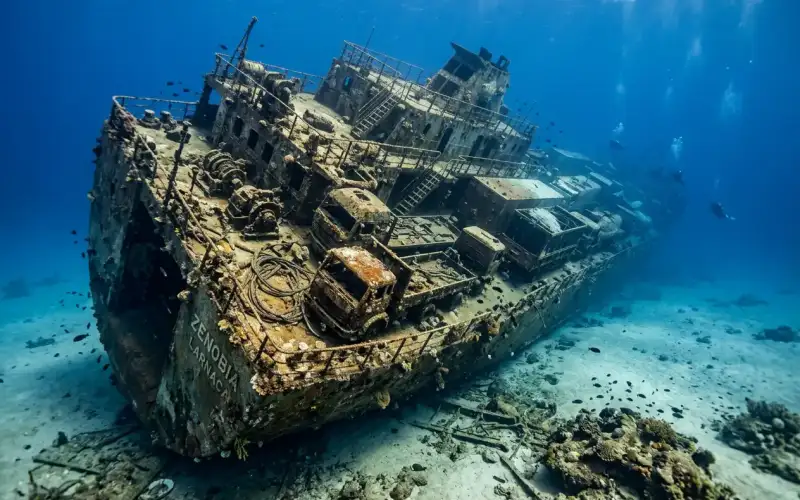
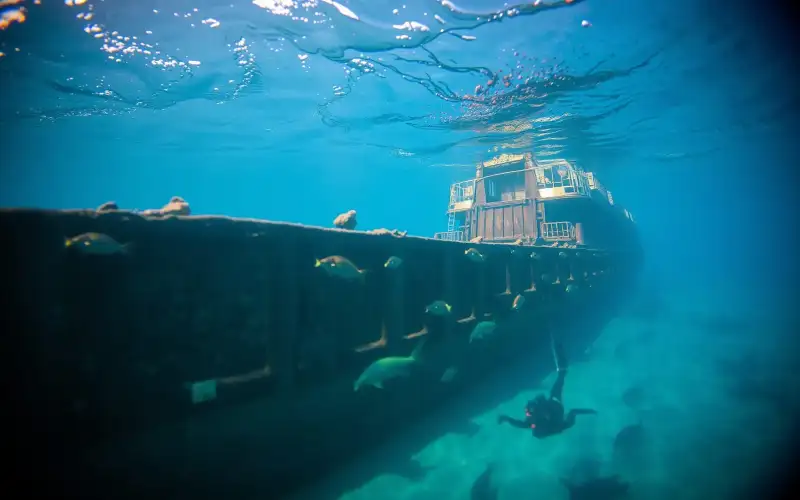
I still remember my 47th dive on the Zenobia—the moment when a grouper the size of a small dog emerged from the engine room doorway, completely unbothered by my presence. That's when it hit me: this isn't just a wreck. It's a living reef, a memorial, and one of Europe's most accessible technical dives all rolled into one. The Swedish-owned cargo ship sank on 9 June 1980, just 400 metres off Larnaca's coast, and for the past 46 years it's become the Mediterranean's most sought-after dive site.
If you're standing on Larnaca's promenade looking at that buoy marking the wreck's position, you might be wondering whether you're ready for it. The answer depends entirely on your training, not your nerve. I've guided everyone from terrified first-time divers doing their open water certification to military technical divers pushing 80 metres. The Zenobia meets you where you are.
What You'll Learn in This Guide
This guide walks you through everything needed to safely dive the Zenobia in 2026, whether you're a fresh open water diver or a seasoned wreck explorer. You'll discover which operators are worth your money, what equipment you actually need versus what's marketing hype, how to interpret the wreck's layout, and what safety decisions matter when you're 42 metres down surrounded by twisted metal and marine life.
We'll cover the practical logistics—boat times, costs, seasonal conditions—and the technical realities. The Zenobia isn't forgiving of carelessness, but it rewards preparation with unforgettable diving. By the end of this guide, you'll know exactly what to expect and how to prepare.
Prerequisites: Know Your Own Limits
Before booking anything, be honest about your certification level and experience. The Zenobia accommodates multiple skill tiers, but the wreck itself doesn't compromise. Here's what you need:
Minimum Certification Requirements
- Recreational diving (shallow wreck work): Open Water Diver certification minimum. Most operators require at least 50 logged dives for any wreck work. The shallow sections (12–20 metres) are genuinely suitable for newer divers, but you need the experience hours, not just the card.
- Intermediate wreck exploration (20–35 metres): Advanced Open Water or equivalent, plus a wreck specialty certification. Ideally 100+ logged dives. You'll be navigating confined spaces and managing increased nitrogen narcosis.
- Deep/technical sections (35–42 metres): Deep Diver certification, Nitrox training, and ideally Technical Diver or equivalent. 200+ dives strongly recommended. This is where the Zenobia demands respect.
I've seen divers with 40 logged dives insist they're ready for 40-metre penetrations. They're not. Depth, nitrogen narcosis, and confined spaces combine in ways that experience teaches you. The Zenobia will still be there after your next 100 dives.
Physical Fitness and Medical Clearance
Wreck diving is physically demanding. You're carrying extra weight, navigating tight spaces, and managing stress in an environment where mistakes compound quickly. If you have cardiovascular concerns, respiratory issues, or ear problems, get medical clearance before booking. Larnaca's dive operators will ask—answer honestly.
The water temperature in 2026 ranges from 15°C in February to 28°C in August. Even in summer, at 42 metres you'll be cold. A 5mm wetsuit is minimum; most divers use 7mm or drysuits. If you're not used to thermal protection, practice in shallower water first.
Mental Preparation
The Zenobia's interior is dark, confined, and full of silt that rises with careless movement. If you're claustrophobic, start with external wreck dives or skip the penetrations entirely. There's no shame in this. I've dived with experienced ocean divers who freeze inside the wreck and excel on the exterior.
Know your comfort level with nitrogen narcosis. At 30 metres, most divers feel mild effects. At 40 metres, it's noticeable—a slight dreaminess, slower reaction time. If you've never experienced it, do a controlled dive to 30 metres with an instructor first.
Step-by-Step: Planning and Booking Your Zenobia Dive
Step 1: Choose Your Operator and Dive Profile
Larnaca has roughly a dozen dive operators, but only 4–5 regularly run Zenobia trips. In 2026, expect to pay €80–120 per dive for a guided wreck dive, plus €30–50 for equipment rental if needed. The cost varies based on group size, whether you need guides for multiple divers, and what's included.
Top operators include those based near the Larnaca Marina and Mackenzie Beach, which are closest to the wreck. Check reviews on diving forums and ask about their incident history. A reputable operator will have detailed safety briefings, current wreck maps, and guides who actually know the Zenobia's layout—not just generic wreck knowledge.
Decide your dive profile: external only, shallow penetration, or deep technical penetration. This determines your operator choice, cost, and which dives you need beforehand. If you want to go inside the cargo holds, you need at least a wreck specialty and an operator who offers penetration dives.
Step 2: Arrange Necessary Training Before Arrival
If you're open water certified but lack wreck or deep certifications, do these courses before arriving in Cyprus. A wreck specialty course takes 2–3 days and costs £150–250 in the UK. A deep diver course is similar. Doing these at home is cheaper and means you arrive in Larnaca ready to dive, not spending your first days in training.
If you're already trained, bring your certification cards and dive log. Operators will ask for both. If your log is digital only, bring proof on your phone or printed copies. Some older operators still don't trust digital-only records.
Step 3: Book 2–3 Weeks Ahead
The Zenobia is weather-dependent. Boats need calm conditions to safely moor on the wreck. In winter (November–March), dives are less frequent and more subject to cancellation. Summer (June–September) is busier but more reliable. Book directly with operators rather than through hotel concierges—you'll pay less and get better information.
When booking, confirm: group size, guide-to-diver ratio, whether equipment is included, what type of briefing you'll get, and the cancellation policy. Ask specifically about their last three Zenobia trips—conditions, what sections were dived, any incidents.
Step 4: Gather and Check Your Gear
If you're bringing your own equipment, pack it in carry-on luggage when flying into Larnaca Airport. Checked baggage occasionally gets damaged. Rent only what you can't carry: tanks, weights, and BCD if yours doesn't fit your body shape.
Check your equipment thoroughly the day before your dive. Test your regulator, verify your BCD inflates and deflates, confirm your computer battery is full, and check your wetsuit for tears. Rental gear should be tested in the shop before you leave—don't wait until you're on the boat.
Step 5: Do a Shallow Warm-Up Dive
If you haven't dived in 3+ months, do a 20-minute shallow dive (8–12 metres) the day before your Zenobia dive. This refreshes your buoyancy control and equipment handling. The Zenobia demands precision—you can't afford to be rusty. Most operators offer shallow shore dives near Larnaca for €30–40.
Step 6: Attend the Full Safety Briefing
The night before or morning of your dive, your operator will brief you on the Zenobia's layout, entry/exit points, depth profile, and emergency procedures. Pay full attention. This isn't ceremony—it's your survival plan. Ask questions about anything unclear. A good operator expects them.
Step 7: Arrive Early on Dive Day
Boats typically depart at 8:00 or 8:30 AM from Larnaca Marina. Arrive 45 minutes early. You'll do final equipment checks, get weighed for ballast, and receive last-minute updates on conditions. The Zenobia is only 400 metres offshore, so the boat ride takes 5–10 minutes.
Step 8: Execute Your Dive Plan
Once at the wreck, your guide will anchor on a fixed mooring. You'll descend along the line, equalizing pressure in your ears constantly. The wreck comes into view around 25 metres—the bow section first, then the massive hull. At 42 metres, visibility is typically 15–25 metres in summer, 8–15 metres in winter.
Stay close to your guide. The Zenobia's interior is a maze of corridors, cabins, and cargo holds. Silt is your enemy—one careless fin kick clouds visibility to zero. Move slowly, deliberately, and with purpose. If your guide signals to exit, exit immediately. There's no negotiation at depth inside a wreck.
Step 9: Manage Your Bottom Time and Gas
Most recreational dives on the Zenobia last 35–45 minutes bottom time. You'll spend roughly 5 minutes descending, 30 minutes exploring, and 5 minutes ascending (including safety stops). Your guide watches your pressure gauge constantly. When you hit your turnaround pressure (typically 50–80 bar), you begin ascent regardless of where you are.
Ascend slowly—no faster than 10 metres per minute. The safety stop at 5 metres for 3–5 minutes is mandatory, not optional. Nitrogen narcosis effects wear off as you ascend, but decompression sickness doesn't care about your feelings.
Step 10: Debrief and Log Your Dive
Back on the boat, your guide will debrief the group. They'll explain what you saw, answer questions, and note any issues. Log this dive immediately in your logbook—depth, time, conditions, what sections you visited. This record matters for your next dives and for your insurance.
Troubleshooting Common Issues
Cancelled Dives Due to Weather
The Zenobia is exposed to open water. If sea conditions are rough, boats won't go. This happens 20–30% of winter days, less in summer. If your dive is cancelled, you have three options: reschedule for the next day (if possible), dive an alternative site, or take a refund. Check your operator's policy before booking.
Nitrogen Narcosis Panic
If you feel confused or panicked at depth, signal your guide immediately. Ascend slowly. Narcosis reverses as you go shallower. This is why shallow warm-up dives matter—you learn how narcosis feels in a controlled environment.
Ear Equalization Problems
If you can't equalize your ears, stop descending and ascend 2–3 metres. Try again. If it still doesn't work, surface. Forcing equalization causes barotrauma. Bring decongestant nasal spray if you're prone to sinus issues. Dive operators in Larnaca sell it, but it's cheaper at pharmacies (around €5–8).
Silt-Out During Penetration
If visibility drops to zero inside the wreck, stop moving immediately. Don't panic, don't swim forward. Orient yourself to the guide line and follow it out. This is why guides insist on staying close and moving slowly. Silt-outs are preventable through discipline.
Equipment Failure
Rental equipment occasionally fails. If your regulator freeflows or your BCD won't inflate, signal your guide and ascend. Never ignore equipment problems at depth. Most operators carry backup regulators on the boat for emergencies.
Seasonal Conditions and Best Times to Dive
The Zenobia is diveable year-round, but conditions vary dramatically. Summer (June–August) offers warm water (26–28°C), good visibility (20–25 metres), and calm seas. Expect crowds and higher prices. Autumn (September–October) is ideal—water still warm (23–25°C), visibility excellent, fewer divers. Winter (November–March) brings cold water (15–17°C), reduced visibility (8–15 metres), and frequent cancellations. Spring (April–May) is transitional and unpredictable.
If you're diving in winter, expect reduced bottom time due to cold and possibly limited penetration dives due to poor visibility. Spring and autumn are genuinely the best times—you get good conditions without summer crowds or winter complications.
Equipment Rental and Costs in 2026
Most Larnaca operators offer rental packages. A typical setup costs €40–60 and includes BCD, regulator, wetsuit, and weights. Tanks are usually included in the dive fee (€80–120). If you rent everything, budget €120–180 per dive. Nitrox fills cost an extra €10–15 if your training permits them.
Buy your own mask and fins if you don't have them—rental masks often don't fit well, and fins affect buoyancy control. A decent mask costs £20–40, fins £30–50. These are worth owning.
Safety Considerations You Can't Ignore
The Zenobia has claimed lives. In 2002, two experienced technical divers died inside the wreck. In 2015, a diver died during a deep penetration. These weren't negligent divers—they were skilled people who made split-second mistakes or had equipment failures at depth. This is why I emphasize training, experience, and following your guide's instructions absolutely.
Decompression sickness (the bends) is a real risk at these depths. Follow your computer's guidance. Don't skip safety stops. If you develop symptoms after diving—joint pain, tingling, shortness of breath—get to a recompression chamber immediately. Larnaca has one at the hospital, roughly 10 minutes from the marina by car.
Nitrogen narcosis impairs judgment. You might decide 45 metres is fine when it's not, or that staying in the wreck five minutes longer is okay when your gas reserve is already marginal. This is why guides make decisions, not divers, at depth. Trust their judgment over your instinct.
What to Expect: The Zenobia's Layout
The wreck sits upright on the seabed, bow pointing north. The shallow sections (12–25 metres) include the stern, upper decks, and exterior hull. Intermediate divers explore the bridge, upper cargo holds, and engine room entrance (25–35 metres). Deep technical dives penetrate the engine room, lower cargo holds, and crew quarters (35–42 metres).
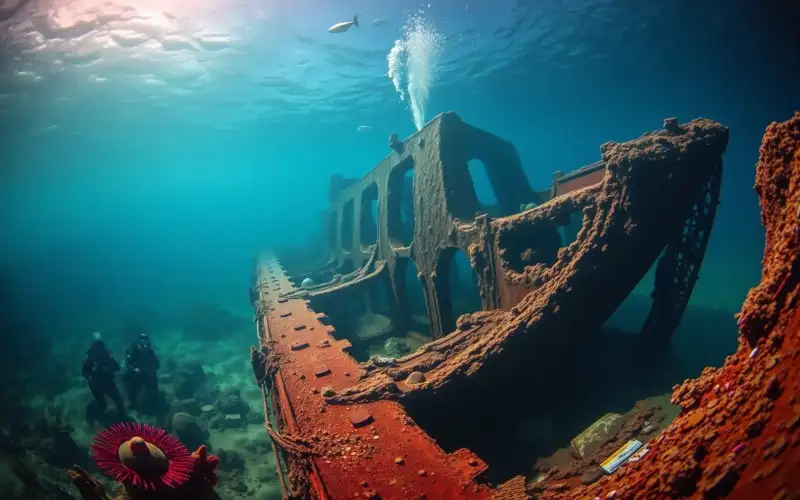
The bow is the most intact section. The stern shows significant deterioration. The engine room is spacious but disorienting—multiple levels, narrow passageways, and zero natural light. The cargo holds are vast and eerie, with occasional large fish inhabiting the deeper sections.
Marine life includes grouper, amberjack, barracuda, and occasionally larger fish. Octopuses hide in crevices. Nudibranchs and soft corals coat the exterior. The wreck is effectively a reef now—it's been underwater for 46 years.
Final Thoughts
The Zenobia isn't just a dive site. It's a technical challenge, a historical monument, and a living ecosystem. Respect it, prepare thoroughly, and follow your guide's instructions. Do that, and you'll have a dive that stays with you for decades. I've done it 100+ times and I'm still learning something on each dive. That's what makes it special.
Comments (2 comments)