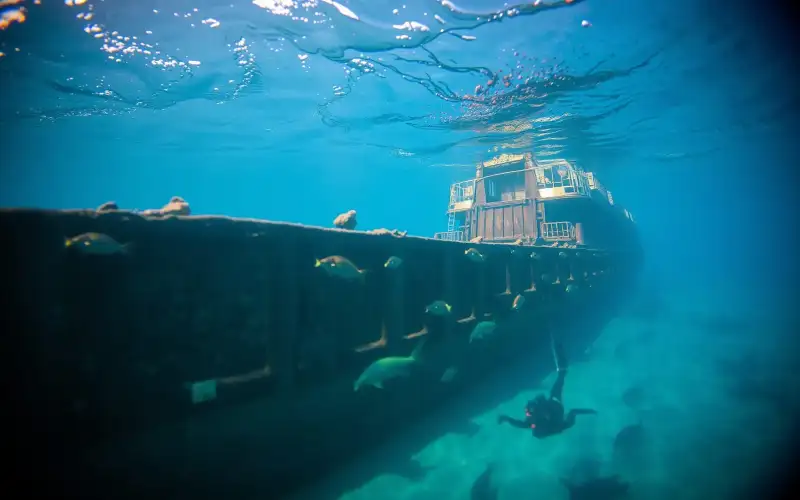
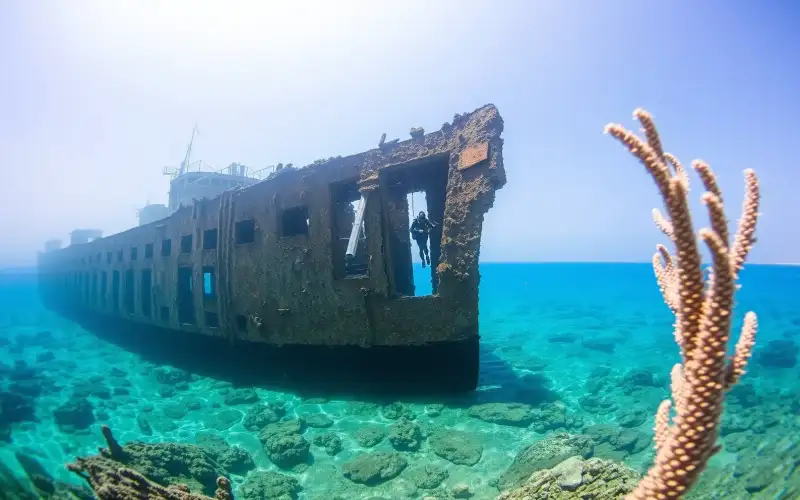
I'll never forget my first glimpse of the Zenobia's massive hull emerging from the blue haze at 42 metres. The Swedish cargo ship, which sank in 1980 just off Larnaca, sits on the seabed like a time capsule—lorries still parked in her holds, corridors frozen mid-voyage. But that memory came on a crowded August morning with visibility barely beyond arm's length and water so warm it felt like bathwater. I learned fast: timing matters enormously when you're planning a Zenobia dive.
Most British divers I meet at the Larnaca waterfront tavernas assume the Mediterranean is consistently warm and clear year-round. The reality is messier, more seasonal, and honestly more interesting. The Zenobia demands respect, and she reveals her secrets differently depending on when you visit. After dozens of dives on this wreck across different seasons, I've developed a strong sense of which months genuinely deliver the experience you're hoping for—and which ones leave you frustrated, cold, or squinting through murk.
Understanding the Zenobia: Why Timing Changes Everything
The Zenobia lies in 42 metres of water, making her a technical dive for most recreational divers. You'll need Advanced Open Water certification at minimum, and many dive schools insist on Nitrox qualification to extend bottom time safely. The wreck sits roughly 40 kilometres south of Larnaca Harbour, a 45-minute boat journey from the marina.
What makes the Zenobia so compelling is her accessibility for an intermediate wreck—she's not as deep as many wrecks in the eastern Mediterranean, and the structure is stable. You can penetrate certain sections if you're trained, swim through the wheelhouse, explore the bridge, and peek into cargo holds. But none of that matters if visibility is five metres or the current is running sideways at two knots.
Water temperature and visibility are the two variables that shift most dramatically across the calendar year. Temperature affects how long you can safely dive without losing core body heat; visibility determines whether you'll actually see the wreck's fascinating details or just grey shapes. Crowd levels matter too, especially if you're a photographer hoping for solo time on the wreck.
Month-by-Month Breakdown: When to Dive
January to March: Cold Water, Excellent Clarity
Winter is when serious technical divers flock to the Zenobia. Water temperatures drop to 15–17°C, which sounds miserable until you realise visibility often stretches to 30–40 metres. That's when the wreck becomes genuinely photogenic. The winter thermocline—that sharp boundary between warm and cold water layers—sits deeper here, and the cooler surface water is typically clearer.
The downside: you'll need a 7mm wetsuit minimum, ideally a thicker one or even a drysuit if you're sensitive to cold. Gloves are essential. The boat ride from Larnaca can be choppy in January and February, with swells rolling in from Atlantic storm systems. Dive days are shorter—sunset comes around 5 p.m.—so you're limited to morning dives.
Crowds are moderate. January is quieter than summer, but February and March see increasing numbers of European divers escaping winter. Dive schools in Larnaca are well-staffed and running regular Zenobia trips. Expect to pay €80–120 per dive, depending on whether you're joining a group or booking a private guide.
I'd recommend this season if you're comfortable in cold water and you've got flexible dates. The photographs you'll capture are worth the extra thermal protection.
April to May: Warming Trend, Still Clear
Spring is arguably the sweet spot for most divers. Water temperatures climb from 17°C in early April to 22–23°C by late May. That's warm enough for a 5mm wetsuit to feel comfortable for two dives in a day. Visibility remains excellent—25–35 metres is typical—because the thermocline is still deep and the water hasn't yet begun churning with summer heat and tourism traffic.
The weather is stable. Winds are lighter, the sea is calmer, and you get longer daylight for morning and afternoon dives. I've done some of my best Zenobia dives in May, with perfect conditions and just enough other divers to feel like you're part of a small community, not a cattle market.
Crowds are picking up but still manageable. Easter holidays bring some British families, but the real summer surge hasn't started. Dive schools are busy but not overwhelmed. Expect €70–100 per dive.
If I could recommend just one window, it would be late April through May. The conditions are forgiving, the light is beautiful, and you won't be elbowing past forty other divers in the wheelhouse.
June to August: Warm Water, Variable Visibility, Peak Crowds
Summer is when Larnaca's beaches fill with sunbathers and the Zenobia becomes a bucket-list tick for holiday divers. Water temperatures reach 25–27°C—warm enough for a 3mm shorty or even a rash guard if you're brave. The sea feels almost tropical.
But here's what nobody tells you: summer visibility is often disappointing. Thermocline mixing, plankton blooms, and increased boat traffic stir up the water column. Visibility drops to 15–20 metres, sometimes less. The Zenobia becomes a grey shape you navigate by feel and wreck line, not a detailed structure you can photograph clearly. I've done summer dives where I couldn't clearly see the bow even though I was swimming right past it.
Crowds are intense. Larnaca's dive schools run multiple boats to the Zenobia daily during July and August. You'll share the wreck with 30–50 other divers. If you're claustrophobic or you value solitude, summer is frustrating. If you're a social diver and you don't mind crowded conditions, it's fine—the water is warm, the boat ride is pleasant, and you'll have company.
Prices spike. Expect €100–150 per dive, sometimes more for private guides. Book weeks in advance; boats fill up quickly.
The only real advantage to summer diving is the warmth and the stability. If you're bringing a non-diving partner who wants to snorkel or relax on the boat, summer weather is ideal. But for wreck diving itself, I'd skip these months if you can.
September to October: Returning Clarity, Warm Water, Fewer Divers
Autumn is genuinely underrated. By mid-September, summer tourism has peaked and started to decline. Families have returned to school. The water is still warm—22–24°C—and visibility begins improving as the summer plankton blooms subside. By October, you're looking at 25–30 metres of visibility regularly.
The weather is stable. Winds are lighter than winter, the sea is calmer, and daylight is still reasonable—sunset around 6 p.m. in September, 5:30 p.m. in October. You can comfortably fit two dives into a day.
Crowds drop noticeably. The Zenobia still gets visited, but you're no longer competing with dozens of other groups. Dive schools run trips but aren't running multiple boats. You might share the wreck with 10–15 other divers rather than 50.
Prices normalise. Expect €75–110 per dive. This is also when many serious divers plan technical training dives, so you'll meet experienced people in the water.
September and October are my personal favourite months to dive the Zenobia. The conditions are genuinely good, the crowds are manageable, and there's a sense of purpose rather than tourism. If you're planning a trip specifically for wreck diving, target these months.
November to December: Cooling Trend, Decent Visibility, Fewer Tourists
Late autumn sees water temperatures drop from 20°C in November to 16–17°C by December. Visibility remains respectable—20–28 metres—because the water is still relatively stable. Crowds continue to decline as winter approaches.
The catch: weather becomes unpredictable. November can be fine, but December often brings storms and rough seas. Dive trips are cancelled more frequently. You'll need a 5–7mm wetsuit, and boat rides can be uncomfortable.
For most divers, November is acceptable—warm enough, clear enough, quiet enough. December is a gamble. If you're flexible and you don't mind potentially losing a dive day to weather, it can work. If you're visiting for a fixed week, I'd avoid December.
Gear: What to Bring, What to Rent
The Zenobia demands specific equipment. At 42 metres, you need a reliable computer, a torch (the wreck's interior is dark), and redundant air supplies.
What to bring from the UK:
- Your own dive computer—most UK divers trust their own equipment more than rental units
- A good torch and a backup torch—essential for any wreck diving
- Dive logs and certification cards
- A thick wetsuit or drysuit if you're diving in winter (January–March)
- Fins and mask if you have strong preferences
What to rent in Larnaca:
- Tank and BCD—rental equipment is well-maintained at established dive schools
- Regulator if you don't want to travel with your own
- Weights and weight belt
- A lighter wetsuit (3–5mm) if you're arriving in summer and didn't want to pack one
Larnaca dive schools stock modern rental gear. Expect to pay €15–25 for a full rental set (BCD, regulator, tank, weights). Quality is generally good, though I always inspect regulators before diving—just habit.
Recommended Dive Schools in Larnaca
Several schools operate regular Zenobia trips. The best ones combine experienced guides, small group sizes, and safety-first attitudes.
Yellow Submarine Dive School is based at Larnaca Marina and runs daily Zenobia trips. They're known for thorough briefings and comfortable boats. Guides are locals who know the wreck intimately. They offer Nitrox fills and technical training. Expect €80–120 per dive depending on group size.
Dive-In Larnaca operates from the Radisson hotel waterfront. They're PADI-affiliated and cater heavily to tourists, but their guides are competent and their equipment is modern. They run group dives and private charters. €85–130 per dive.
Aqua Sports is smaller and more technical-focused. If you're planning penetration dives or technical training on the Zenobia, they're worth contacting. They require higher certification levels and run smaller groups. €90–140 per dive.
All three schools can arrange accommodation packages through partner hotels in Larnaca, which is convenient if you're flying into Larnaca Airport and want a seamless experience.
Certification Requirements and Safety
The Zenobia is a 42-metre dive, which puts it in technical territory. Most recreational agencies (PADI, SSI, BSAC) require Advanced Open Water certification minimum. Many instructors insist on a 40-metre specialty or equivalent.
Nitrox certification is strongly recommended. The Zenobia is deep enough that nitrogen narcosis becomes a factor, and Nitrox (enriched air) reduces narcosis risk and extends bottom time. Most Larnaca dive schools offer Nitrox fills and will brief you on gas management.
If you're not certified for 40+ metres, most schools offer a supervised deep-dive experience or a guided tour in shallower sections of the wreck. This isn't ideal—you miss the main structure—but it's an option if you're keen and you're willing to do training.
Decompression is required on the Zenobia. A standard recreational dive might involve 15–20 minutes bottom time followed by 5–8 minutes of mandatory decompression stops. Your computer will guide you, but understanding gas consumption and planning your dive carefully is essential.
What to Expect: The Dive Itself
The boat ride from Larnaca Marina takes 45 minutes. You'll motor south past the Salt Lake, past fishing boats, and out toward open water. The Zenobia's buoy is marked clearly—a yellow surface marker.
The descent is a controlled affair. You drop along a line to the wreck, equalising pressure as you go. The visibility determines what you see first: in clear water, you'll see the bow structure emerging at around 30 metres; in murky conditions, you'll be right on the wreck before you realise it.
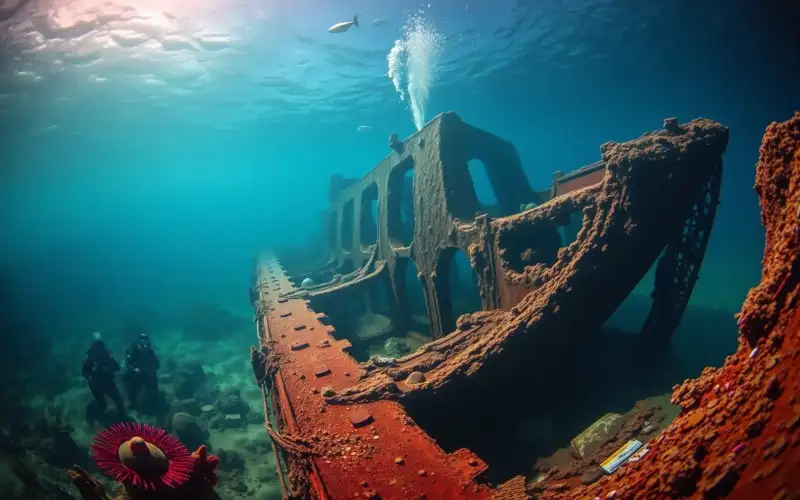
The wreck itself is enormous—160 metres long. Most recreational dives explore the bow section, the bridge, and the upper cargo hold. The hull is intact and stable; you won't see the kind of debris and collapse you'd find on older wrecks. It's a working museum, essentially.
Current can be an issue. On some days, a gentle current runs along the wreck; on others, it's negligible. Your guide will assess this and plan the dive route accordingly. If current is strong, you'll move with it rather than fight it.
Bottom time is typically 20–30 minutes for recreational divers. You'll spend 5–10 minutes ascending and decompressing. Total water time is 40–50 minutes. It's a short dive but an intense one.
Planning Your Zenobia Trip in 2026
Here's my honest advice: if you're serious about diving the Zenobia, book your trip for April, May, September, or October. These months offer the best balance of water temperature, visibility, and crowd levels. You'll see the wreck clearly, you'll be comfortable in the water, and you won't feel like you're part of an assembly line.
If you're constrained to summer holidays, go ahead—the water is warm and the experience is still worthwhile, just crowded and less visually rewarding. Avoid December unless you're experienced in rough-water diving and you're flexible about cancellations.
Book your dive school at least two weeks in advance, especially if you're visiting during peak season. Bring your certification cards and logbook. If you're flying into Larnaca Airport, most dive schools can arrange transport directly from the airport to the marina, which is convenient.
The Zenobia is genuinely one of the Mediterranean's finest wreck dives. She's accessible, fascinating, and well-preserved. Timing your visit correctly means the difference between a forgettable underwater tour and a dive you'll remember for years.
Comments (4 comments)