
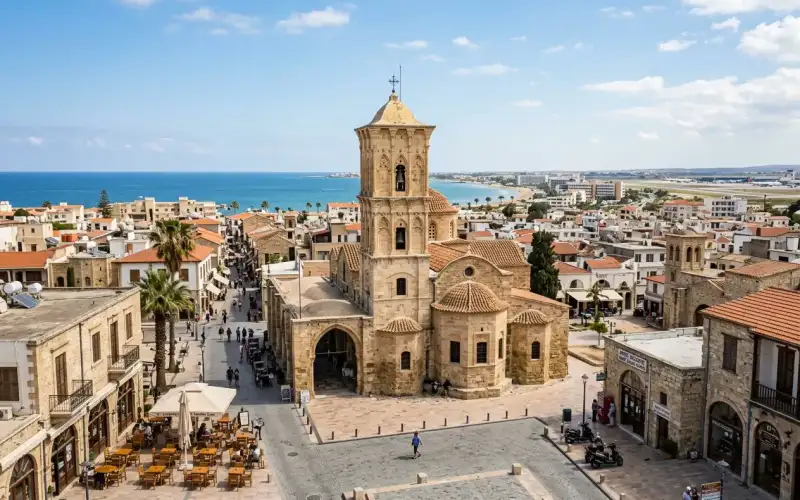
I first stepped into Agios Lazaros on a March morning when the church was nearly empty, sunlight streaming through high windows onto centuries-old frescoes. A elderly Cypriot woman lit a candle near the iconostasis, and I realised I was standing in one of the Eastern Mediterranean's most historically significant Byzantine churches—yet many British visitors to Larnaca rush past it without stopping. That's a genuine loss.
Saint Lazarus Church sits in the heart of Larnaca's old town, just a short walk from the seafront tavernas where I've spent countless lazy afternoons. It's not just a religious monument; it's a tangible connection to 1,500 years of Mediterranean history, Byzantine artistry, and the spiritual life of Cyprus. Whether you're a cultural traveller, history enthusiast, or simply curious about what lies beyond the beach resorts, this church deserves several hours of your time.
The Extraordinary History of Saint Lazarus and Larnaca
The story begins in first-century Judea. Lazarus of Bethany was the brother of Mary and Martha, a figure prominent in the Gospel of John. Jesus raised him from the dead after four days in the tomb—one of the most dramatic miracles in Christian scripture. This event made Lazarus central to Christian theology and veneration, symbolising resurrection and eternal life.
After the crucifixion and resurrection of Christ, Lazarus faced persecution in Jerusalem. According to Byzantine tradition, he fled to Cyprus around 60 AD, eventually settling in the port city of Kition (ancient Larnaca). He became the city's first bishop and spent his final years preaching Christianity to the island's inhabitants. When he died—for the second time—his body was buried in Larnaca, and the city that had once been a pagan trading post gradually became a pilgrimage destination for Christian believers across the Mediterranean.
For centuries, Lazarus's tomb remained a focal point of devotion. However, in 890 AD, Byzantine Emperor Leo VI ordered the construction of a grand church directly above the saint's burial site. This wasn't merely a chapel; it was an imperial project, reflecting Constantinople's desire to honour one of Christianity's most important saints and strengthen Byzantine control over Cyprus. The church was completed by 900 AD and remains largely intact today—one of the finest surviving examples of Middle Byzantine architecture outside mainland Greece.
The Venetian occupation of Cyprus (1489–1571) and subsequent Ottoman rule (1571–1878) saw the church repurposed and modified, though it retained its essential structure. British colonial administration (1878–1960) brought restoration efforts. Today, the Church of Saint Lazarus operates as both an active Orthodox place of worship and a significant archaeological and cultural monument managed with care by the Cypriot authorities.
Architecture and Artistic Treasures Inside
The exterior of Agios Lazaros is deceptively modest—a low-slung stone building with a modest bell tower added during the Venetian period. But step inside, and you enter a world of Byzantine sophistication that speaks to centuries of artistic refinement.
The Central Dome and Interior Layout
The church follows the classic Middle Byzantine cross-in-square design. Four robust columns support a central dome, creating a sense of both intimacy and grandeur. The dome itself is a masterpiece of Byzantine engineering, distributing weight elegantly across the supporting structure. Natural light filters through windows positioned strategically around the dome, illuminating the interior in ways that change throughout the day.
The floor plan divides into distinct zones: the narthex (entrance vestibule) where visitors traditionally remove shoes or cover shoulders, the naos (main body), and the sanctuary beyond the iconostasis. This spatial arrangement wasn't accidental—it reflected Orthodox theology about the progression from the secular world toward the divine presence of Christ represented in the altar.
Iconography and Frescoes
The walls and vault surfaces are covered with religious imagery spanning different periods. Some frescoes date to the original 9th-century construction; others were added or repainted during Venetian and Ottoman periods. The quality varies—some sections show remarkable preservation, while others bear the marks of time, moisture, and centuries of candle smoke.
Look carefully at the depictions of Saint Lazarus himself. He's typically shown as an elderly bearded man, sometimes holding a censer or standing near his tomb. The iconography emphasises his role as the resurrected one, often paired with scenes of the resurrection of Lazarus or his role as bishop of Larnaca. The iconostasis—the ornate screen separating the nave from the sanctuary—features painted icons of Christ, Mary, and saints, many gilded and dating from various restoration campaigns.
The dome typically features Christ Pantocrator (Christ as ruler of all), a composition that dominated Byzantine church decoration. The pendentives below the dome often contain images of the four evangelists or church fathers. While not all original decoration survives, enough remains to convey the visual richness that once filled the entire interior.
The Tomb of Saint Lazarus
The most spiritually significant feature lies beneath the church floor. A stone sarcophagus, believed to contain the remains of Saint Lazarus, rests in the crypt directly beneath the altar. Access to the crypt is limited—you can view it through a protective gate or grille, and occasionally during special services or with permission from the church authorities, visitors may descend the narrow stone steps for a closer look.
The crypt itself is a modest chamber, cool and somewhat austere. The sarcophagus is plain stone, lacking the ornate decoration you might expect. This simplicity somehow amplifies the sense of antiquity and reverence. Standing near it, you're not just looking at a historical artefact; you're in the presence of a space that has been venerated for over 1,600 years.
Byzantine and medieval pilgrims travelled enormous distances to visit this tomb. Some sought healing; others came to pray for spiritual intercession. The church records mention pilgrims from as far as Western Europe, the Balkans, and the Middle East. During the Venetian period, the church became a destination for Catholic and Orthodox believers alike. Today, the tomb remains a place of quiet contemplation, and many visitors light candles nearby as an act of devotion.
The Church Museum
Adjacent to the main church building, a small museum houses artefacts and artworks related to Saint Lazarus and the church's history. The collection includes religious vestments, liturgical vessels, ancient coins, and fragments of sculpture and mosaic. While the museum is modest in scale compared to major institutions in Nicosia or Limassol, it provides valuable context for understanding the church's significance across different historical periods.
Among the notable pieces are Byzantine bronze crosses, Ottoman-era religious items, and documentation of restoration efforts undertaken in recent decades. The museum also displays photographs and architectural drawings showing how the church appeared at various points in its history. Staff members are generally knowledgeable and can answer questions about specific artefacts, though they may speak limited English—a phrase book or translation app helps.
Practical Information for Visiting
Opening Hours and Entry
The church is open to visitors most days from approximately 8:30 AM to 12:30 PM and 3:00 PM to 6:00 PM, though hours vary seasonally and may change for religious observances. On major Orthodox feast days—particularly the Feast of Saint Lazarus (celebrated on the Saturday before Easter, called Lazarus Saturday) and on 17 December—the church hosts special services and may have restricted visiting hours. I recommend checking locally before visiting, as hours can shift without notice.
Entry is free, though donations are welcomed and contribute to ongoing maintenance and conservation. The museum typically charges a small fee (usually 2–3 euros) and may have slightly different hours than the main church.
Dress Code and Etiquette
This is an active Orthodox place of worship, not a museum. Respectful dress is essential. Women should wear skirts or trousers that extend below the knee, and sleeveless tops or low-cut necklines are inappropriate. Men should wear long trousers and shirts with sleeves. Hats should be removed indoors. Many visitors carry a lightweight scarf or cardigan to cover shoulders if needed.
Photography is generally permitted in the main church, though some areas may be restricted. Always ask before photographing the crypt or museum displays. Flash photography should be avoided to protect frescoes and artefacts. Visitors should speak quietly, avoid touching frescoes or artefacts, and refrain from eating or drinking inside.
Best Times to Visit
Early morning visits (8:30–10:00 AM) offer the quietest experience and the best natural light for viewing interior details. Avoid visiting during active services, which typically occur on Sunday mornings and weekday evenings. Spring and autumn provide comfortable temperatures; summer heat can make the stone interior feel oppressive, though the thick walls do provide some cooling effect.
Getting There
Saint Lazarus Church sits on Agios Lazaros Street in central Larnaca, roughly 500 metres from the seafront promenade (Phinikoudes). From Larnaca Airport, a taxi costs approximately 15–20 euros. Public buses (routes 20 and 21 from the main bus station) pass near the church. If you're staying in a seafront hotel, it's a pleasant 10–15 minute walk through the old town streets. Parking is available on surrounding streets, though spaces can be limited during peak hours.
What to See Nearby
The church's location in old Larnaca means you can easily combine a visit with other cultural attractions. The Larnaca District Archaeological Museum is about 400 metres away, housing significant finds from across the Larnaca region dating back to the Neolithic period. The Pierides Museum, a private collection of ancient Cypriot art, is similarly close. The waterfront area with its traditional tavernas and the salt lake (which attracts flamingos in winter) lies just beyond the promenade.
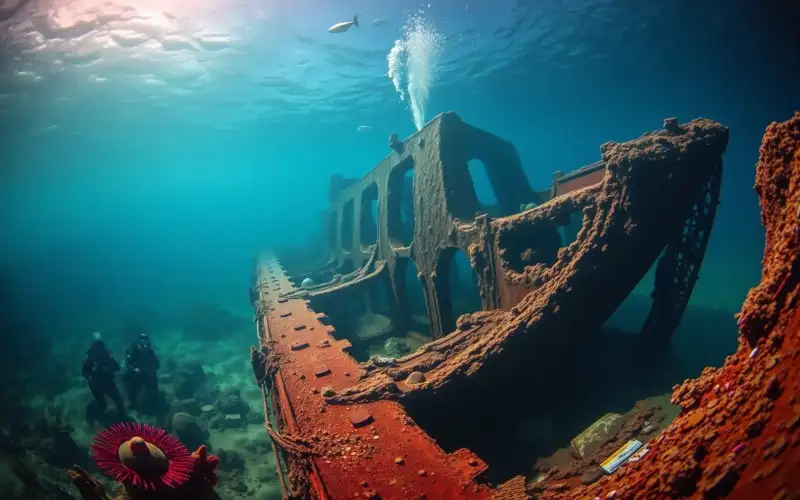
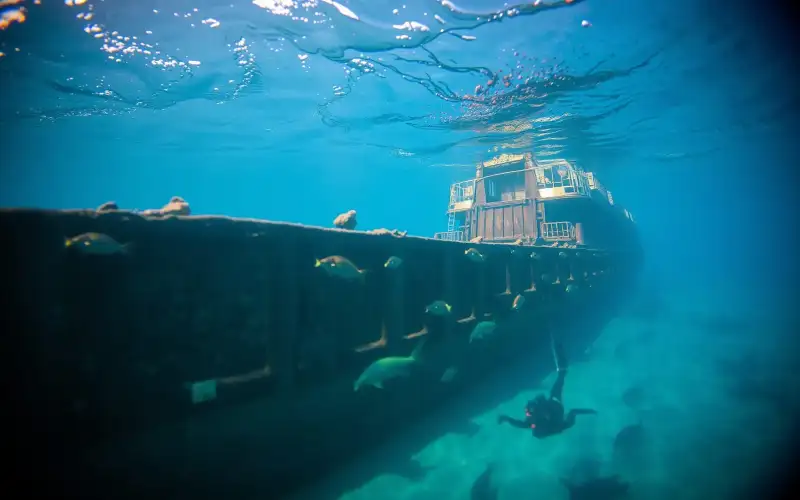
The Church of Saint Lazarus also sits within walking distance of several smaller chapels and the old Larnaca fort ruins. If you're interested in water sports, the main diving schools and water sports operators are based along the beach, about 1.5 kilometres south. The Zenobia wreck—one of Europe's finest diving sites—is accessible from Larnaca harbour, roughly 40 metres down. While diving requires certification and booking in advance, it's worth considering if you have the time and experience.
Comparing Your Visit Options
Quick Visit vs. Deep Dive
A rushed visit—30 minutes to view the main church and crypt—gives you the essential experience: the architectural space, the tomb, and a sense of the church's spiritual significance. This suits travellers with limited time or those combining multiple sites in one day.
A comprehensive visit spans 2–3 hours: exploring the main church thoroughly, visiting the museum, reading about the history, and sitting quietly in the interior to absorb the atmosphere. This allows time to appreciate the artistic details, speak with staff members, and understand the layered history embedded in the building itself.
Independent Visit vs. Guided Tour
Visiting independently gives you flexibility and encourages personal reflection. You move at your own pace, linger where you wish, and form your own impressions. However, without background knowledge, some details may pass unnoticed.
Guided tours (available through some Larnaca hotels or tour operators) provide expert context about Byzantine history, iconography, and the saint's significance. A knowledgeable guide can explain architectural features, identify specific frescoes, and share stories that bring the space to life. Tours typically cost 25–40 euros per person and last 60–90 minutes. They're particularly valuable if you're unfamiliar with Orthodox Christianity or Byzantine art.
Final Thoughts
Saint Lazarus Church is one of those places that rewards patience and attention. It's not a flashy attraction with dramatic views or thrilling activities—no water sports or beach clubs here. Instead, it offers something rarer: a genuine encounter with history, artistry, and spiritual tradition that has endured for over a millennium.
Every time I visit, I notice something new—a detail in a fresco, the play of light through a window, the quiet presence of locals lighting candles for loved ones. That's the mark of a truly significant place. Whether you're a history enthusiast, art lover, or simply someone seeking to understand Cyprus beyond its resorts and beaches, Agios Lazaros deserves a place on your Larnaca itinerary. Arrive early, dress respectfully, and give yourself time to simply be present in this remarkable space.


Comments (2 comments)