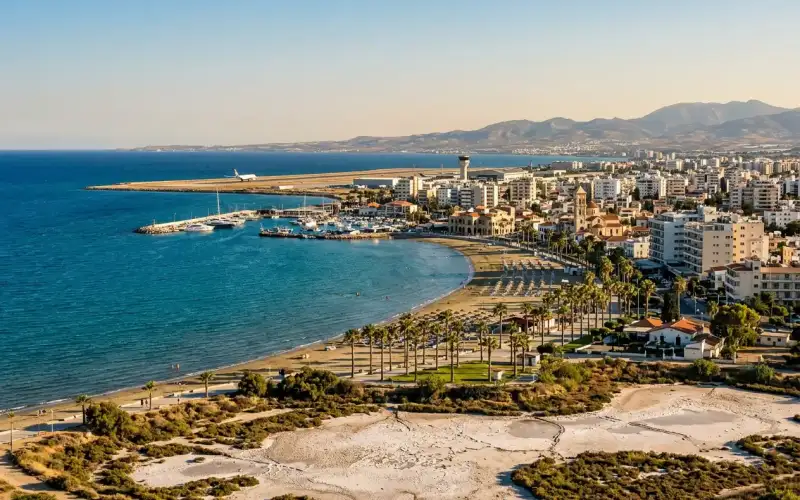
I arrived at Larnaca International Airport on a Thursday in May, and by Friday morning I was already sitting at a waterfront taverna nursing a cold Fix beer, watching fishermen mend nets below the salt lake. That's the rhythm of Larnaca—it pulls you in gently, without fanfare. A week here isn't long enough to exhaust the place, but it's precisely the right length to settle into its particular magic: the meditative pace of seafront promenades, the sudden thrill of a dive into the Zenobia wreck, the meandering mountain roads that lead to villages where time moves differently. This day-by-day plan is built on what actually works for British travellers who want balance—beach mornings, cultural afternoons, and evenings that stretch into long meals with local wine.
Day One: Arrival and Seafront Orientation
Most British visitors arrive at Larnaca International Airport between mid-morning and early afternoon. The airport sits just 9 kilometres south of the city centre, about a 20-minute drive depending on traffic. A taxi costs around £18–22, or you can take a shuttle bus operated by Kapnos for £5 per person if you're not in a rush. I've found the shuttle leaves every 30 minutes during peak hours and takes roughly 35 minutes, depositing you at Finikoudes Beach or the main bus station.
Once you've checked into your hotel, skip the temptation to nap. Instead, head directly to the Larnaca Seafront (Foinikoudes), which stretches for about 1.5 kilometres along the coast. This isn't a dramatic beach—the sand is compact, the water calm, and the whole scene is genteel rather than wild. That's precisely why it works. Spend your first afternoon simply walking the length of it, ducking into the small museums if energy permits. The Church of Saint Lazarus sits just back from the beach; it's free to enter, and the cool stone interior offers genuine respite from the May heat.
For dinner, resist the tourist tavernas immediately facing the beach—they're serviceable but unmemorable. Instead, walk inland two streets to Pathos Taverna or similar neighbourhood spots where locals eat. You'll pay £12–15 for a proper kleftiko (slow-roasted lamb wrapped in paper) or fresh fish, and the wine list will include Cypriot producers you've never heard of. A glass of Ktima Gerolemo white costs about £3.50. Eat slowly. This is the Larnaca pace.
Day Two: Diving and the Zenobia Wreck Experience
If you're a certified diver—and many British visitors come specifically for this—today is essential. The Zenobia is a Swedish-built cargo ship that sank in 1980 just off the Larnaca coast, and it remains one of Europe's most famous wreck dives. At 172 metres long and lying between 42 and 50 metres down, it's suited to experienced divers (PADI Advanced Open Water minimum), though some operators offer guided dives for those with basic certification.
Dive shops line the Larnaca seafront. Expect to pay £80–120 per dive (two tanks) including equipment, or around £280–350 for a full PADI Advanced course over two to three days. I booked through Aqua Sports Diving Centre, which operates from a small office near the old salt lake. They pick up from your hotel at 8:00 AM, and you're in the water by 9:30 AM. The boat journey takes about 15 minutes. Visibility in summer runs 20–40 metres, and the wreck is staggering—cargo holds still stacked with articulated lorries, the bridge intact enough to swim through, smaller vehicles spilling from the hull. It's eerie and magnificent in equal measure.
If diving isn't your thing, the Zenobia can still be experienced. Glass-bottom boat tours depart from the seafront daily at 10:00 AM and 3:00 PM, costing £22 per person, and they pass directly over the wreck. You won't see the detail, but you'll see the shape of it and the scale becomes clear.
Non-diving afternoons work well for visiting the Larnaca Museum, housed in a 19th-century mansion near the seafront. Admission is £5, and the collection spans Neolithic pottery, Mycenaean finds, and Roman sculptures. Budget 90 minutes. By evening, fatigue will be real—either from diving or simply from the heat and novelty of the place. Eat light: souvlaki or grilled octopus at a casual spot, then an early night.
Day Three: Lefkara Village and Mountain Escape
Today involves a day trip inland to Lefkara, one of the most photogenic villages in Cyprus and famous for its lace-making tradition. The drive takes about 45 minutes from Larnaca city centre, heading west through the Larnaca plains. You can rent a car (£25–40 per day from Budget or similar at the airport) or book a private driver (£60–80 for the day), or join a guided tour (£45–55 per person including lunch). I drove myself, partly because the roads are straightforward and partly because I wanted to stop at roadside produce stalls.
Lefkara sits at 650 metres elevation, and the temperature drops noticeably as you climb. The village itself is a tangle of whitewashed streets, with the Church of the Assumption dominating the central square. Lace drapes from shop windows—traditional Lefkara lace, made by hand using techniques passed down for centuries. It's delicate work, and prices reflect that: a handmade tablecloth runs £80–200. Many shops are tourist-oriented, but if you explore the quieter backstreets, you'll find older women still making lace in small workshops, and they're happy to explain the process if you show genuine interest.
Lunch is the highlight. Taverna Lefkaritiko in the central square serves traditional Cyprus fare: halloumi cheese (£6 for a grilled portion), kolokasi (taro root stewed in tomato), and local wine. The portions are generous and the prices modest—expect £12–18 for a full meal. Eat in the shade of the plane trees. Around 3:00 PM, as the heat peaks, the village quiets further. This is the moment to wander, to sit in a quiet corner, to buy a small piece of lace as a genuine reminder rather than a souvenir.
On the return to Larnaca, take the road through Choirokoitia, stopping at the Neolithic settlement if archaeology interests you (£5 entry, 45 minutes). Otherwise, drive back via the main highway, arriving in Larnaca by early evening. Rest at your hotel, then dinner at one of the seafront spots you skipped on Day One—by now you'll appreciate them more.
Day Four: Beaches and Water Activities
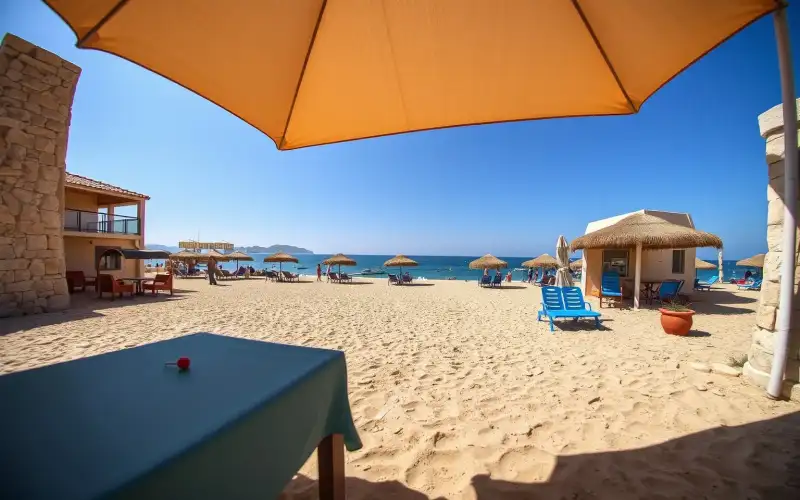
Larnaca's beaches vary considerably. Finikoudes, which you walked on Day One, is urban and serviceable. For something quieter, head 15 kilometres south to Mazotos Beach or 20 kilometres north to Pervolia Beach. Both are less crowded, with fine sand and shallow water ideal for swimming. A taxi ride costs around £15–20 each way.
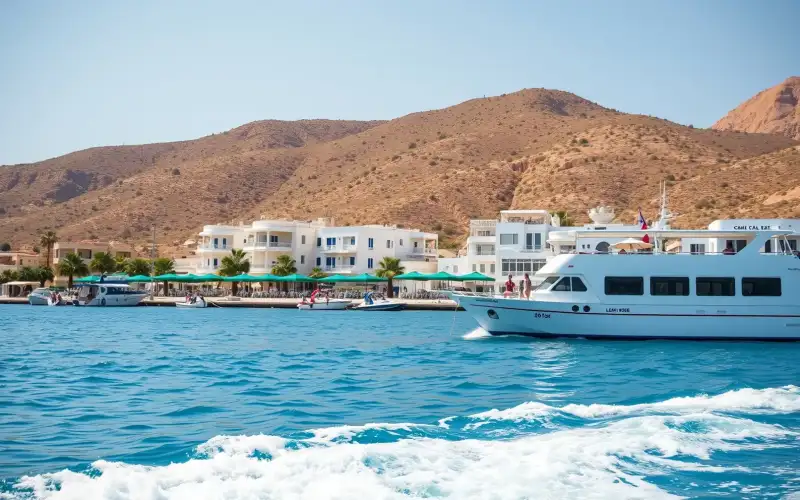
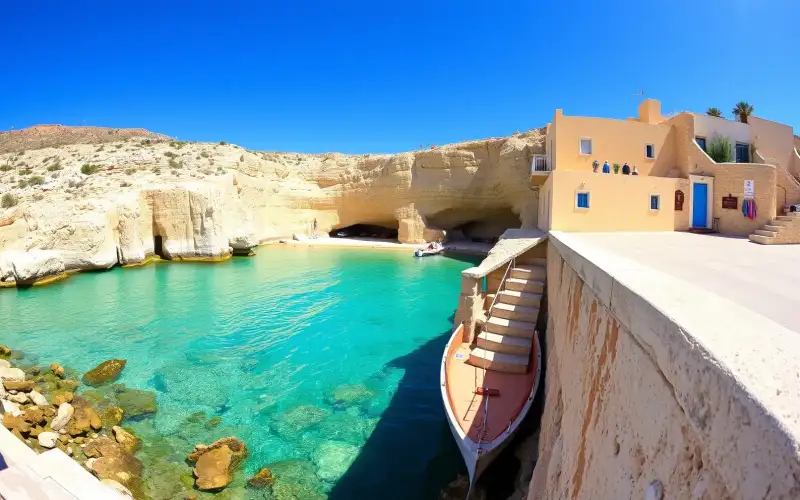
Alternatively, book a Blue Lagoon cruise, which departs from the harbour near the old salt lake. These half-day trips (£25–35 per person) take you by boat to secluded coves and small islands, with stops for swimming and snorkelling. The water is remarkably clear, and the crowds are manageable. Departure is typically 9:30 AM, returning by 1:30 PM, which leaves the afternoon free.
If you're not diving the Zenobia, consider a snorkelling trip instead. Equipment rental from seafront shops costs £8–12 per day, and the reefs near Larnaca support decent marine life. Grouper, barracuda, and smaller fish are common. I've never seen anything threatening, but the experience of being underwater—even in shallow water—shifts something in your perception of the place. The Mediterranean becomes less a backdrop and more a living thing.
Spend the late afternoon at your chosen beach, reading or simply watching the water. As the sun drops below the horizon around 8:00 PM, the light turns honeyed and the beaches empty. This is when locals arrive for their evening swim. Join them if you're inclined. The water in May and June is warm—22–24 degrees Celsius—and swimming in the fading light is a small luxury.
Dinner near the beach: fresh fish. Most seafront tavernas source fish daily from the boats you see moored at the harbour. Ask for the catch of the day (often sea bream or sea bass) and request it grilled whole. It costs £14–20 depending on weight. A squeeze of lemon, a side of horta (boiled greens), and cold white wine make for a meal that tastes like the place itself.
Day Five: Famagusta and the Karpas Peninsula
This is a full day trip, and it requires some explanation. Famagusta (Gazimagusa in Turkish) lies 70 kilometres north of Larnaca and sits in the self-declared Turkish Republic of Northern Cyprus. British travellers can visit, but it's complex politically and administratively. Most organised tours handle logistics, which is the safest approach. Expect to pay £50–70 per person for a guided tour including transport and lunch.
What you're going to see: the medieval Othello's Castle (built by the Venetians, named after Shakespeare's play), the vast Gothic cathedral of St Nicholas (now a mosque), and the eerie half-finished modern buildings abandoned in 1974. The walled Old Town is atmospheric, with narrow streets and a sense of time having stopped. It's sobering and compelling in equal measure. Lunch is typically at a local restaurant serving Turkish-Cypriot food—kebabs, fresh salads, and strong coffee.
The Karpas Peninsula, extending north from Famagusta, is less visited and wilder. If your tour includes it, you'll see long beaches, wild horses roaming freely, and villages where tourism barely registers. The journey is long—you'll be out for 10–11 hours—but it's the day that most clearly shows you a different Cyprus from the resort-heavy south.
If the political complexity or logistics concern you, skip Famagusta and spend Day Five exploring Larnaca's hinterland instead: the Stavrovouni Monastery (perched on a dramatic hilltop, 45 minutes inland), or the Hala Sultan Tekke mosque near the salt lake (a peaceful, whitewashed complex reflecting the region's Ottoman heritage). Both are free or ask for small donations.
Day Six: Salt Lake and Village Food Markets
The Larnaca Salt Lake is unusual: a seasonal lagoon that dries to crystalline white in summer and fills with flamingos in winter. In May and June, it's drying out, so the flamingos have mostly left for northern breeding grounds. What remains is a landscape of stark, geometric beauty—white salt pans stretching toward the horizon. The birdwatching is still excellent (herons, spoonbills, avocets), and the light is extraordinary in early morning or late afternoon.
Drive or take a bus to the salt lake's edge. Parking is free. Bring binoculars and a camera. Walk the perimeter path—it's about 3 kilometres round trip—and spend an hour simply observing. It's meditative in a way beaches aren't.
Lunch at the Hala Sultan Tekke café overlooks the lake. It's basic but authentic: Cypriot salads (horta, feta, olives), grilled halloumi, and cold lemonade. Cost is around £8–12 per person. By afternoon, head to Larnaca's Central Market (Agora Larnacas), a covered market two streets back from the seafront. It's most lively in the morning, but mid-afternoon still offers good browsing. You'll find fresh produce, local cheeses, olives in enormous bins, and dried herbs. Buy tomatoes, feta, olives, and bread for a picnic dinner, or simply walk through and observe how locals shop. The market is a genuine place, not a tourist attraction, which is precisely why it matters.
If you're cooking, most hotels have at least a kitchenette. If not, you can assemble a picnic and eat it on the seafront at sunset. The cost is minimal—£6–8 for excellent ingredients—and the experience is more genuinely Larnaca than any restaurant can provide.
Day Seven: Troodos Mountains and Departure Prep
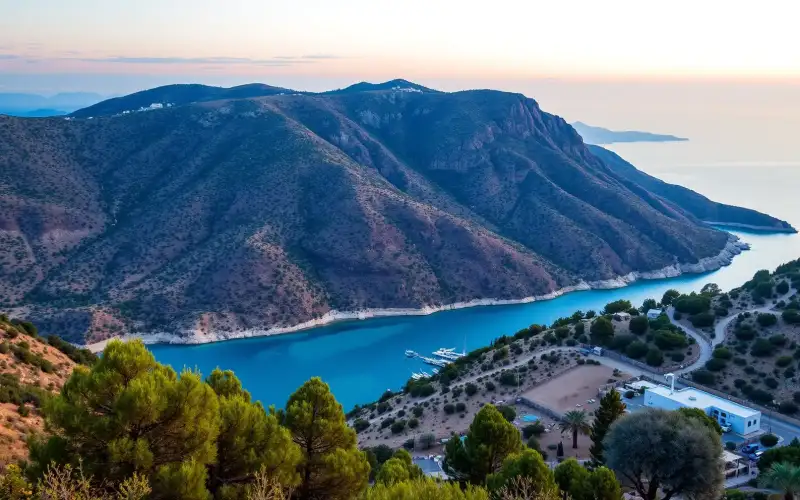
Your final full day should take you to the Troodos Mountains, Cyprus's alpine region, which sits about 90 kilometres inland from Larnaca and climbs to 1,952 metres at Mount Olympus. The drive takes roughly 90 minutes through increasingly dramatic scenery: from the flat coastal plains through orchards and vineyards into genuine mountain landscape. If you're driving, the roads are well-maintained but winding. Alternatively, join a guided tour (£55–70 including lunch and guide).
The Troodos plateau is remarkably cool—often 10 degrees Celsius cooler than the coast—and it offers a complete change of atmosphere. The mountain villages (Platres, Pedoulas, Kakopetria) are built for walkers and hikers, with narrow stone streets and traditional architecture. Pine forests dominate, and the air smells entirely different from the coast.
Spend the morning walking one of the marked trails. The Caledonian Trail (6 kilometres, moderate difficulty) descends through forest and past waterfalls. The walk takes about 2.5 hours and requires a reasonable level of fitness, but the payoff is immersion in genuine Cypriot mountain landscape. Alternatively, a gentler 2-kilometre loop around Platres village takes about 45 minutes.
Lunch at a traditional mountain taverna: stews (stifado, pastitsio), grilled meat, and local wine. The Troodos region produces excellent wine—visit a small producer if time allows. Ktima Gerolemo has a small tasting room outside Pedoulas (£8 per person for three wines and local cheese). By late afternoon, begin your return to Larnaca. You'll arrive by 6:00 PM or 7:00 PM, leaving time for a final seafront dinner and packing.
Transport and Practical Logistics
Getting around Larnaca and the wider region is straightforward for British travellers accustomed to driving on the left—Cyprus drives on the left, which is a significant advantage. Car rental from the airport costs £25–45 per day for an economy vehicle, with major companies (Hertz, Budget, Avis) offering online booking. Fuel costs roughly £1.30 per litre. Parking in Larnaca city centre is free on streets and in dedicated lots.
If you prefer not to drive, local buses operated by EMEL connect Larnaca to surrounding towns. A single journey ticket costs £1.50–2.00. For longer trips (Famagusta, Troodos), organised tours are more practical and only marginally more expensive than self-driving when fuel and parking are factored in.
Taxis are reliable and metered. A 5-kilometre journey costs around £8–10. Ride-sharing apps (Beat, Uber) operate in Larnaca but are less common than traditional taxis.
Budget Breakdown and Daily Costs
British travellers often ask about overall cost. Here's a realistic breakdown for mid-range travel in 2026:
| Category | Daily Cost (£) | Weekly Total (£) |
|---|---|---|
| Mid-range hotel (3-star) | 60–80 | 420–560 |
| Meals (breakfast, lunch, dinner) | 35–50 | 245–350 |
| Activities (diving, tours, entry fees) | 25–40 | 175–280 |
| Transport (car rental, taxis, fuel) | 15–25 | 105–175 |
| Total per day | 135–195 | 945–1,365 |
Budget is flexible. You can reduce costs by eating at local tavernas rather than tourist restaurants, skipping paid activities some days, and relying on buses instead of car rental. You can increase costs by choosing upmarket hotels (£120–180 per night) and booking premium experiences like private guides or fine dining. The figure above represents a comfortable middle ground for British travellers accustomed to quality without extravagance.
Eating Well: The Food Rhythm
One reason a week in Larnaca works is that it's long enough to move beyond restaurant novelty and into actual eating patterns. By Day Four, you'll have favourite spots. By Day Six, you'll know which taverna makes the best grilled octopus and which baker has the best bread.
Breakfast is typically light: coffee (£1.50–2.50) and a pastry or toast at a café. Lunch is the main meal, usually between 1:00 PM and 3:00 PM. Dinner is lighter, eaten late (8:00 PM or later), often just mezze (small plates of dips, cheese, grilled vegetables) and wine. This rhythm is deeply Cypriot and, once you adjust to it, becomes one of the holiday's great pleasures.
Cypriot wine is underrated internationally. Most tavernas stock local producers—Ktima Gerolemo, Tsantali, Keo—and a glass costs £2.50–4.00. The whites are crisp and mineral, the reds earthy. Food pairings are natural: grilled fish with white wine, grilled meat with red. By the end of the week, you'll have preferences.
One meal should be at a fish taverna, ordering the daily catch grilled whole. One meal should involve kleftiko (slow-roasted lamb). One meal should be meze—a dozen small plates shared across the table. These aren't tourist experiences; they're how locals eat, and they're where the place reveals itself most clearly.
Pacing and Rhythm
Seven days is long enough to avoid rushing but short enough to prevent boredom. The itinerary above balances activity days (diving, Famagusta, Troodos) with recovery days (beaches, village exploration, markets). No two days are identical, yet nothing feels frenetic. This is deliberate. Larnaca rewards slow attention. The place has been shaped by millennia—Phoenicians, Romans, Venetians, Ottomans, British colonisers—and those layers accumulate in ways that reveal themselves gradually, not all at once.
On your final evening, sitting somewhere on the seafront with a cold drink, you'll feel the week's rhythm in your body. The early starts for diving or tours, the long lazy afternoons, the late dinners, the conversations with locals who've become familiar. This is what a week in Larnaca offers: not a checklist of sights, but a genuine settlement into a place. You'll leave with photographs, certainly, but more importantly with a sense of how the place actually works—the taste of its food, the angle of its light, the pace at which things happen. That's what matters.
Comments (3 comments)