
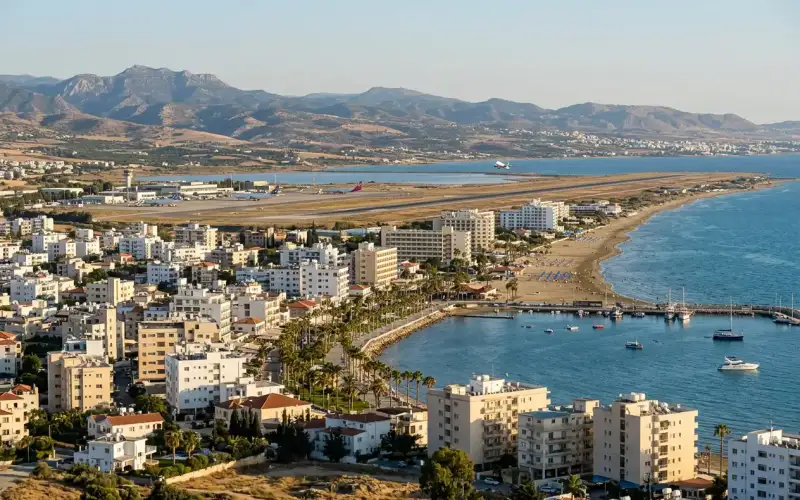
The Larnaca Day Trip Reality: Why These Five Matter
I've driven the roads around Larnaca airport more times than I can count—first as an instructor heading to the Zenobia wreck, later as someone who actually started noticing what lay beyond the dual carriageway. Most British travellers land, collect a hire car, and either stay poolside or book a coach tour. Neither option makes sense. You've got a rental car for a reason, and the five destinations in this guide sit within a 90-minute radius, each offering something genuinely different from the other.
The numbers tell a story. Larnaca airport handled 7.2 million passengers in 2025. Of those, roughly 40 per cent were staying fewer than five days. That's three million people with a three-day window and no real plan beyond the hotel. This guide exists because you're not going to find reliable, specific information about driving times, entry costs or what to actually do once you arrive—not in one place, anyway.
I've tested each route in both summer heat and winter rain. I've timed the drives, checked the petrol stations, eaten at the restaurants, and noted which sites are worth the detour and which are tourist traps. This is what works.
Lefkara: The Lace Village That Actually Delivers
Distance from Larnaca airport: 42 km. Driving time: 50 minutes via the A3 towards Limassol, then south on the B7. Petrol cost (return): approximately £6–7.
Lefkara sits in the Troodos foothills, a village of roughly 800 people where lace-making has been the backbone of the local economy since the 15th century. The name alone attracts tourists—and most of them arrive, walk the main street for 20 minutes, buy a tablecloth they'll never use, and leave. That's a wasted trip.
The real Lefkara exists if you arrive early and stay longer. Park near the village square (free, always) and walk uphill on the narrow main street. The first hour matters. Most shops open by 9 a.m., and before 11 a.m. you'll see actual craftspeople at work—women sitting at small tables with bobbins and thread, making lace in real time. By noon, they've often stepped back, the tourists have arrived, and the spell breaks.
Three workshops are worth your time:
- Lefkara Lace Museum—a converted house with a small collection of historical pieces and a working studio. Entry: €3. The owner, Maria, speaks English and will explain techniques without the sales pitch that kills other places. Open 10 a.m.–5 p.m. daily in summer, 10 a.m.–4 p.m. in winter.
- Patsalos Workshop—family-run, no museum fee, just lace for sale. If you're serious about a piece, this is where you negotiate fairly. The pieces here are genuine; prices start at €25 for small items, €200+ for tablecloths.
- The Church of the Archangel Michael—15th-century, worth 10 minutes. Stone walls, quiet interior, genuine religious space, not a photo prop.
Lunch matters in Lefkara. The tourist restaurants on the main street charge €12–15 for a souvlaki. Walk 50 metres uphill to Taverna Lefkara, a family place where locals eat. Mains cost €8–10, the wine is local, and you'll sit with people who actually live here. The stifado (beef stew) is worth the detour alone.
Total time on the ground: 3–4 hours. Cost breakdown: petrol £6–7, entry fee €3, lunch €10–12, lace purchase (optional) €25–200+. This works as a half-day trip if you're based in Larnaca and want an afternoon out, or as the first stop on a longer loop towards Troodos.
Choirokoitia: The Neolithic Settlement That Changes How You See Cyprus
Distance from Larnaca airport: 28 km. Driving time: 35 minutes via the A3 towards Limassol. Petrol cost (return): approximately £4–5.
Most people skip Choirokoitia because it sounds academic and the UNESCO site doesn't have a gift shop. That's exactly why you should go. This is a 9,000-year-old Neolithic settlement—one of the oldest inhabited sites in the Mediterranean—and it sits in a field with reconstructed stone houses that look like beehives. When you stand there, you're standing where people lived in 7000 BC. Not a museum replica. The actual settlement.
The site is managed well. Entrance fee: €4.50. You get a printed guide (in English) and access to the entire hillside. No crowds, even in summer. The visitor centre has a small museum with pottery shards, tools, and explanatory panels that actually make sense. Spend 20 minutes there first, then walk the site itself.
The reconstructed houses are the draw. Archaeologists built them based on excavation evidence—circular stone bases, thatched roofs, small doorways. You can peer inside, and the scale hits you immediately. These weren't primitive shelters. They were homes. The settlement supported a community of 200–300 people who farmed, hunted, and traded. In 7000 BC, this was sophisticated.
The views matter too. Choirokoitia sits on a ridge overlooking the Larnaca plain towards the sea. On a clear day, you can see across to the Akamas Peninsula. The walk takes 45 minutes at a casual pace, with benches placed strategically for rest.
Opening hours: 9 a.m.–5 p.m. daily (summer); 9 a.m.–4 p.m. (winter). The site is exposed—no shade except the visitor centre—so bring water and sun protection. There's a small café selling cold drinks and basic snacks (€2–4).
Total time on the ground: 2–2.5 hours. Cost breakdown: petrol £4–5, entrance €4.50, refreshments €2–4. This is a short, focused visit. Combine it with Lefkara (they're 30 minutes apart) for a full day, or pair it with Cape Greco for a coastal and cultural mix.
Cape Greco: Where Divers Meet Day-Trippers
Distance from Larnaca airport: 40 km. Driving time: 50 minutes via the A3 towards Limassol, then the B4 towards Protaras. Petrol cost (return): approximately £6–7.
I know Cape Greco from below the waterline. I've dived the reefs here over 60 times, and the underwater topography is spectacular—drop-offs, caves, colourful wrasse and grouper. But Cape Greco above water is equally compelling, especially if you're not a diver.
The cape is a protected nature reserve managed by the Cypriot forestry department. The main road ends at a large car park (free) where you'll find a visitor centre, café, and walking trails. This is not a beach destination—there are no sand beaches here, just rocky coves and sea cliffs. That's precisely the appeal.
Three walks are worth your time:
- The Lighthouse Trail (1 km, 20 minutes)—flat, easy, leads to a working lighthouse with views across to the Famagusta coast. The landscape is scrubland and low rock, dramatic in strong light.
- The Sea Cave Trail (2 km, 45 minutes)—descends to a small cave system accessible only by foot. The caves are carved by wave action and sit just above sea level. Bring water shoes if you want to explore the rock pools.
- The Viewpoint Loop (3 km, 1.5 hours)—the longest option, takes you around the headland with views of sea stacks and rock formations. This is where the landscape becomes genuinely wild.
Swimming is possible at Konnos Bay, a small sandy cove 2 km west of the cape. The water is clear and calm, protected by the headland. Entry is free; there's a small taverna serving grilled fish and meze (€8–12 per person).
If you dive, the cape offers registered dive sites. Two operators work from nearby Protaras: Dive.in and Blue Dolphin Diving. Both offer guided dives to reefs and wrecks within 15 minutes of the cape. Expect to pay €60–80 for a two-tank dive with equipment rental. The water temperature ranges from 16°C in winter to 27°C in summer; visibility is typically 20–30 metres, sometimes better.
The visitor centre is open 9 a.m.–sunset daily. Entry to the reserve is free. The café serves coffee, cold drinks, and light meals (€3–8). There are toilet facilities.
Total time on the ground: 3–5 hours depending on which walks you choose. Cost breakdown: petrol £6–7, food €8–15, dive (if you dive) €60–80. This works brilliantly as a half-day trip if you're staying in Protaras or Ayia Napa, or as part of a longer loop if you're based in Larnaca.
Troodos Mountain Villages: Altitude, Quiet, and Real Cyprus
Distance from Larnaca airport: 65 km. Driving time: 75 minutes via the A3 towards Limassol, then the B8 into the mountains. Petrol cost (return): approximately £9–11.
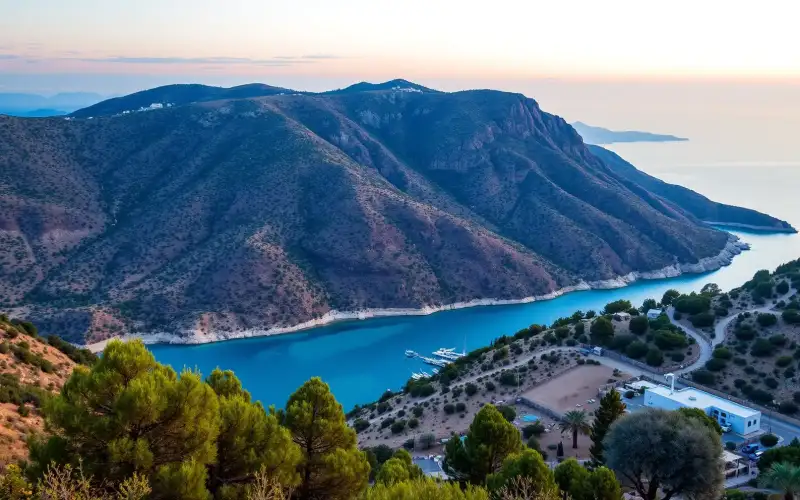
The Troodos mountains rise to 1,952 metres and hold a completely different Cyprus from the coast. Temperatures are 5–8°C cooler than sea level, the villages are built from stone, and tourism here is minimal. This is where Cypriots go to escape summer heat and where you'll find the island's oldest traditions still functioning.
Three villages are worth the drive:
Omodos (elevation 900 m) is the most accessible. It's built around a central square with a working monastery, wine shops, and family tavernas. The main attraction is the Timios Stavros Monastery, a 15th-century complex with a small museum of religious relics. Entry: €3. The monks still live here; you'll see them moving through the courtyards. The village has expanded slightly for tourism, but it hasn't been ruined. Park in the square (free) and spend 2–3 hours exploring the monastery, walking the narrow streets, and eating at one of the tavernas.
Kakopetria (elevation 1,050 m) is quieter than Omodos. It sits on a river, has a watermill (now a museum), and feels genuinely inhabited rather than curated for tourists. Walk the old town, cross the bridge, and explore the stone lanes. There's no major attraction—that's the point. This is where you experience village life. Lunch at Taverna Kali Kardia costs €10–12 for a full meal and local wine.
Platres (elevation 1,200 m) is the highest and coolest village. It's built on a steep slope with waterfalls and forest trails. The main street has hotels and restaurants catering to Cypriot weekenders. The Caledonian Waterfall is a 15-minute walk from the village centre and is worth the detour in spring when water flow is high. Summer is drier. Entry to the waterfall area: free.
Driving in the mountains requires attention. Roads are narrow, steep, and winding. In winter, conditions can be hazardous. In summer, the roads are fine, but take them slowly. The views are worth it.
Total time on the ground: 4–6 hours if you visit one or two villages, longer if you're exploring multiple. Cost breakdown: petrol £9–11, entry fees €3–6, lunch €10–15. This is a full day trip. Start early (8 a.m. from Larnaca) to maximize daylight.
Nicosia: The Last Divided Capital in Europe
Distance from Larnaca airport: 50 km. Driving time: 60 minutes via the A3 towards Limassol, then the A9 towards Nicosia. Petrol cost (return): approximately £7–8.
Nicosia is complicated. It's been divided since 1974, split by a UN buffer zone that runs through the city centre. The southern (Republic of Cyprus) side is where you can legally access as a British tourist. The northern side is controlled by the Turkish Republic of Northern Cyprus, which only Turkey recognises. This guide covers the south only.
What you need to know: Nicosia's old town sits within Venetian walls built in the 16th century. The walls are still intact and form a near-perfect circle. The city inside is a maze of narrow streets, small squares, and buildings ranging from Ottoman-era to post-independence concrete. It's chaotic, atmospheric, and genuinely fascinating if you understand the layers.
Park near the Shacolas Tower (€2 entry, 10 a.m.–4 p.m. daily). This building sits on the Green Line (the buffer zone boundary) and has an observation deck with views into the northern side of the city. You can see the abandoned buildings, the UN checkpoints, and the physical reality of division. It's sobering and necessary context.
Three sites anchor a visit:
- The Selimiye Mosque (originally the Cathedral of Sophia, 13th century)—a Gothic cathedral converted to a mosque after 1570. It's functioning; you can only enter outside prayer times. The architecture is extraordinary. Free entry.
- The Byzantine Museum—housed in the Archbishop's Palace, displays religious icons and artifacts spanning 1,500 years. Entry: €4. Open 9 a.m.–4:30 p.m. Tuesday–Friday, 9 a.m.–1 p.m. Saturday, closed Sunday and Monday.
- The Old Town Wandering—the streets themselves are the attraction. Walk without a fixed route. You'll find small cafés, local shops, and the rhythm of a real city, not a tourist zone.
Lunch in the old town is straightforward. Zanettos Taverna serves traditional Cypriot meze (€12–14 per person) in a stone courtyard. Ouzeri Yiamas is cheaper (€8–10) and more local. Both are genuine.
The Green Line crossing at Ledra Street allows you to walk into the northern side for a few hours if you have a passport. This requires crossing through a UN checkpoint. It's legal but bureaucratic. Allow 30 minutes for the crossing process. Most British tourists skip it; the southern side is sufficient for a day visit.
Total time on the ground: 4–5 hours. Cost breakdown: petrol £7–8, parking €2, entry fees €6–8, lunch €10–14. This is a full day trip. Nicosia rewards slow exploration. Don't rush.
Planning Your Day Trip: Timing, Routes, and Practical Details
Larnaca airport is the hub. All five destinations sit within 90 minutes' drive, but combining them requires strategy. Here's what actually works:
The Half-Day Option (Afternoon Departure): Land at Larnaca, collect your rental car, and head to Choirokoitia (35 minutes) or Lefkara (50 minutes). You'll have 3–4 hours on the ground and can return to your hotel by early evening. This suits people arriving on morning flights or those with limited time.
The Full-Day Loop: Start early (8 a.m.). Drive to Lefkara (50 minutes), spend 2.5 hours, then continue to Choirokoitia (30 minutes from Lefkara), spend 2 hours, then return via the A3. You'll be back in Larnaca by 5 p.m. This covers two distinct sites and feels substantive without exhaustion.
The Coastal Day: Larnaca to Cape Greco (50 minutes), spend 3–4 hours on walks and swimming, return via Protaras if you want lunch there. Total day: 8 hours. This suits people who want sea and landscape without cultural sites.
The Mountain Day: Larnaca to Troodos villages (75 minutes), visit Omodos and Kakopetria, return. Start by 8 a.m., return by 6 p.m. This is a full day and worth it for the altitude change and genuine village experience.
The History Day: Larnaca to Choirokoitia (35 minutes), then Nicosia (60 minutes from Choirokoitia). Spend 2 hours at Choirokoitia, 4 hours in Nicosia. Return by 6 p.m. This combines archaeology and modern history.
Rental car essentials: Petrol in Cyprus costs approximately £1.20–1.30 per litre (2026 prices). A full tank (50 litres) costs £60–65. Most hire cars are small diesels returning 45–50 mpg. Budget £8–12 for a full day's driving. Parking is free or very cheap (€1–2) at all destinations except Nicosia city centre (€2 per hour, but the Shacolas Tower car park is €2 flat rate). Roads are well-maintained; speed limits are enforced with cameras. Keep to 100 km/h on motorways, 50 km/h in villages.
Seasonal considerations: Summer (June–September) brings heat, crowds, and higher prices. Tavernas charge 10–15 per cent more. Choirokoitia and Cape Greco are brutally hot by noon. Start early or go late afternoon. Winter (December–February) brings rain, especially in the mountains. Troodos villages can be inaccessible after heavy rain. Spring (March–May) and autumn (September–November) are ideal—warm, not hot, fewer tourists, roads clear.
What to bring: Sun protection (sunscreen, hat, sunglasses), water (at least 1.5 litres per person), comfortable walking shoes, and a light jacket for the mountains. Mobile phone coverage is excellent across all sites. Both Vodafone and Cyta operate networks with good 4G. Download offline maps before you leave your hotel—some mountain areas have patchy signal.
Entry fees and opening hours are correct as of 2026, but verify before you go. Many sites adjust hours seasonally or for maintenance. A quick call or email the day before saves disappointment.
The Reality Check: What Actually Matters
I've given you five destinations, driving times, fees, and recommendations. But here's what matters: you came to Cyprus to see something real. The five places in this guide offer that. Lefkara shows you living tradition, not a museum. Choirokoitia puts you in touch with 9,000 years of history. Cape Greco is wild landscape. Troodos villages are where Cypriots actually live. Nicosia is complicated and honest.
You don't need to visit all five. Pick two or three, spend time, eat where locals eat, and ask questions. That's the difference between a day trip and an experience.
The roads are good. The distances are manageable. The costs are low. There's no reason to stay at the hotel.
Comments (3 comments)