
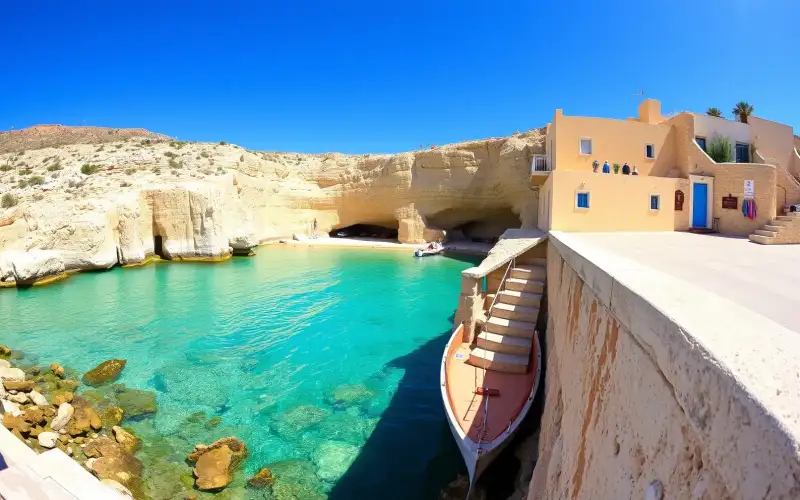
The Morning I Found the Underwater Statues
I arrived at Cape Greco on a Thursday in April, when the spring light hits the limestone cliffs at an angle that makes everything look like it's been freshly painted. The car park was nearly empty—just two other vehicles and a coach from a Protaras hotel, its passengers already disappearing down the main coastal path. I'd driven the 40-odd kilometres from Larnaca Airport in just under an hour, and the moment I stepped out and felt that particular Mediterranean wind—salt-sharp, warm, moving fast—I understood why people make the journey.
What I didn't expect was the statue. Not immediately visible, but marked on the tourist board near the visitor centre: an underwater bronze figure, submerged in the shallows below the cliffs, part of a project to create an artificial reef and art installation. It's the sort of detail that doesn't make it into most guidebooks, the kind of thing you stumble upon when you actually walk the paths instead of just reading about them. That's what Cape Greco offers—not just the obvious sea caves and photo-stop beaches, but the small discoveries that make a day trip feel like you've genuinely explored somewhere.
Getting There from Larnaca: Routes and Timing
By Car: The Practical Route
Most British visitors rent a car, and for Cape Greco, it's the right choice. From Larnaca town centre, you head southeast through Dhekelia and Xylophagou, following signs toward Protaras and then Cape Greco. The route is straightforward—mostly flat, well-signposted, and takes 50-65 minutes depending on traffic and which hotel you're leaving from. If you're staying near the airport, you're looking at closer to 40 minutes. The road surface is good; there's nothing technical about the drive, though summer traffic toward Protaras can slow you down between July and September.
Parking at Cape Greco is free and plentiful. There's a main car park near the visitor centre, and several smaller lay-bys along the coastal access road. I'd recommend arriving before 10 a.m. if you're going in peak season (June to August), not because the car park fills up, but because the paths get crowded and the sun becomes intense by midday. In April or May, or again in September and October, you can arrive anytime and have a peaceful morning.
By Bus: The Budget Option
If you're not driving, the bus network from Larnaca is workable but requires planning. Larnaca Bus Station (near the old town) operates services toward Protaras—you'll need to check the current timetable, as routes change seasonally. The journey takes around 90 minutes and costs roughly €5-7 one way. From Protaras town, you'll need a taxi (€12-18) or local bus to reach the cape itself, adding another 15-20 minutes and extra cost. Most people find this more hassle than it's worth for a day trip; a car rental or taxi from the airport costs around €50-70 for the day and gives you flexibility.
By Taxi or Organised Tour
Larnaca taxis can arrange a day trip, though prices vary widely. Expect €80-120 for a return journey with waiting time, or around €150-200 if you want the driver to wait while you explore. Several tour operators in Larnaca offer guided Cape Greco trips (usually €45-65 per person) that include transport, a guide, and sometimes a boat trip to the caves. These are useful if you want context and company, though they tend to move quickly and stick to the main sights.
The Cape Itself: What You'll Actually See
The Visitor Centre and Main Pathways
Cape Greco is a national forest park, managed by the Cyprus Department of Forests. The visitor centre near the car park has basic facilities—toilets, water, a small shop selling postcards and maps—and staff who can advise on path conditions. The main coastal path is clearly marked, paved in places, and loops around the cape's southeastern tip. It's not strenuous; most sections are flat or gently sloping, and the full loop takes around two hours at a leisurely pace, though you can do shorter sections.
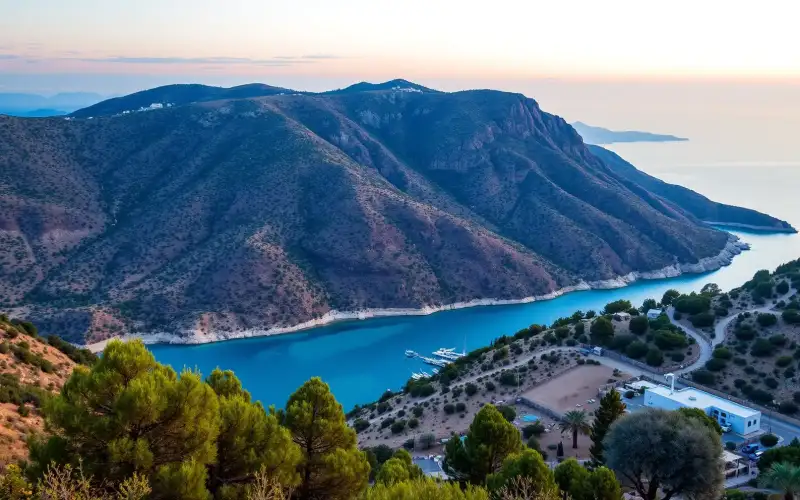
The paths are genuinely beautiful. You're walking through Mediterranean scrubland—low junipers, wild herbs, the occasional agave plant—with the sea constantly visible below. The limestone cliffs are honey-coloured in morning light, darker and more dramatic in afternoon shadow. In spring, there are wildflowers: scarlet poppies, yellow daisies, purple vetches. The geology is fascinating too—you can see different layers of rock, caves carved into the cliff face, and evidence of ancient quarrying.
The Sea Caves: Spilies tis Kyprianis
The most famous feature is the sea caves, particularly the large cave system on the eastern side of the cape. These aren't show caves with lighting and steps; they're natural caves carved by wave action over millennia. You can view them from the cliff paths above, or, if you're reasonably fit and careful, scramble down rough stone steps to reach the cave entrances at sea level. The caves are cool and dramatic inside, with water seeping through the limestone roof and small pools in the floor. The air smells of salt and wet stone.
Local legend claims the caves were used by pirates and smugglers, though there's no solid historical evidence. What is certain is that they've been known to fishermen and sailors for centuries. The main cave extends quite far back, and if you bring a torch (phone torches work fine), you can explore 30-40 metres in. Be cautious of the uneven floor and slippery rocks. Wear shoes with grip, not flip-flops. The caves are free to visit and accessible year-round, though they're best visited in calmer seas—check conditions before you scramble down.
The Beaches: Konnos and Pernera
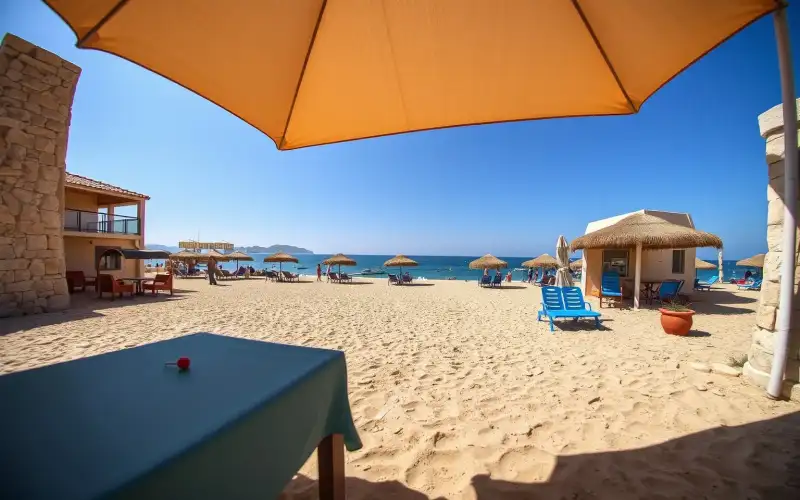
There are several small beaches along the cape. Konnos Beach, on the western side, is the most accessible and has become increasingly popular. It's a crescent of sand and fine pebbles, backed by low cliffs and a handful of tavernas. The water is clear and calm, ideal for swimming. It gets crowded in summer, but in shoulder seasons it's peaceful. There's a small charge for sun loungers (€3-5 per day) if you want to settle in, or you can bring your own towel and use the free beach space.
Pernera Beach, slightly further around the cape, is smaller and quieter. Both beaches have basic facilities—showers, toilets, a few tavernas selling drinks and simple food. Prices are typical for Cyprus: a coffee costs €2-3, a beer €3-4, a simple lunch around €8-12. The tavernas are casual, family-run places; don't expect haute cuisine, but the food is fresh and honest.
Walking Routes and Practical Considerations
The Coastal Path Loop
The main walking route is the coastal path that loops around the cape's tip. Starting from the visitor centre, you can walk clockwise or counterclockwise; the loop is roughly 4 kilometres and takes 90 minutes to 2 hours at a normal pace. The path is marked with occasional signs and paint blazes on rocks. Sections are paved or have defined stone steps; other sections are rougher, following natural terrain. There are several viewpoints with benches, and the views are consistently good—cliffs, caves, the open sea, and on clear days, the Turkish coast to the north.
If you're less confident or have limited time, the section from the visitor centre to Konnos Beach is easier and shorter (about 1 hour return), and it gives you the main highlights without the full loop. The path to the sea caves requires more care—steeper, rougher, and with some scrambling—but it's very doable for anyone reasonably fit and wearing proper footwear.
What to Pack and Wear
Bring plenty of water—at least 1.5 litres per person. There's no water on the paths themselves, and the sun is intense, even in spring. Sun protection is essential: high-factor sunscreen, a hat, sunglasses. The paths offer little shade, and the limestone reflects light intensely. Wear proper walking shoes or trainers; the terrain is rocky and sometimes loose. Flip-flops are fine for the beaches but not for the paths. A light waterproof jacket is useful in spring and autumn, though summer is reliably dry. Bring a small first-aid kit—plasters for blisters, antiseptic for scrapes—as the rocky terrain can cause minor injuries.
A camera or phone is obvious, but also consider binoculars. The cape is good for bird watching, particularly in spring and autumn when migrants pass through. You might see kestrels, hoopoes, or various warblers. A printed map from the visitor centre is useful, though phone maps work fine too.
Best Times to Visit
April to May and September to October are ideal. The weather is warm but not scorching, the paths are less crowded, and the light is excellent for photography. June to August is busy and hot; midday temperatures regularly exceed 30°C, and the beaches and paths can feel crowded. November to March is quieter and cooler, but some days are cloudy or rainy. The sea is swimmable year-round, though it's coldest in January and February.
Beyond the Main Cape: Nearby Attractions
The Zenobia Wreck and Diving
If you're a qualified diver, Cape Greco is the jumping-off point for dives on the Zenobia, a Swedish car ferry that sank in 1980 just off the coast. It's one of Europe's most famous wreck dives, lying at 42 metres. Several dive operators in Protaras and Larnaca run Zenobia trips; expect to pay €100-150 per dive, including equipment. It's an advanced dive, requiring deep-water certification. If you're not a diver but interested, some operators offer introductory dives or snorkelling trips to shallower wrecks in the area.
Protaras and Fig Tree Bay
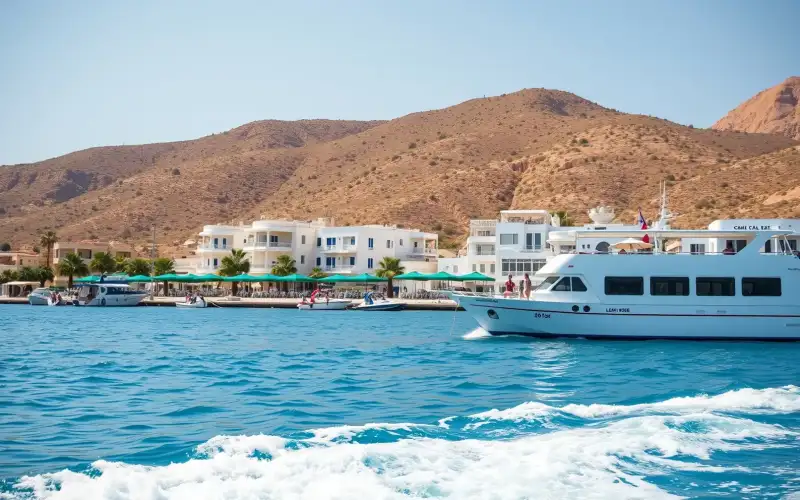
Protaras town, 10 kilometres west of Cape Greco, is a beach resort that's grown considerably in recent years. Fig Tree Bay is its main beach—a long, sandy curve backed by hotels and tavernas. It's more developed and busier than the cape's beaches, but it's a good option if you want more facilities, restaurants, or evening entertainment. You can easily combine a morning at Cape Greco with an afternoon in Protaras.
Ayia Napa: The Bigger Picture
Ayia Napa, another 15 kilometres west, is Cyprus's main beach resort. It has a busy nightlife, water parks, and numerous restaurants and bars. Many visitors base themselves in Ayia Napa and do Cape Greco as a quieter day trip escape. The drive from Ayia Napa to the cape takes about 20 minutes.
A Day in Practice: How It Might Unfold
You leave Larnaca at 8 a.m., arriving at Cape Greco around 9 a.m. You park, buy a map from the visitor centre, and start the coastal path loop at 9:30. By 11 a.m., you've reached the sea caves, spent 20 minutes exploring them, and are heading toward Konnos Beach. You arrive at Konnos around noon, swim, and have lunch at one of the tavernas. By 2 p.m., you're back on the path, completing the loop by 3:30 or 4 p.m. You drive back to Larnaca, arriving around 5 p.m., in time for an early dinner or to relax at your hotel.
Alternatively, if you're less interested in walking, you could spend the morning at Konnos Beach, have lunch, explore the caves in the afternoon, and still be back in Larnaca by early evening. Or, if you're based in Ayia Napa or Protaras, you might visit Cape Greco as a morning trip before heading to the beach resort for the afternoon and evening.
The Deeper Connection
What struck me most about Cape Greco, standing on the cliff edge in the afternoon light with the sea far below and the paths stretching back toward the visitor centre, was how little it had changed from descriptions I'd read written in the 1980s. The caves are still there, the cliffs still dramatic, the paths still quiet enough that you can hear the sea and the occasional bird. Tourism has touched it lightly—a visitor centre, some basic facilities, marked paths—but it hasn't been developed or packaged into something generic. It remains a place where you actually feel like you're exploring, not just consuming a tourist attraction.
For anyone based in Larnaca for a week or weekend, Cape Greco is worth a full day. It's close enough to be accessible, varied enough to hold your attention, and beautiful enough that you'll find yourself wanting to return. Bring water, wear proper shoes, arrive early if you can, and don't rush. The caves will still be there in the afternoon, and the coastal path doesn't go anywhere.
Comments (4 comments)