
The Larnaca to Lefkara Question: Why This Village Matters
I arrived in Lefkara on a Thursday morning in October when the light hits the whitewashed buildings at just the right angle to make you understand why Leonardo da Vinci supposedly visited here in 1482. The village clings to a mountainside 800 metres above sea level, about 45 kilometres southwest of Larnaca Airport, and it's the kind of place where you'll see women sitting on doorsteps working on lace frames—not as a performance for tourists, but because they're actually making a living that way.
The question I get asked most by British travellers at Larnaca is simple: is Lefkara worth the effort? The answer depends on what you want. If you're after beach bars and duty-free shopping, no. If you want to step into a genuinely preserved medieval village where the economy still revolves around traditional crafts, where the architecture hasn't been demolished and rebuilt, and where you can eat lunch in a taverna that's been run by the same family for forty years—then absolutely.
How Do You Get There from Larnaca?
The Bus Route (Budget Option)
The most economical way is the EMEL bus service from Larnaca city centre. The number 43 bus departs from the main bus station (near Finikoudes Beach) roughly every 90 minutes during the day. A single ticket costs €2.50 (as of 2026), and the journey takes about 75-90 minutes depending on stops. The bus winds through the Larnaca plains, passing through villages like Athienou and Odou before climbing into the Troodos foothills.
The return buses run until around 18:00, so you need to plan your departure carefully. I'd recommend catching a morning bus—the 08:30 or 09:15 departures give you a solid 6-7 hours in the village. The bus station in Lefkara is basic but functional, located at the lower entrance to the village near a small café.
Rental Car (Flexibility Option)
If you're comfortable driving on Cypriot roads, renting a car gives you freedom. Larnaca has numerous rental agencies (Hertz, Avis, Budget) with daily rates starting around €25-35 for a basic hatchback. The drive from Larnaca Airport takes roughly 50-60 minutes via the A3 motorway toward Limassol, then the B7 inland road toward Athienou. The roads are well-maintained and clearly signposted, though the final 15 kilometres climb steeply with tight switchbacks.
Parking in Lefkara can be tight during peak season (July-August), but in spring or autumn, you'll find spaces near the village entrance or in the small car park beside the traditional coffee house. Having a car also lets you visit nearby villages like Kato Lefkara (the lower village) or continue to the Troodos Mountains for a longer day out.
Guided Tours (Convenience Option)
Several tour operators from Larnaca run half-day and full-day Lefkara excursions, typically costing €45-65 per person. These usually include hotel pickup, a guided walk through the village, a lace workshop visit, and lunch. The advantage is no navigation stress and some historical context. The disadvantage is you're locked into the group's schedule and eating at the restaurant they've partnered with.
What's the Best Time to Visit Lefkara?
Lefkara in summer (July-August) is heaving with tour groups, especially between 11:00 and 14:00. If you go then, arrive by 08:30 or stay until after 17:00 to experience the village when it's quieter. Spring (April-May) and autumn (September-October) are genuinely better—temperatures are pleasant (18-25°C), the light is softer, and you can actually have conversations with shopkeepers without a queue behind you.
Winter (November-February) is quiet but can be grey and occasionally rainy. The village sits high enough that it occasionally gets snow, which transforms it into something from a Christmas card but also means some shops close unpredictably. Avoid Easter week and the first week of August if you want any sense of authenticity.
Where Do You Find Authentic Lefkara Lace?
Understanding the Lace Market
Lefkara lace—or lefkaritiko—has been made here since the 15th century. It's a distinctive geometric style, usually white linen on white linen, worked on wooden frames. The problem is that most of what tourists see is either mass-produced in factories or imported from Bulgaria and India. Real handmade Lefkara lace takes 40-80 hours to complete a single tablecloth, which explains why authentic pieces cost €150-400 rather than €20.
Where to Buy the Real Thing
The Lefkara Lace Museum and Workshop (open 10:00-17:00, closed Sundays) is run by a cooperative of actual lacemakers. You can watch women working and buy directly from them—no middleman markup. Pieces here are certified handmade, and prices reflect the labour. A small doily runs €30-50; a full tablecloth €200-300.
The traditional coffee house (Kafeneio) near the bus station sometimes has older women selling lace they've made themselves. These pieces are often cheaper than the museum shop because the makers are selling directly, and the quality is identical. Spend ten minutes chatting—they usually appreciate genuine interest over quick sales.
Avoid the shops with window displays facing the main street. These are almost entirely tourist traps selling imported stock. The real makers work in their homes or small workshops down the side streets. If you see a woman sitting outside with a lace frame, stop and ask if she has pieces for sale. She almost certainly does.
What Should You Actually Do in Lefkara?
The Walking Route
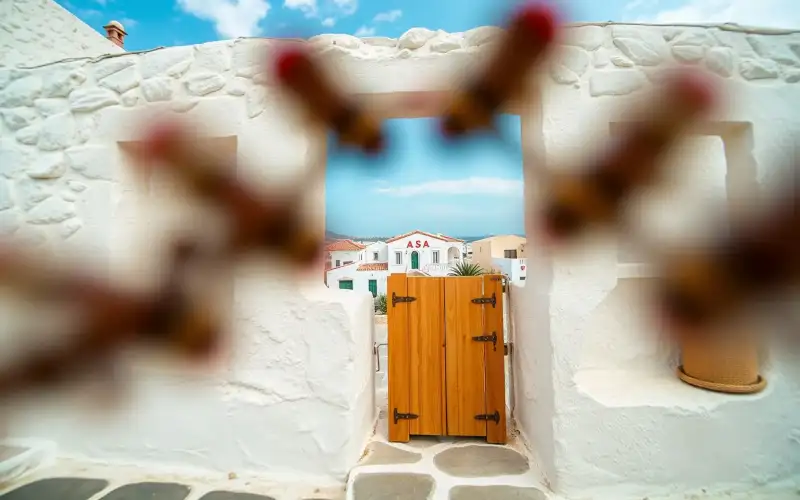
The village is small enough (population about 800) to explore on foot in 2-3 hours. Start at the lower entrance and walk uphill along the main street, which winds in a gentle spiral. You'll pass the Church of the Holy Cross (16th century, with a beautiful bell tower), several tavernas, and dozens of lace shops. Continue to the upper village where the streets narrow and become genuinely medieval—whitewashed stone houses, bougainvillea spilling over walls, cats sleeping in doorways.
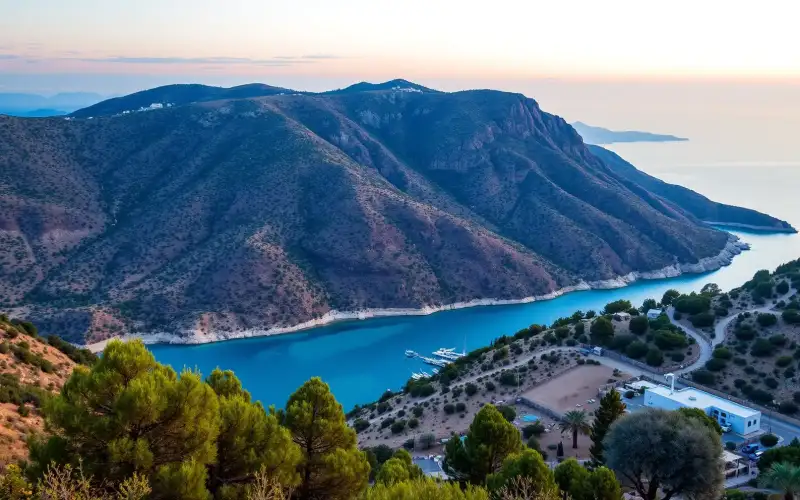
The viewpoint at the top of the village overlooks the Larnaca plains all the way to the coast. On clear days, you can see the Salt Lake's white edges and sometimes the mountains of the Akamas Peninsula to the west. This view alone justifies the trip.
The Silverware Tradition
Lefkara is also known for filigree silverwork, a craft that's less famous than lace but equally skilled. Several workshops still operate, particularly around the main square. The pieces are genuinely beautiful—delicate silver jewellery, cutlery handles, decorative boxes—and prices are reasonable (€15-80 for small pieces) because labour costs are lower than Western Europe.
Where Do You Eat in Lefkara?
The Taverna Question
There are about fifteen tavernas in Lefkara, and quality varies wildly. The ones with laminated menus and pictures of food are generally tourist-focused and mediocre. The ones to seek out are:
- Taverna Lefkara (main street, uphill from the bus station)—run by a family for three generations, serves proper Cypriot meze (€12-15 per person), fresh fish on Fridays, and the owner, Yiannis, actually cares about the food. Closed Mondays.
- Platanos (near the central square)—shaded by an enormous plane tree, serves simple grilled meats and vegetables, excellent local wine, feels like eating at someone's house.
- To Patriko (upper village, quieter location)—smaller, fewer tourists, excellent kleftiko (slow-roasted lamb wrapped in paper), book ahead in summer.
What to Order
Order the meze—it's the traditional way to eat in Cyprus. You'll get 8-12 small plates (hummus, grilled halloumi, village salad, grilled octopus, lamb keftedes, etc.) for €12-18 per person. Pair it with a local Cypriot wine or the local retsina. Avoid anything described as
Comments (4 comments)