
The Larnaca Base Advantage: Why This Airport Hub Works for Road Trips
I arrived at Larnaca airport on a rain-soaked March morning in 2024, picked up a hired Hyundai i20, and drove straight into the Troodos Mountains. Three hours later, I was sitting in a village café in Omodos, drinking thick coffee and watching mist roll across vineyards that had been there for centuries. That single decision—to use Larnaca as a hub rather than splitting time between three coastal towns—shaped the entire trip. No repacking hotel rooms. No navigating unfamiliar check-ins. Just a car, a map, and the freedom to chase light across Cyprus's most interesting landscapes.
Larnaca airport receives over three million passengers annually, making it Cyprus's primary entry point. For British travellers especially, the airport sits just 4 kilometres from town, cutting transfer time to under 10 minutes. The location is strategically positioned: you're 45 minutes from Troodos National Park, 90 minutes from the Akamas Peninsula's red-earth tracks, and within reasonable reach of Paphos, Limassol and the Zenobia wreck site near Larnaca itself. Most importantly, you avoid the rental-car trap of paying premium rates for multiple drop-off locations or wasting petrol on repositioning drives.
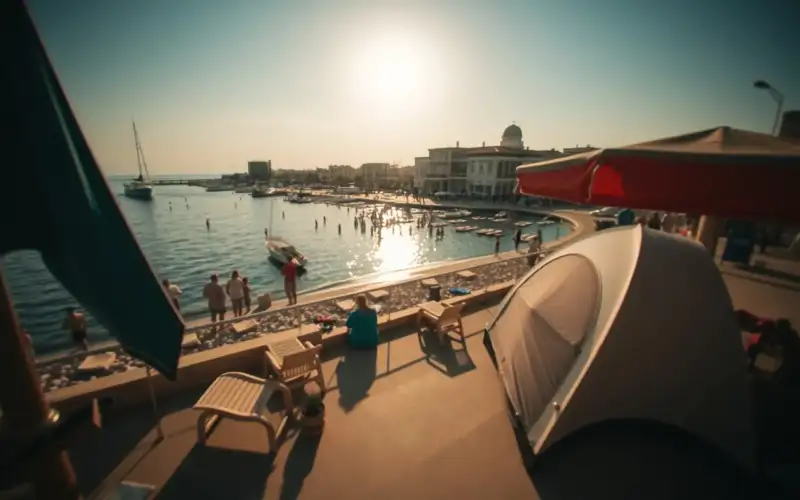
The Salt Lake and Mackenzie Beach lie on your doorstep. The Hala Sultan Tekke mosque sits 15 kilometres south. Yet Larnaca itself is often treated as merely a transit point—a place to sleep before heading elsewhere. That's a mistake. Using the town as your operational base and returning each evening means you'll actually see how light changes on the Larnaca waterfront, where the best seafood tavernas operate, and which beaches clear of crowds after 4 p.m.
Calculating Fuel Costs and Understanding Cyprus's Road Network
Before you pick up a rental car, understand the economics. In 2026, unleaded petrol in Cyprus costs approximately €1.35 per litre. A typical week-long self-drive loop covering 1,200 kilometres in a mid-range hatchback (consuming roughly 6 litres per 100 kilometres) will cost around €97 in fuel. That's less than a single night in a mid-range Limassol hotel.
Cyprus's road network is surprisingly efficient. The main A3 motorway connects Larnaca to Limassol (65 kilometres, 50 minutes), and secondary roads are generally well-maintained. Mountain roads—particularly those ascending to Troodos villages—are narrow and winding but clearly marked. Speed limits are enforced; cameras operate on main routes, and fines for speeding start at €50 and escalate rapidly. The national speed limit is 100 kilometres per hour on motorways, 90 on open roads, and 50 in towns. Most rental companies include third-party liability insurance; comprehensive coverage costs an additional €8–12 daily.
Petrol stations cluster around major towns and motorway exits. The network is reliable, but don't expect 24-hour pumps in mountain villages. The main chains—Caltex, Shell, and Speedway—accept card payments and are found near all significant junctions. One practical note: hire companies typically charge €0.25–0.40 per kilometre if you return the car with less fuel than you collected it. Always fill the tank before returning; the markup is brutal.
Motorway Tolls and Road Tax
Cyprus has no motorway tolls. The A3 is free. This differs sharply from mainland Europe and makes longer drives considerably cheaper. Road tax is included in your rental agreement; you won't encounter additional charges for using specific routes.
Navigation and Mobile Data
Offline maps are essential. Download Google Maps or Maps.me before departure; mobile signal is strong in towns and along main routes but patchy in high Troodos villages. Most rental companies offer GPS units (€5–8 daily), but your phone will suffice if you've prepared offline coverage. Driving is on the left, which British drivers will find immediately comfortable.
Parking in Towns: Where to Leave Your Car Safely
Parking anxiety kills road-trip joy. Here's the reality: Cyprus towns lack the chaotic parking politics of Athens or Istanbul. Most towns have designated zones, and enforcement is light compared to the UK.
Larnaca town centre: The waterfront promenade has free parking (2-hour limit, rarely enforced). The municipal car park near the old fort costs €1.50 per hour, with a €6 daily cap. Overnight parking at your hotel is typically included; confirm when booking.
Troodos villages (Omodos, Platres, Kakopetria): Parking is free and abundant. These villages receive fewer than 500 daily visitors outside summer holidays. You'll find spaces within 50 metres of the main square in every case. No meters, no permits, no stress.
Paphos: The harbour-front car park charges €1.50 per hour (€8 daily maximum). Street parking near the castle is free but limited to 2 hours. The municipal lot on Gladstone Street is your safest bet for all-day parking (€1 per hour, €6 daily cap).
Limassol: The seafront has metered parking (€1.50 per hour). The old town's narrow streets have free parking but tight spaces unsuitable for rental cars. Use the municipal lot on Anexartisias Street (€1.50 per hour, €8 daily cap).
Akamas Peninsula: The Lara Beach car park (the main access point) is free but fills by 10 a.m. in summer. Arrive early or visit in shoulder seasons (April–May, September–October).
A practical tip: never leave valuables visible. Rental cars are occasionally targeted for break-ins, particularly in Paphos and Limassol. Use the hotel safe for passports and excess cash. Rental companies provide steering-wheel locks; use them if parking overnight outside your hotel.
Self-Drive Routes: Four Loops Worth Your Time
Cyprus's geography divides neatly into four distinct regions, each workable as a day trip from Larnaca. The following loops are designed for drivers with varying energy levels and interests.
Loop One: Troodos Mountains and Wine Villages (160 kilometres, 7 hours with stops)
This is the route I'd recommend first. It's the most historically rich and visually stunning, yet entirely manageable in a single day. Depart Larnaca at 8 a.m., heading west on the A3 motorway toward Limassol. Exit at Kofinou (35 kilometres), turning north into the foothills. The landscape shifts immediately: flat coastal plains give way to terraced vineyards and pine forest.
Your first stop is Omodos, a village of honey-coloured stone houses arranged around a central square. The Timios Stavros Monastery dates to the 15th century; entry costs €2 and takes 30 minutes. The monastery's wine shop sells local Mavron and Xynisteri at €6–9 per bottle—substantially cheaper than Larnaca supermarkets. Eat lunch here; the taverna adjacent to the square serves slow-cooked stews and grilled halloumi for €8–12 per person.
Continue north to Kakopetria (25 kilometres), climbing through increasingly dense forest. The village sits at 650 metres and marks the southern gateway to Troodos proper. The old stone houses cluster around a rushing stream; it's a photographer's dream and virtually tourist-free on weekdays. From here, the road ascends to Platres (20 kilometres), the highest village in the range at 1,100 metres. The air cools noticeably; if you're visiting in winter, snow is possible.
Descend westward to Prodromos and then Pedoulas, stopping at the Archangelos Michael Church in Pedoulas (entry free; donation €1–2 suggested). The church's Byzantine frescoes are extraordinary—15th-century work depicting saints with a rawness and intimacy rarely seen in restored churches. The drive down the western slope toward Polis takes you through the most remote section of the Troodos range. Villages here—Kritou Marottou, Stavros tis Psokas—are barely developed. You'll see more goats than tourists.
Return to Larnaca via Paphos (if you have energy) or backtrack through the Troodos spine. Total fuel cost: approximately €12–14. This loop works year-round, though mountain roads occasionally close after heavy snow (December–February). Check road conditions at your hotel reception before departing.
Loop Two: Akamas Peninsula and Coral Bay (200 kilometres, 8 hours)
This loop targets beach-focused travellers and divers. Head west on the A3 to Paphos (65 kilometres, 50 minutes). Park near the harbour and spend 90 minutes exploring the castle and the Roman mosaics at Kato Paphos (€4.50 entry). The mosaics date to the 3rd century AD and depict hunting scenes and mythological figures with remarkable detail.
From Paphos town, drive north toward Polis (32 kilometres, winding mountain road). Polis is a working fishing town, not a resort. The harbour smells of salt and diesel; the tavernas serve fresh fish at €12–16 per kilogram. This is where you'll find real Cyprus, not the packaged version.
The Akamas Peninsula road departs Polis heading south. This is a red-earth track, passable in a standard rental car but requiring careful driving. The road deteriorates progressively; expect 20–30 minutes of slow driving to reach Lara Beach. The beach itself is stunning—a crescent of golden sand backed by low cliffs. Sea turtles nest here in summer (June–August); the beach is partially protected and has minimal facilities. Swimming is excellent; the water is clearer here than at developed beaches.
Return via the same route, or continue south to Coral Bay (a developed beach resort with better facilities but less character) and loop back to Paphos via the coastal road. The return journey to Larnaca takes 70 minutes on the A3 motorway.
Loop Three: Zenobia Wreck and Salt Lake (80 kilometres, 5 hours)
This loop is for divers and maritime history enthusiasts. The Zenobia is a Swedish-registered roll-on/roll-off cargo ship that sank in 1980, just 40 kilometres south-east of Larnaca. It lies in 42 metres of water and is the largest wreck in the Mediterranean accessible to recreational divers. Dive operators in Larnaca run daily trips; expect to pay €80–120 per person for a two-tank dive, including equipment rental.
If you're not diving, the loop still works. Drive south from Larnaca to the Salt Lake (15 kilometres, 20 minutes). In summer, the lake's mineral-rich water turns pink—a result of algae and brine shrimp. The colour is most vivid in July and August. The lake is surrounded by salt pans, and you can walk the perimeter in 90 minutes. Bring water; there's no shade.
Continue to Cape Kiti lighthouse (another 20 kilometres) and return via the coastal road. Stop at Pervolia village for a late lunch. The waterfront tavernas here serve grilled octopus and sea urchin roe at reasonable prices. This loop is best in shoulder seasons (April–May, September–October); summer heat makes the salt lake walk uncomfortable.
Loop Four: Limassol Castle and Kolossi (120 kilometres, 6 hours)
Limassol is Cyprus's second-largest city and a port with genuine character. Drive west on the A3 (65 kilometres, 50 minutes). Park in the municipal lot and explore the castle (€4.50 entry). The castle dates to the 14th century and housed the Knights Templar; the views from the ramparts extend across the harbour to the Akamas Peninsula.
From Limassol, drive inland to Kolossi Castle (25 kilometres, 30 minutes), a Crusader fortress that produced the famous Commandaria wine. Entry costs €2.50. The castle is smaller than Limassol's but more atmospheric; fewer visitors, better preserved medieval stonework. The surrounding Commandaria wine region produces some of Cyprus's finest dessert wines. Several wineries offer tastings (€5–10 per person, including a small glass and snacks).
Return to Limassol via the same route, or loop north through the foothills toward Paphos and return via the A3. Total fuel cost: €15–18.
A Complete Seven-Day Itinerary Based in Larnaca
This itinerary balances driving with rest days, assumes mid-range fitness and comfort, and prioritises sites accessible by road without requiring specialist hiking or diving skills.
Day One: Arrival and Salt Lake
Collect your rental car at the airport. Drive to your hotel in Larnaca (10 minutes). Spend the afternoon at Mackenzie Beach or the Salt Lake. Rest; adjust to the time difference. Evening meal at a waterfront taverna. Total driving: 15 kilometres.
Day Two: Troodos Mountains Loop
Depart 8 a.m. Follow Loop One as described above. Return to Larnaca by 5 p.m. Evening meal in the old town. Total driving: 160 kilometres.
Day Three: Rest Day or Local Exploration
Spend the day in Larnaca. Visit the Archaeological Museum (€2.50), the Hala Sultan Tekke mosque (€1.50), or simply relax on the beach. Alternatively, drive to nearby Kiti (15 kilometres) to see the Church of Angeloktisti, a 6th-century basilica with remarkable Byzantine mosaics. Return for dinner. Total driving: 30 kilometres or less.
Day Four: Paphos and Akamas Peninsula
Depart 8 a.m. Follow Loop Two as described. Return by 6 p.m. This is a full day; expect to feel the driving. Total driving: 200 kilometres.
Day Five: Limassol and Kolossi
Depart 9 a.m. (later start, shorter loop). Follow Loop Four. Return by 5 p.m. Stop at a Commandaria winery for a tasting. Total driving: 120 kilometres.
Day Six: Zenobia Dive or Salt Lake Walk
If diving: book a morning dive trip (6 a.m. departure from Larnaca harbour). Return by 2 p.m. Spend the afternoon resting. If not diving: drive to the Salt Lake, walk the perimeter, and return for a late lunch. Total driving: 30 kilometres.
Day Seven: Departure or Final Exploration
If your flight departs afternoon, spend the morning at Mackenzie Beach or revisit a favourite spot from earlier in the week. Return the rental car by noon. Total driving: 15 kilometres.
Practical Considerations for Self-Drive Success
Fuel Station Locations and Hours
Major fuel stations operate 6 a.m.–10 p.m. daily. Caltex stations on the A3 motorway are open 24 hours. In villages, fuel is available but often only during daylight hours. Never start a mountain loop with less than a half-tank.
Insurance and Rental Company Policies
Compare quotes from at least three companies. Avoid companies that charge per-kilometre rates; unlimited mileage is standard and costs €25–40 daily for a hatchback. Check the excess (damage waiver) carefully; it's typically €300–500. Decline the rental company's insurance if your personal car insurance or credit card provides rental coverage abroad.
Road Conditions and Seasonal Considerations
Winter (December–February): Mountain roads occasionally close after heavy snow. Coastal routes remain passable. Spring (March–May) and autumn (September–October) are ideal; weather is mild, and crowds are manageable. Summer (June–August): coastal areas are extremely busy; Troodos villages offer relief from heat. Petrol prices are consistent year-round.
Emergency Services and Breakdowns
The emergency number is 112. Most rental companies provide roadside assistance; confirm the process before departing the rental office. Mobile signal is strong in towns and along main routes. The Cyprus Tourism Organisation operates a 24-hour helpline: +357 2230 3011.
Practical Packing and Equipment
Bring a physical map as backup (offline Google Maps is adequate, but a paper map provides psychological comfort). Sunscreen is essential; UV intensity is high year-round. A small cooler with water bottles saves money and keeps you hydrated during long drives. Binoculars are useful for bird-watching in the Akamas Peninsula. An adapter for your phone charger (UK plugs fit Cyprus outlets without conversion).
Wear comfortable driving shoes. The rental car will have air conditioning, but mountain roads can feel chilly; bring a light jumper. Driving gloves are unnecessary; the steering wheel won't burn your hands.
Money-Saving Strategies
Fill your petrol tank the evening before long drives; prices are consistent, but you'll avoid last-minute panic. Eat lunch in villages rather than towns; a taverna meal in Omodos costs €8–10 per person; the same meal in Paphos costs €14–18. Buy water and snacks at supermarkets rather than petrol stations (50% markup at pumps). Most archaeological sites charge €2–4.50 entry; these costs add up, so prioritise based on genuine interest rather than tourist-guide recommendations.
Frequently Asked Questions About Self-Driving Cyprus
Can I drive on a UK licence?
Yes. Your UK driving licence is valid in Cyprus for up to 12 months. Carry your licence, passport, and proof of insurance at all times. An International Driving Permit is not required but can be useful if you plan to rent in other countries during the same trip.
What's the best time to self-drive Cyprus?
April–May and September–October offer ideal conditions: mild temperatures, manageable crowds, and reliable fuel availability. July–August are extremely busy; roads are congested, and petrol stations in remote areas occasionally run low. Winter mountain roads are occasionally impassable.
Is a standard rental car suitable for all routes?
Yes. A hatchback or compact sedan handles every route in this guide. The Akamas Peninsula road is rough but passable in a standard car if driven carefully. Four-wheel drive is unnecessary and will cost an extra €20–30 daily.
How far in advance should I book a rental car?
Two weeks is sufficient; booking further ahead rarely saves money. Book directly with the rental company rather than through comparison sites; you'll often receive better rates and clearer communication about insurance terms.
Are there speed cameras on Cyprus roads?
Yes. Fixed cameras operate on the A3 motorway and main routes into towns. Mobile units are deployed in villages and school zones. Speeding fines start at €50 and escalate significantly for excessive speeds. The speed limit is strictly enforced.
Can I take a rental car to the Turkish-occupied north?
No. Rental agreements explicitly prohibit crossing into the Turkish Republic of Northern Cyprus. The border is heavily policed; attempting to cross will result in fines, confiscation of the vehicle, and potential legal consequences.
What happens if I break down?
Call your rental company's roadside assistance number (provided in your rental documents). Most companies have partnerships with local mechanics and will arrange recovery or repair. Wait in a safe location; don't attempt repairs yourself. Signal failure is rare; most breakdowns are fuel-related (running out of petrol) or tyre issues.
Is it safe to self-drive Cyprus?
Cyprus has one of Europe's lowest crime rates. Roads are well-maintained and clearly marked. Driving standards are similar to the UK. The main hazard is overconfidence on winding mountain roads; drive slowly, expect sharp turns, and never overtake on blind corners. Fatigue is a genuine risk on long days; take breaks every two hours.
Final Thoughts: Why This Approach Works
Using Larnaca as your base isn't a compromise; it's a strategic advantage. You avoid the rental-car shuffle, you return to a familiar place each evening, and you gain flexibility. If a village captures your attention, you can spend an extra hour there without worrying about hotel check-in times. If weather turns, you're close enough to retreat without losing the day.
The loops described here are tested routes, but they're not prescriptive. The beauty of self-driving is the ability to deviate. See a sign for a village you've never heard of? Turn. Spot a church on a hillside? Stop. This is how you discover the Cyprus that doesn't appear in guidebooks—the taverna where the owner's mother cooks lunch, the viewpoint where no other tourists stand, the moment when the landscape suddenly makes sense.
Comments (4 comments)