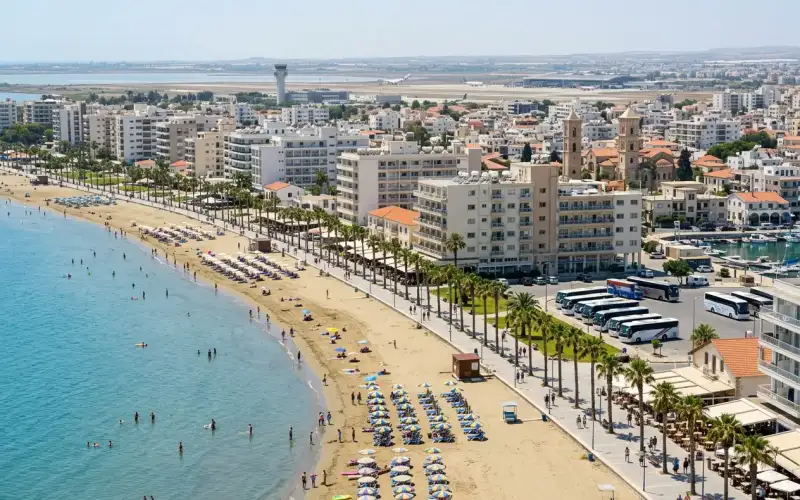
Last summer, I watched a father wrestle a double buggy through Larnaca's old town cobblestones while his two children melted in 38-degree heat. By lunchtime, they'd abandoned the pram and were eating ice cream in the shade of a taverna courtyard. That's the reality of family travel to Larnaca—it works brilliantly if you plan it right, but improvisation costs you time and temper.
I've managed airport operations for two decades and lived in Larnaca for five years. I've seen what works for British families and what doesn't. This handbook pulls together the practical intelligence you need: where to stay with kids, which beaches won't exhaust you, which restaurants actually welcome children rather than tolerate them, and the unglamorous logistics that make the difference between a holiday and a headache.
Which Hotels Actually Work for Families?
The mistake most parents make is booking a "family room" in a standard hotel and hoping for the best. Larnaca's hotels fall into three useful categories for families.
All-Inclusive Resorts with Real Kids' Clubs
The Sunwing Waterworld and similar all-inclusive properties on the Larnaca-Ayia Napa strip offer genuine childcare infrastructure. Kids' clubs run from 9am to 6pm, with supervised activities, meals and entertainment included. Parents get actual time to themselves—a rarity on family holidays. Expect to pay £80–£120 per night for a family of four in July-August. The trade-off: you're somewhat isolated from Larnaca town itself, and the food is standardised. But if your priority is stress-free meals and guaranteed supervision, these deliver.
The Sunwing has a water park on-site, which matters more than you'd think. Children can burn energy in a controlled environment without you having to drive anywhere. The kids' club staff speak English fluently and are trained in child supervision—not just babysitting.
Mid-Range Family Hotels in Town
Hotels like the Radisson Blu and the Lordos Beach Hotel sit closer to Larnaca's centre and offer family suites with separate living areas. These run £60–£90 per night and give you flexibility. You're not locked into resort meals, you can walk to restaurants and the seafront, and you retain independence. The Lordos Beach Hotel has a small pool and direct beach access, which simplifies mornings.
The advantage here is proximity. Larnaca's town centre is compact. You can walk to the salt lake (flamingos in winter), the marina, and decent restaurants without a car. For families with older children (8+), this setup often works better than an all-inclusive resort because kids want some autonomy and you're not paying for facilities you won't use.
Apartment Rentals for Longer Stays
If you're staying two weeks or longer, a family apartment in Dekelia or Makenzy (the residential areas north of town) offers better value and more space. You'll pay £40–£70 per night for a two-bedroom apartment with kitchen and washing machine. This matters more than hotels advertise. With young children, laundry accumulates fast in hot climates. Having your own machine saves money and stress.
The downside is isolation. You'll need a car or willingness to use taxis. But for families staying longer, the space and kitchen access usually win out. You can prepare simple breakfasts, store groceries, and let children nap in their own rooms without disturbing your evening.
Which Beaches Are Actually Safe and Manageable?
Not all Larnaca beaches suit families with small children. I've seen parents wade into the Mediterranean with toddlers and realise mid-stride that the shelve-off is steep and the undertow is real.
Mackenzie Beach (Best for Young Children)
Mackenzie is 2km north of town centre and has a long, shallow shelve that extends 30 metres before dropping off. The sand is fine and compacted. Most importantly, it's patrolled by lifeguards daily from 10am to 6pm (May to October). The beach has a taverna at the north end, a shower block, and a small playground. Parking is free and located directly behind the beach. Arrive by 9:30am to secure a spot in summer.
The water temperature in July-August reaches 28°C, warm enough that children don't resist entering. The shallow zone means you can supervise confidently. Bring a pop-up sun tent—essential. The beach has no natural shade, and sun cream alone won't protect a toddler for six hours.
Finikoudes Beach (Town Centre, Busy but Reliable)
Finikoudes runs along Larnaca's seafront promenade and is the most accessible beach if you're staying in town. It's crowded in July-August, but the shallowness is consistent and lifeguards are present. The promenade has restaurants, ice cream shops, and a children's playground at the southern end. For families with older children (6+) who can manage busier environments, Finikoudes works as a half-day option.
The key advantage: you can walk from most town-centre hotels. You don't need transport. The disadvantage is that it's genuinely packed mid-summer, and finding space for a sun tent requires early arrival.
Beaches to Avoid with Small Children
Larnaca Castle Beach and the southern beaches near Ayia Napa are steep and rocky. The shelve-off is abrupt. I wouldn't take children under five there. The water is beautiful and clearer than Mackenzie, but the logistics are wrong for supervision.
What Attractions Actually Keep Children Engaged?
The honest truth: Larnaca isn't a theme-park destination. It's a working port city with cultural sites and natural features. That shapes what you can realistically do with children.
Larnaca Salt Lake (Winter, November–March)
The salt lake north of town is genuinely spectacular in winter when flamingos migrate there. Thousands of pink flamingos create a scene children remember. It's free to visit, accessible by car (park at the northern end), and takes 45 minutes to two hours. Bring binoculars and a camera. In summer, the lake dries out and loses its appeal.
Larnaca Castle and Town Museum
The castle sits on the seafront and is climbable for children 5+. It's small—you'll cover it in 45 minutes—but the views from the top are worth the effort. Entry is €2.50 per adult, €1.50 for children. The town museum is indoors and air-conditioned, which matters in August. Exhibits cover local history and archaeology. Children under 8 will lose interest quickly, but it's a useful rainy-day option.
Ayia Napa Water Park (30km Away)
If your children are water-park enthusiasts, Ayia Napa Water Park is 30km east and reachable by car in 35 minutes or by coach tour (several operators run daily trips from Larnaca hotels). It's a proper water park with slides, wave pools and lazy rivers. Entry is €35–€45 per adult, €25–€30 for children. Bring your own food and water—prices inside are inflated. The park opens 10am–6pm daily in summer.
The journey is worth it if your children are 6+. Younger children will find many rides inaccessible due to height restrictions.
Zenobia Wreck Diving (For Older Children and Parents)
The Zenobia, a Swedish cargo ship that sank in 1980, is one of Europe's best wreck dives and lies 40 metres down 8km off Larnaca. This isn't a family activity for young children, but if you're a diving family or want to learn, Larnaca-based dive operators run courses and guided dives. Children can start learning at age 10. It's genuinely special—a 200-metre ship on the seabed, now a marine habitat. Not every family will do this, but it's worth knowing it exists if diving interests you.
Which Restaurants Actually Welcome Families?
This is where local knowledge matters. Many traditional tavernas welcome children but lack high chairs and won't adjust portions. Others actively cater to families.
Seafront Tavernas (Finikoudes Promenade)
The tavernas along Finikoudes—including Psarolimano and Miltos—have outdoor seating, high chairs available, and menus with simple grilled fish and souvlaki. They're not fancy, but they're reliable. Children can eat simply (grilled chicken, chips, salad) while parents eat well. Expect £8–£12 per main course. Service is slow by British standards but patient with children. Order water and soft drinks rather than alcohol if you're driving.
Taverna Tou Psara (Town Centre, Off Zinonos Street)
This family-run taverna has been operating for 30 years and genuinely likes children. The owner will adjust portions, suggest mild dishes, and allow children to order creatively. It's not a chain; it's a real family business. Expect £10–£14 per main. The courtyard seating is partially shaded. This is the type of place where you'll see Cypriot families eating, which is usually a good sign.
Pizza and Casual Chains
Pizza Hut and local pizza restaurants are safe options if children are tired or picky. They're air-conditioned, quick, and predictable. Not exciting, but they exist if you need them.
Supermarkets for Self-Catering
If you're in an apartment or want to prepare simple meals, Carrefour (town centre, Zinonos Street) and Sklavenitis (Mackenzie area) stock British brands—Branston beans, Twinings tea, Heinz products—alongside local options. Prices are 15–25% higher than UK supermarkets. Fresh fruit and vegetables are cheaper and better quality. Opening hours are typically 8am–9pm weekdays, 8am–10pm Saturday, 10am–8pm Sunday.
Practical Logistics: The Things No One Mentions
Pushchairs and Buggy Access
Larnaca's old town has cobbled streets that are genuinely difficult with a pushchair. If you're staying in town, you'll either need an all-terrain buggy or you'll abandon it and use a baby carrier. The seafront promenade is flat and paved—fine for buggies. Hotels can usually store a pushchair during the day if you want to explore on foot.
Hire a car if you have young children. Taxis are available but don't have child seats, which is a legal requirement in the UK. Some car rental companies offer child seats for €5–€8 per day. Book in advance.
Sun Safety and Heat Management
Larnaca's summer sun is intense. Temperatures regularly exceed 35°C in July-August. Children dehydrate quickly and burn despite sun cream. The practical approach:
- Apply SPF 50+ sun cream every two hours and after swimming
- Invest in a UV-protective pop-up tent for the beach (£20–£30, available at supermarkets)
- Limit beach time to 10am–1pm and 4pm–6pm. The midday heat (1pm–4pm) is dangerous for young children
- Carry a 1.5-litre water bottle per child and enforce drinking every 20 minutes
- Dress children in UV-protective swimwear if they're pale or prone to burning
Dehydration in young children shows as irritability, reduced urination, and dry lips before obvious thirst. Monitor this actively.
Medical Care and Pharmacies
Larnaca General Hospital is on Grigoris Afxentiou Street and has a 24-hour A&E department. It's modern and handles routine issues competently. Pharmacies are abundant—one on nearly every street corner. Pharmacists speak English and can advise on minor ailments. Bring your EHIC card (or UK Global Health Insurance Card from 2024 onwards) for reduced-cost hospital treatment.
Common issues: gastroenteritis (usually mild), sun-related dehydration, and minor cuts. Tap water is safe to drink throughout Larnaca.
Transport: Car Hire vs. Taxis vs. Walking
For families, a car is essential if you're staying longer than three days or want to visit Ayia Napa. Car hire from the airport costs £15–£25 per day for a small family car. Petrol is €1.30–€1.50 per litre (as of 2026). Parking in town is free on most streets; paid parking exists but is inexpensive.
Taxis are reliable but expensive for families. A journey from the airport (20km) costs €35–€40. For a week's holiday with multiple journeys, a hire car is cheaper and more flexible.
Walking within Larnaca town is feasible for families with older children, but the heat limits this in summer. A 20-minute walk in 36°C heat with a toddler is miserable.
Timing: When to Go
April-May and September-October are ideal for families. Temperatures are 25–28°C, water is warm enough for swimming, and beaches are less crowded than July-August. If you must travel in summer, book accommodation with a pool and plan beach visits early in the day. Winter (November–March) is mild and pleasant but water temperature drops to 16–17°C, which most children won't tolerate.
Sample Three-Day Itinerary
Here's what a realistic family break looks like:
| Day | Morning | Afternoon | Evening |
|---|---|---|---|
| Day 1 (Arrival) | Arrive, hire car, check into hotel | Rest, swim in hotel pool | Casual dinner at seafront taverna |
| Day 2 | Beach at Mackenzie (9:30am–1pm) | Hotel rest, lunch, nap | Walk Finikoudes promenade, ice cream |
| Day 3 | Larnaca Castle and town museum | Lunch, Carrefour supermarket shopping | Taverna Tou Psara dinner |
Final Practical Checklist
Before you book, confirm these details with your hotel:
- Do they provide a high chair and cot? (Most do, but confirm)
- Is the pool fenced or supervised? (Safety matters)
- Is there air conditioning in the room? (Non-negotiable in summer)
- What's the cancellation policy if a child gets ill?
- Do they offer early breakfast for families with young children?
Pack these items (not always available locally or overpriced): infant sun cream SPF 70+, familiar medications, any prescription items, and comfort items (favourite toys, books). Supermarkets stock most nappies and wipes, but brands differ.
Larnaca works for families. It's not a theme-park destination, but it's manageable, affordable, and genuinely pleasant for a week's break. The key is planning around heat, choosing the right beach, and accepting that some days will be quieter than others. British families have been coming here for years because it works. Now you know why.
Comments (4 comments)