The first thing that strikes you when you step out of Larnaca Airport is how close everything is. The salt lake — a genuine flamingo habitat from November through March — sits right alongside the runway approach. The old town is eight minutes by taxi. The beach is closer still. I've been flying into this airport for twenty years, and that immediacy never gets old. Larnaca doesn't make you work for it the way some destinations do.
For British first-timers, that's genuinely good news. This is a city that rewards curiosity without punishing inexperience. Prices are reasonable, English is spoken almost universally, and the infrastructure — roads, signage, payment systems — is familiar enough that you won't spend your first afternoon feeling completely lost. That said, there's real depth here if you know where to look. This handbook is designed to give you both: the practical foundation and the local knowledge that makes the difference between a decent holiday and a brilliant one.
Understanding Larnaca: The City in Context
Larnaca is Cyprus's third-largest city and its main international gateway. Around 85,000 people live here permanently, swelling considerably in summer. It sits on the south-eastern coast, roughly midway between Nicosia (inland, 45km north) and Ayia Napa (50km east along the coast). Limassol, the island's second city, is about 75km west.
The city has been continuously inhabited for at least 3,000 years — the ancient Phoenician city of Kition sat roughly where the modern centre stands. You can still visit the archaeological site on Kimonos Street, where Bronze Age walls and a Phoenician temple complex sit in an open excavation trench. It's free to enter, often overlooked, and genuinely fascinating.
Historically, Larnaca was Cyprus's most important port, and that trading heritage shaped its character. It's cosmopolitan, relatively relaxed, and noticeably less flashy than Limassol or Ayia Napa. That suits most British visitors perfectly — especially the 35-65 age bracket who want good food, interesting history and a proper beach, rather than rooftop bars and all-night clubs.
When to Go
The honest answer for most first-timers is May, June or September. July and August are spectacular if you love heat — temperatures regularly hit 38°C — but the beaches are crowded, prices peak, and the midday sun is genuinely punishing. May and June give you warm water (22-25°C by June), long days, and a city that's busy but not overwhelmed. September is arguably the sweet spot: sea temperatures peak around 28°C, crowds thin after the first week, and the light turns golden in a way that makes everything look better than it deserves to.
Winter visits (November through February) are underrated. Larnaca stays mild — rarely below 12°C — and the flamingos arrive on the salt lake in November. The city functions normally; it's not a ghost town. Accommodation drops significantly in price, and you'll have Finikoudes beach almost to yourself on a weekday morning.
Neighbourhoods: Where to Base Yourself
Larnaca isn't huge, but understanding its distinct areas will help you choose accommodation and plan your days more effectively.
Finikoudes and the Seafront
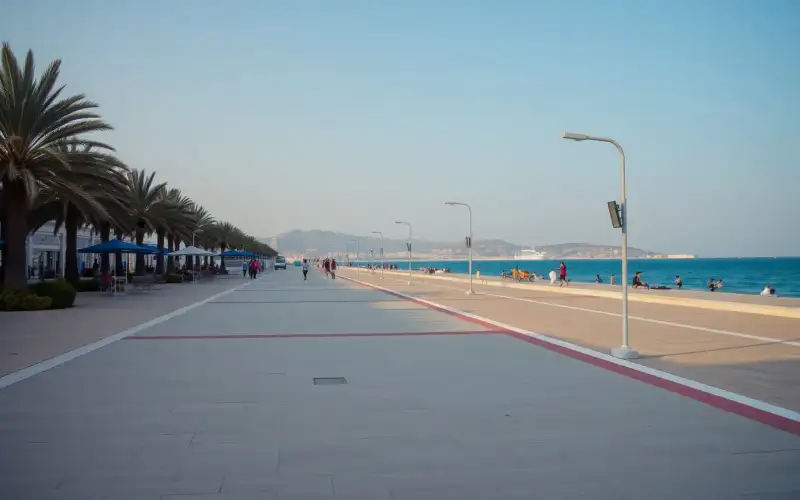
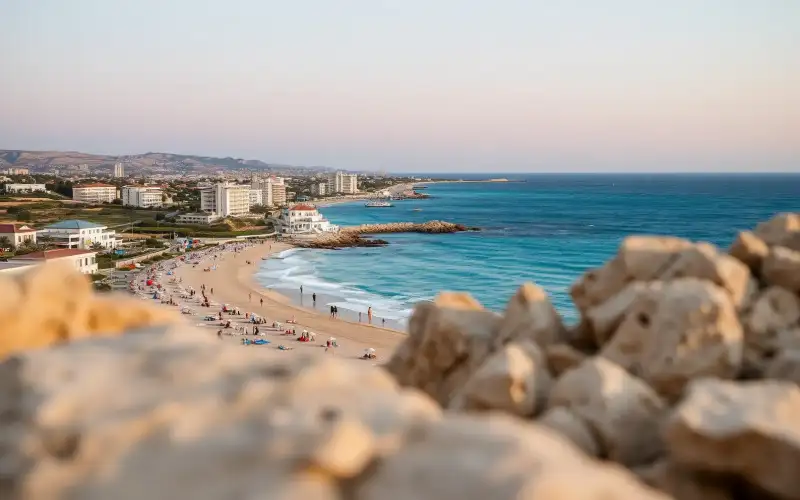
The palm-lined Finikoudes promenade is the city's social spine. Hotels, apartments, restaurants and cafés line the beachfront road (Athinon Avenue), and the beach itself — about 1.5km of sandy shore — is cleaned daily in season and has Blue Flag status. This is where most first-time visitors stay, and for good reason: you're walking distance from the old town, the castle, the marina and half a dozen good tavernas. Apartment rentals here tend to be in mid-rise blocks with balconies facing the sea. Expect to pay £70-£120 per night for a decent one-bedroom in peak season.
The Old Town (Skala)
Immediately south of the castle, Skala is the historic Turkish Cypriot quarter — largely empty of its original inhabitants since 1974, now repopulated by a mix of young Cypriots, expats and tourists. The streets are narrow, the buildings old and slightly crumbling in a photogenic way, and the restaurant quality here is consistently higher than the tourist strip. Zenon of Kition Street and the surrounding lanes are where I tend to eat when I'm not diving. Apartments in Skala are often in converted traditional houses — more character, slightly less convenience.
Mackenzie Beach Area
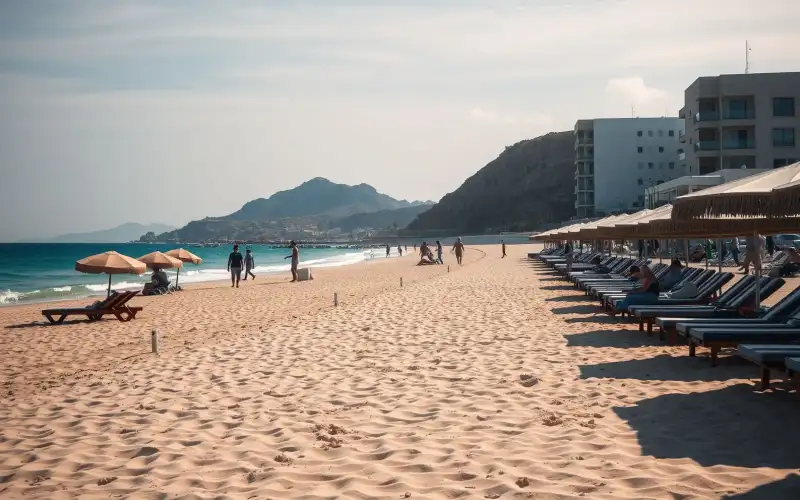
About 2km south of the centre, Mackenzie Beach sits directly below the airport flight path. Planes pass overhead every 20-30 minutes in peak season, which some people find thrilling and others find intolerable — worth knowing before you book. The beach itself is excellent: wider than Finikoudes, less crowded, with a string of beach bars serving food all day. Families with self-catering apartments tend to gravitate here. It's a 10-minute taxi ride into town, or a 25-minute walk along the coast path.
Dhekelia Road Corridor
Heading east from the centre along the coast towards Ayia Napa, the Dhekelia Road passes through a series of small resort areas — Pyla, Voroklini, Pervolia — with a mix of villa rentals, apartment complexes and smaller hotels. This is excellent territory for families or groups wanting more space. Villas with private pools are genuinely affordable here compared to equivalent properties in the Algarve or Balearics. A three-bedroom villa with pool runs around £1,200-£1,800 per week in July, depending on the property.
The Beaches: What to Expect
Larnaca's beaches are sandy, which isn't a given in Cyprus — much of the island's coastline is rocky or pebbly. The main options within easy reach of the city centre are:
- Finikoudes Beach — Central, convenient, Blue Flag, sunbeds and umbrellas for hire (€5-€8 each per day). Gets busy from 10am in July and August. Best visited early morning or late afternoon.
- Mackenzie Beach — Wider, slightly coarser sand, excellent beach bars. Planes overhead. Popular with locals and expats. Sunbeds available but there's also free sand.
- Faros Beach — At the southern tip of the bay, near the lighthouse (faros means lighthouse in Greek). Quieter, less developed, good for snorkelling around the rocky edges.
- Pervolia Beach — About 12km south-east of the centre. Worth the drive or taxi for a less crowded experience. Some good fish tavernas nearby.
- Mazotos Camel Park Beach — Yes, there's a camel park. The beach adjacent to it is pleasant and rarely busy. About 25km from the city centre.
For snorkelling, the area around the Zenobia wreck off Larnaca port is world-class — though the wreck itself, lying at 16-42 metres, requires scuba certification. The shallower reef around the stern can be explored by confident snorkellers, but diving it properly is something else entirely. If you're a certified diver and you haven't dived the Zenobia, that's reason enough to choose Larnaca over any other Cyprus destination.
Key Sights: The Honest Assessment
Larnaca isn't Valletta or Dubrovnik — it doesn't overwhelm you with UNESCO-listed monuments. But what it has is genuinely worth your time.
Larnaca Fort and Medieval Museum
The Ottoman fort at the southern end of Finikoudes beach is small but well-presented. Built in the late 16th century on Byzantine foundations, it houses a collection of medieval artefacts and offers good views over the bay from the battlements. Entry is €2.50. It takes about 45 minutes to go around properly. Open Tuesday to Sunday, 8am-5pm (4pm in winter). Don't rush it — the courtyard alone is worth sitting in for ten minutes.
Church of Saint Lazarus
This is Larnaca's most important building, full stop. The 9th-century Byzantine church stands in the centre of the old town and contains the tomb of Saint Lazarus — yes, the one Jesus raised from the dead, who according to tradition became the first Bishop of Kition after fleeing Judea. The iconostasis is extraordinary: gilded, floor-to-ceiling, and genuinely moving even if you have no religious connection. Free entry, though donations are welcomed. Dress code is enforced — shoulders and knees covered.
The Salt Lake
Visible from the plane as you land, the salt lake is a 2.2km-wide natural lagoon that fills with seawater in winter and dries to a salt flat in summer. From November through March, greater flamingos — sometimes 10,000 or more — feed here on the brine shrimp. The walking path around part of the lake starts near the Hala Sultan Tekke mosque (itself worth visiting — it's one of Islam's most sacred sites and entry is free). Binoculars are useful; the flamingos tend to congregate in the centre of the lake.
Pierides Museum
Housed in a 19th-century colonial mansion on Zinonos Kitieos Street, the Pierides is a private collection of Cypriot antiquities assembled over five generations by the same family. It's small — you can see everything in an hour — but the quality is high and the context genuinely helpful for understanding the island's layered history. Entry is €3. Open Monday to Saturday, 9am-4pm.
Food and Drink: Where to Eat Well
The tourist strip along Finikoudes has plenty of restaurants, and some of them are perfectly decent. But the best eating in Larnaca happens slightly off the main drag.
My standing rule in any Cypriot town: if the menu has photographs of the food and the waiter is standing outside trying to attract you in, keep walking. The places worth eating in don't need to hustle.
For meze — the definitive Cypriot dining experience, a procession of small dishes that can run to 25 courses — head to the tavernas around Skala or along the Dhekelia Road. Expect to pay €18-€25 per person including house wine. The meze at a good taverna will include halloumi (grilled and fresh), loukanika sausage, grilled octopus, various dips, fresh bread, lamb kleftiko, and whatever the kitchen feels like adding. It's not fast food. Allow two hours minimum.
For something lighter, the coffee shops around Plateia Evropis (Europe Square) do excellent Cypriot coffee — served in small cups, thick, with grounds in the bottom — and fresh pastries in the morning. A coffee and a bourekki (cheese or meat pastry) costs around €3-€4.
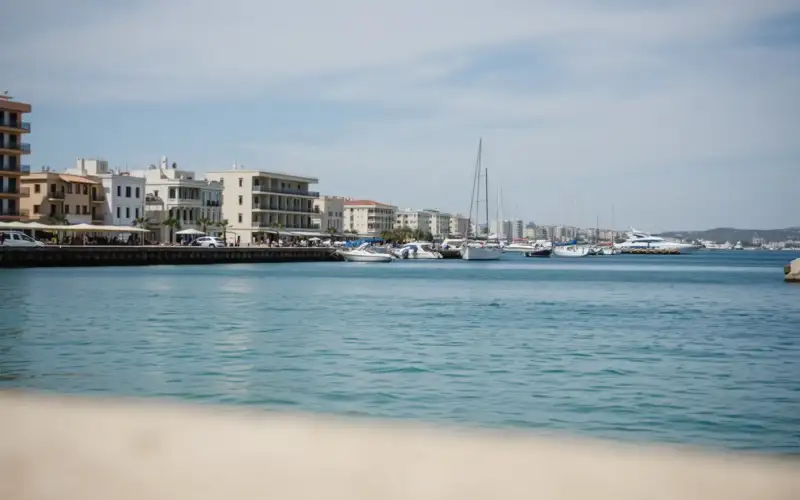
Fish restaurants cluster around the old harbour and the fishing boats moored near the fort. The catch is landed daily. Grilled sea bream, red mullet and sword fish are reliable choices. Avoid anywhere displaying lobster prominently at suspiciously low prices.
Getting Around: Practical Logistics
| Journey | Method | Approximate Cost | Time |
|---|---|---|---|
| Airport to Finikoudes | Taxi | €10-€12 | 8-12 minutes |
| Airport to Finikoudes | Bus (Route 425) | €1.50 | 20-25 minutes |
| Larnaca to Limassol | Intercity bus | €4 | 75 minutes |
| Larnaca to Nicosia | Intercity bus | €4 | 55 minutes |
| Larnaca to Ayia Napa | Bus (Route 702) | €3 | 75 minutes |
| City centre to Mackenzie | Taxi | €6-€8 | 8-10 minutes |
Taxis in Larnaca are metered and generally honest. The BOLT app works well here and tends to be 10-15% cheaper than flagging a cab on the street. Car hire is worth considering if you plan to explore beyond the city — the roads are good, driving is on the left (same as the UK), and the island is small enough that Paphos is only two hours away. Expect to pay €35-£55 per day for a small automatic in peak season, including basic insurance.
The urban bus network (run by OSEA) covers the main tourist areas and is cheap — €1.50 per journey, or €5 for a day pass. It's not the fastest way to get around, but Route 425 between the airport and the city centre runs every 30 minutes and is perfectly adequate for luggage-free journeys.
Apartments and Villas: The Self-Catering Advantage
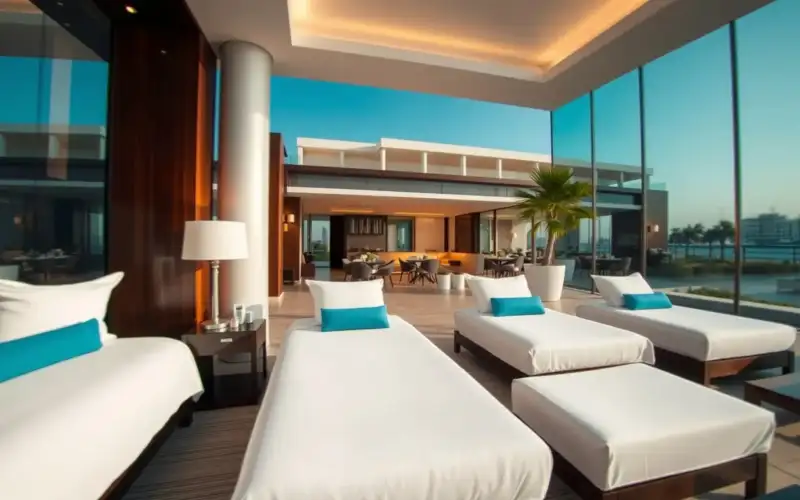
For first-timers, the choice between a hotel and a self-catering apartment or villa is worth thinking through carefully. Hotels along Finikoudes offer convenience and the comfort of having someone else sort the towels. But Larnaca's apartment and villa rental market is strong, and for families or groups of three or more, it almost always makes financial and practical sense to self-cater.
The key advantage isn't just cost — it's flexibility. Cypriot supermarkets (the Alphamega chain has a large branch on Griva Digeni Avenue, about 15 minutes' walk from Finikoudes) stock excellent local produce: halloumi, fresh vegetables, local wine, olives, fresh bread. A self-catering family of four can eat breakfast and lunch at home for €25-€30 per day, freeing budget for proper restaurant dinners.
Apartments in the Finikoudes area typically offer one or two bedrooms, a kitchenette or full kitchen, and a balcony. Many buildings have a small pool. For larger groups or families wanting more space, the villa corridor along Dhekelia Road offers properties with private pools, gardens and multiple bedrooms at prices that compare very favourably with equivalent rentals in Spain or Greece.
A word of advice from someone who's stayed in both: if you're diving — and you should be — a self-catering apartment near the marina is more practical than a hotel on the beach strip. You'll be up at 7am for the dive boat and back by noon, and having somewhere to rinse gear and hang a wetsuit without disturbing hotel housekeeping makes the whole trip run more smoothly.
Verdict: Is Larnaca Right for Your First Cyprus Trip?
Almost certainly yes — with one caveat. If you're primarily looking for nightlife and beach-party energy, Ayia Napa is your destination, not Larnaca. But for the vast majority of British visitors in the 35-65 bracket: couples, families, divers, history enthusiasts, people who want a genuinely relaxing holiday with good food and reliable sunshine, Larnaca delivers consistently.
It's the kind of place where you can fill a week without trying too hard and still feel you've only scratched the surface. Day trips to Nicosia, Limassol, the Troodos Mountains and the Akamas Peninsula are all feasible from a Larnaca base. The airport is ten minutes from your hotel. The food is good and the people are friendly in a way that doesn't feel performative.
The Zenobia wreck alone — the world's best accessible wreck dive, lying just off the port — justifies the trip for any diver. But even if you never put on a tank, Larnaca has enough to make a first visit memorable and most people's first visit a long way from their last.
Comments (4 comments)